 How-to
Choosing Durable Flooring for Kitchen Remodels: A Practical Guide
Last Updated: November 8, 2026
Quick Summary
Choosing durable flooring for kitchen remodels starts with how the room gets used, not how it looks. Match the material to daily stresses like water at the sink, pet claws and dropped cookware, then check the subfloor and confirm floor height before ordering.
- List daily stresses first: water near the sink, grit from outside, pets, and dropped cookware.
- Have the subfloor inspected for soft spots, moisture and level changes before choosing a material.
- Prefer fully waterproof products over water-resistant ones, and confirm perimeter sealing at the sink and dishwasher.
- Porcelain tile and thick-wear-layer vinyl handle busy kitchens and dogs better than softer finishes.
- Measure finished floor height and confirm appliances and cabinet doors still clear before ordering.
Table of Contents
- Start With How Your Kitchen Gets Used
- Check the Subfloor Before You Pick a Material
- Compare Materials on Water, Scratch and Stain Resistance
- Choosing the Best Waterproof Flooring for Kitchen Use
- Picking the Best Flooring for Kitchen With Dogs
- Matching Flooring Between the Kitchen and Living Room
- Plan Your Remodel Sequence and Confirm Your Flooring Choice
- Frequently Asked Questions
Start With How Your Kitchen Gets Used
Most kitchen floors fail for a simple reason: they were picked for how the room looks on a showroom sample, not for how the room gets used. A busy family kitchen with a rolling island, daily pet traffic and a sink that runs most evenings needs different flooring than a quiet galley kitchen used for coffee and reheating. Before comparing materials, list the stresses your floor will face. Water near the sink and dishwasher, grit tracked in from the yard, dropped cookware, and heavy chairs all matter.
Write down how many people use the room daily, whether pets share the space, and how often you cook versus entertain. Note which spots see the most wear, usually the sink run, the fridge door and the path between the range and the island. This list becomes your filter. A material that handles a light, dry kitchen well may fail quickly under constant spills. That tradeoff is what makes choosing durable flooring for kitchen remodels a practical decision rather than a style one.
Check the Subfloor Before You Pick a Material
A durable finish cannot compensate for a weak base. Before you choose a material, have the subfloor inspected for soft spots, squeaks, moisture and level changes. Tile and stone are especially unforgiving because they crack when the floor flexes. Luxury vinyl plank is more forgiving but still telegraphs bumps and gaps.
Check for past water damage around the dishwasher and sink, since hidden moisture can rot plywood and lead to swelling later. Ask your contractor whether the existing layers need removal, and confirm the height change a new floor will add so cabinets, dishwasher and appliances still fit. Those checks take a few days but prevent expensive redos. Plan this step early in your remodel, because it can change both your material choice and your budget.
Compare Materials on Water, Scratch and Stain Resistance
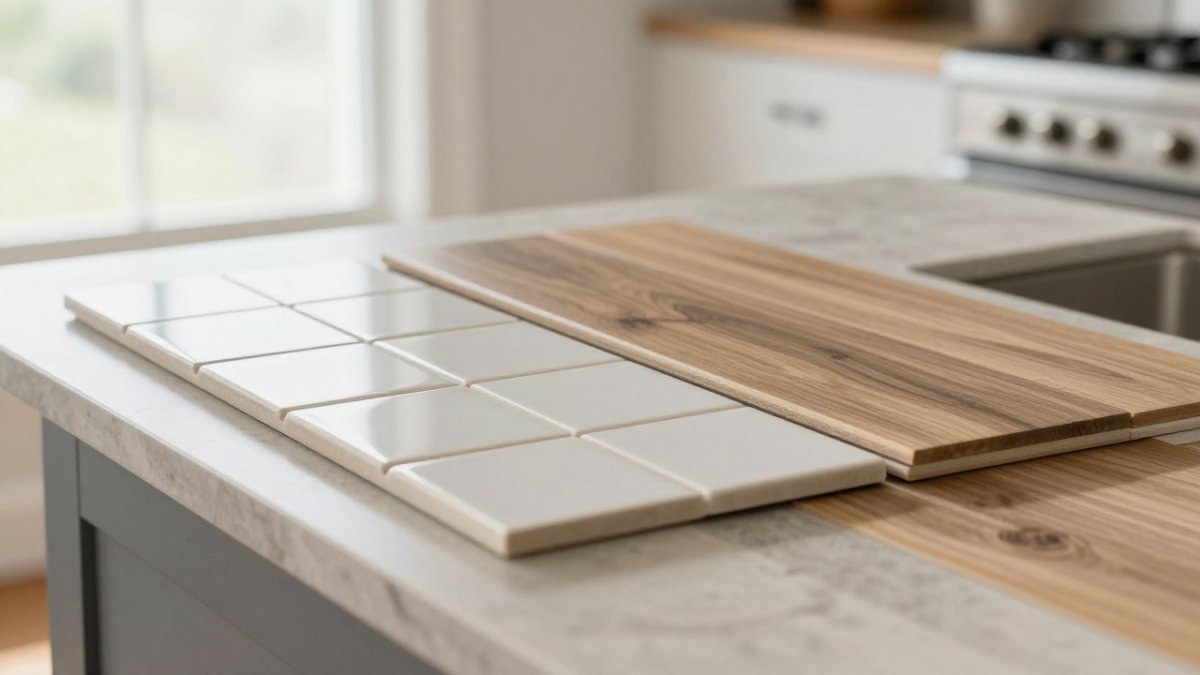
Once you know how the room is used, compare the main options on the traits that matter most in a kitchen, and compare them on numbers, not adjectives. The table below uses practical criteria most installers and manufacturers publish: water behavior, wear-layer or surface hardness, slip resistance, and warranty coverage. Use it as a filter, then confirm the exact figures on the product spec sheet for the material you are considering.
| Material | Water behavior | Scratch and wear criteria | Slip resistance | Typical warranty coverage | Best for |
|---|---|---|---|---|---|
| Porcelain tile | Water absorption under 0.5% for full-body porcelain; effectively waterproof at the tile, grout is the weak point | Mohs hardness of 7 or higher on quality porcelain; resists most dropped utensils | Look for a DCOF of 0.42 or higher for wet areas | Many porcelain lines carry a limited lifetime residential wear warranty | Heavy use, spills, pets, busy family kitchens |
| Ceramic tile | Water absorption higher than porcelain; glaze protects the face but the body can absorb water at chips and edges | Softer glaze than porcelain; can chip on impact | Matte or textured finishes improve wet traction | Typically 10 years to lifetime on the glaze, depending on the line | Light-to-moderate kitchens, budget remodels |
| Luxury vinyl plank | Water-resistant or waterproof depending on core; seams and perimeter are the failure points | Wear layer of 20 mil or more for busy homes; 12 mil suits lighter traffic | Textured and matte finishes rate better when wet | Many waterproof lines offer limited lifetime residential warranties | Comfort, budget-conscious remodels, dog households |
| Hardwood (sealed) | Absorbs standing water; finish and seams are vulnerable | Janka hardness varies widely by species; softer species dent under heavy furniture | Smooth finishes are slippery when wet | Finish warranties commonly run 5-25 years; structural warranties longer | Warm look, homes where water is controlled |
| Engineered hardwood | Water-resistant face, but core layers can swell at seams | Similar to solid hardwood on the surface; core quality drives performance | Smooth finishes are slippery when wet | Typically 10-30 years depending on construction | Warm look with more dimensional stability |
Use a simple scoring method on top of the table. Rate each material from 1 to 5 on water resistance, scratch resistance, stain resistance, comfort and maintenance, then weight the scores against your household profile. A family with young children may weight comfort and water resistance higher, while a home with large dogs may prioritize scratch resistance and a thick wear layer. This keeps the comparison objective and makes your choice easier to defend.
Watch out: a high wear-layer number does not guarantee scratch resistance if the finish is soft, and a high hardness rating does not guarantee stain resistance if the grout or sealer is wrong. Read the full spec sheet, not just the headline number.
For a lifecycle view, add up material, underlayment, installation labor, removal of the old floor, and the expected replacement interval. A cheaper material that needs replacing sooner can cost more over ten years than a pricier one that lasts. Ask your contractor for a line-item estimate that separates material from labor so you can compare options on the same basis.
Choosing the Best Waterproof Flooring for Kitchen Use
Kitchens are the wettest room in most homes, so waterproof performance should be non-negotiable. Look for products rated fully waterproof rather than water-resistant, since resistance alone can fail at seams or edges. Porcelain tile with grouted joints is water-resistant, but grout needs sealing and regular cleaning to stay stain-free. Luxury vinyl plank with a sealed locking system handles spills well, yet water can still seep under the edges if the room is not sealed at the threshold.
Watch out: installers sometimes skip the perimeter sealing around the sink and dishwasher. Ask your contractor to confirm how the seams and transitions will be protected. Waterproof flooring only performs if the installation details are handled correctly.
Picking the Best Flooring for Kitchen With Dogs
Dogs add two challenges: claws and accidents. Hardwood scratches easily, and softer vinyl can show marks from nails. Porcelain tile is a durable option that cleans easily, though it can be slippery when wet, so consider a textured or matte finish. Luxury vinyl plank with a thicker wear layer generally handles claw traffic better than thin products. Avoid polished stone, which shows scratches and etches with urine.
Pick a finish that hides dirt and hair, and keep a squeegee or microfiber mop nearby for quick cleanup.
Matching Flooring Between the Kitchen and Living Room
Open layouts often call for continuous flooring, but you do not have to match the kitchen and living room exactly. A common approach is to choose a durable kitchen material and a softer or warmer option for the living room, then use a transition strip at the doorway. Keep the color tones and plank widths consistent so the spaces feel connected even when the materials differ.
Built-in cabinetry can also tie the rooms together. Custom built-ins in the living room that echo the kitchen cabinet color and hardware help the two spaces read as one design. If you are planning built-ins, PIONEER WOODWERX can help you see how finishes and woodwork relate across connected rooms, and our Built In Entertainment Center shows how built-in woodwork can anchor a living room. For a broader view of the finishes that work across the home, our custom built-ins pages cover the options in detail.
Plan Your Remodel Sequence and Confirm Your Flooring Choice
Flooring usually goes in late in the remodel, after cabinets, appliances and countertops are set, but the choice should be locked in early. See how the renovation process is managed end to end so you can line up the flooring decision with each phase. The reason is logistics: floor height, transitions and clearances all depend on the material, and changing your mind late can force cabinet or appliance adjustments.
Start with floor height. Measure the finished thickness of each candidate, tile plus thinset plus backer board can add well over an inch, while luxury vinyl plank and engineered hardwood are thinner. Confirm that the dishwasher, range and refrigerator still slide in and out under the counter, and that cabinet toe kicks and door swings clear the new surface. If the kitchen opens to a hallway or living room, plan the transition strip and confirm the height difference at the doorway before demolition.
Then confirm acclimation and curing time. Many vinyl and engineered products need to sit in the room for a day or more to adjust to temperature and humidity, and tile thinset and grout need curing time before heavy traffic. Ask your contractor to build those days into the schedule so appliances and cabinets are not reinstalled on a floor that is still settling.
Order materials with a small overage for cuts and future replacements, and confirm lead times, since some tile and specialty vinyl can take weeks to arrive. Ask your contractor to schedule the subfloor check, demolition, rough plumbing and electrical, cabinet installation, and then flooring, in that order. Keep a few spare planks or tiles stored flat for later, since dye lots and patterns change over time.
Watch out: skipping the floor-height check is the most common cause of a dishwasher that no longer fits or a refrigerator that will not roll out. Measure before you order, not after.
Once you have confirmed your material and sequence, contact us to discuss how the flooring fits your kitchen project. Our team manages the full renovation process, and our kitchen remodeling services cover kitchen renovation projects. Pricing depends on the material, square footage, subfloor condition and scope of work, so request a quote for current figures.
Ready to plan your kitchen flooring? Request a free consultation with PIONEER WOODWERX and we will help you match the right floor to how your kitchen is used.
Frequently Asked Questions
What is the most durable flooring for a kitchen?
Porcelain tile and luxury vinyl plank are the two options most often recommended for kitchens because they handle daily wear, spills and moisture well. Porcelain is very hard and resists scratches, but it is cold and hard on dropped dishes. Luxury vinyl plank is softer underfoot and quieter, and it stays comfortable to stand on while cooking. Hardwood can work with a durable factory finish, but it is more sensitive to standing water near the sink and dishwasher. The best pick depends on how the kitchen is used, which is why it helps to compare the options against your own household routine before deciding.
Which kitchen flooring is best for resisting water and spills?
Porcelain tile and waterproof luxury vinyl plank both resist water and spills well when installed correctly. Grout lines in tile need sealing and regular cleaning, since moisture can get into them over time. Vinyl relies on seams being tight and sealed, especially around the sink, dishwasher and refrigerator. Hardwood is not a good choice for areas where water collects, though a sealed finish helps with ordinary spills that are wiped up quickly. Before choosing, check the manufacturer's stated water-resistance rating and ask how the seams and edges are protected during installation.
What should you check before choosing flooring for a kitchen remodel?
Start by inspecting the subfloor for level, moisture, and damage, since most flooring problems come from an unprepared base. Check the height of the new floor against adjoining rooms and the thresholds at doorways, because a thicker material can create a trip point. Confirm the order of work, since cabinets and appliances are usually installed before or after flooring depending on the material and layout. Ask whether the flooring you want requires underlayment, and whether the installer will remove the old floor or install over it. Getting these details settled early helps keep the schedule and budget on track.