 How-to
How to Choose Kitchen Cabinet Hardware Step by Step
Last Updated: November 16, 2026
Quick Summary
To choose kitchen cabinet hardware step by step, first pick the type: knobs for small doors, pulls for drawers and wide doors, latches for vintage or inset styles. Then measure every door and drawer, size pulls to roughly one-third of the width, and match finish to your cabinets, faucet and lighting.
- Measure drawer face width and height, door width and height, center-to-center spacing, and clearance before shopping.
- A 24-inch drawer takes an 8-inch pull under the one-third rule.
- Standard door knobs run 1.25 to 1.5 inches in diameter; door pulls run 3 to 5 inches.
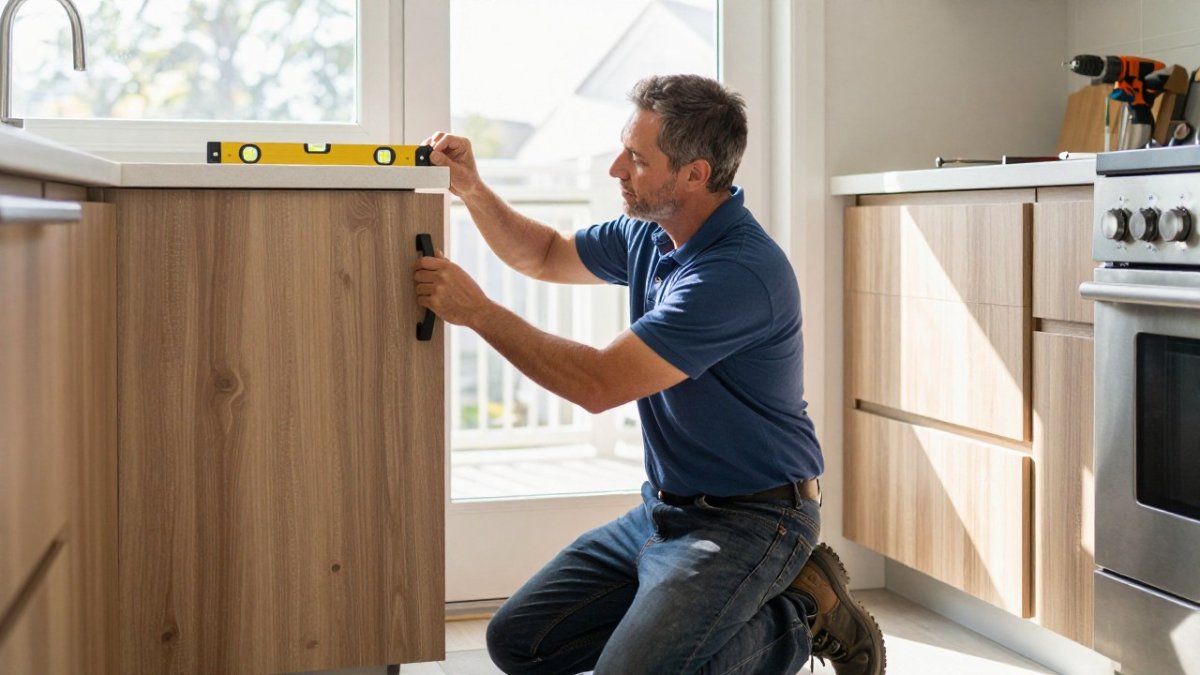
- Mount base cabinet hardware near the top corner opposite the hinges, and upper cabinet hardware near the bottom corner.
- The most reliable mix is knobs on doors and pulls on drawers, tied together by a shared finish.
Table of Contents
- Start With Type: Knobs vs Pulls vs Latches
- Match Hardware Type to Your Cabinet Doors and Drawers
- Sizing Pulls and Knobs to Cabinet Dimensions
- Where Do You Place Handles on Kitchen Cabinets?
- The One-Third Rule for Cabinet Hardware, Explained
- Mixing Knobs and Pulls on Kitchen Cabinets
- How to Choose Cabinet Hardware Color and Finish
- Planning Your Hardware Project With PIONEER WOODWERX
- Frequently Asked Questions
Start With Type: Knobs vs Pulls vs Latches
Learning how to choose kitchen cabinet hardware step by step starts with one decision that shapes everything after it: the type of kitchen cabinet hardware. Pick the wrong type and no finish or size will save the look.
Cabinet hardware falls into three families. Knobs are single-point fixtures screwed through one hole. Pulls, sometimes called handles, attach at two points and give your hand a bar or arch to grip. Latches are catch-style fixtures, most at home on vintage-style and inset cabinet doors.
The choice is not purely visual. It changes how the door feels in daily use, how much force your fingers need, and how the cabinet reads against the rest of the kitchen.
Pros and Cons of Knobs
Knobs are the simplest option, and simple is often right. A knob needs one drill point, installs fast, and suits almost any cabinet style. On small doors and upper cabinets, a knob looks properly scaled.
The trade-offs matter too. A single knob gives you less to grab, which is harder on arthritic hands or anyone with a weaker grip. Knobs also show fingerprints more readily on polished finishes.
- Best for: small doors, traditional and transitional kitchens, lower-traffic cabinets
- Skip if: the user has limited hand strength or the doors are wide and tall
Pros and Cons of Pulls
Pulls win on function. A bar or arch pull gives your whole hand something to hold, which makes wide drawers and heavy doors easier to open. In a busy family kitchen, that difference shows up every single day.
The cost is complexity. Pulls need two drill points set at an exact center-to-center distance, so measuring has to be precise. They also cost more per piece and can overwhelm a narrow cabinet face.
- Best for: drawers, wide doors, aging-in-place modifications, high-use kitchens
- Skip if: the cabinet face is narrow or the style is a delicate period look
Match Hardware Type to Your Cabinet Doors and Drawers
The right hardware type follows the cabinet, not the other way around. Door style and drawer construction decide what will look and work correctly.
Flat-slab and shaker doors take both knobs and pulls well. Raised-panel doors often look best with a knob centered on the stile.
Glass-front and inset doors need extra thought. A heavy pull on a glass door can look clumsy and stress the frame. A small knob keeps the visual weight down.
If you are still deciding which cabinet material suits your home, our guide on which kitchen cabinet material is right for your home walks through the options before you commit to hardware.
Sizing Pulls and Knobs to Cabinet Dimensions
Hardware size should follow the cabinet's proportions, not the other way around. A pull that looks right on a 36-inch drawer will look lost on a 12-inch one. This is also the step where most do-it-yourself projects go wrong, so treat it as a measuring job first and a shopping job second.
Measure Before You Shop
Work through the kitchen with a tape measure and a notepad, and record four numbers for every door and drawer:
- Drawer face width and height, measured edge to edge on the drawer front
- Door width and height, measured on the door face, not the opening
- Center-to-center (CTC) spacing on any existing pull, measured from the center of one screw hole to the center of the other
- Overhang or clearance between adjacent doors and drawers, so a long pull does not collide with a neighboring piece
Center-to-center spacing is the number that decides whether new hardware fits existing holes. Measure every pull individually, since sizes can differ within a single kitchen.
Starting Sizes That Hold Up
Use these as a first pass, then confirm against your measured list:
- Drawer pulls: roughly one-third of the drawer's width, so a 24-inch drawer takes an 8-inch pull
- Door knobs: 1.25 to 1.5 inches in diameter for most standard doors
- Door pulls: 3 to 5 inches for standard doors, longer for tall pantry doors
- Bar pull diameter: 1/2 inch is the common middle ground; 3/8 inch reads lighter, 5/8 inch reads heavier
Reusing Existing Holes
If the cabinets already have pulls and you want to keep the same footprint, buy replacements with matching CTC spacing and you avoid drilling altogether.
Watch out: drilling a second hole without checking the cabinet door's interior clearance can put a screw into the hinge plate or the door's center panel, and that mistake is visible every time the door opens.
Templates and Drilling
A paper or plastic drilling template, sold by most major hardware brands and available at any home center, sets both hole spacing and edge distance so every pull lands at the same height.
For a full kitchen, drill one door as a test, mount the hardware, and check the look and the swing clearance before repeating the setup on the rest of the run.
Where Do You Place Handles on Kitchen Cabinets?
Placement follows a simple logic: put the hardware where the hand naturally reaches.
Drawers are simpler. Center the pull horizontally and place it vertically where it looks balanced, usually centered on the drawer face or slightly above center on deep drawers.
Consistency is what separates a professional-looking install from an amateur one. Pick one rule and apply it to every cabinet in the run.
Watch out: mixing placement rules between adjacent cabinets is the most common visual mistake we see.
The One-Third Rule for Cabinet Hardware, Explained
The one-third rule for cabinet hardware is a proportion guideline: a pull should span roughly one-third of the drawer or door width it sits on. It keeps hardware visually balanced against the cabinet face.
Run the math before you shop:
| Cabinet Element | Width | One-Third Rule | Suggested Pull |
|---|---|---|---|
| Small drawer | 12 in | 4 in | 3 to 4 in pull |
| Standard drawer | 24 in | 8 in | 8 in pull |
| Wide drawer | 36 in | 12 in | 12 in pull |
| Standard door | 15 in | 5 in | 3 to 5 in pull |
| Tall pantry door | 18 in | 6 in | 5 to 6 in pull |
Width
The rule is a starting point, not a law. Very wide drawers sometimes look better with two smaller pulls rather than one long bar. On narrow cabinets, a knob often beats a pull that would crowd the face.
Mixing Knobs and Pulls on Kitchen Cabinets
Mixing knobs and pulls on kitchen cabinets works when the mix follows a rule. The most reliable approach: knobs on doors, pulls on drawers. It reads as intentional because it maps to function.
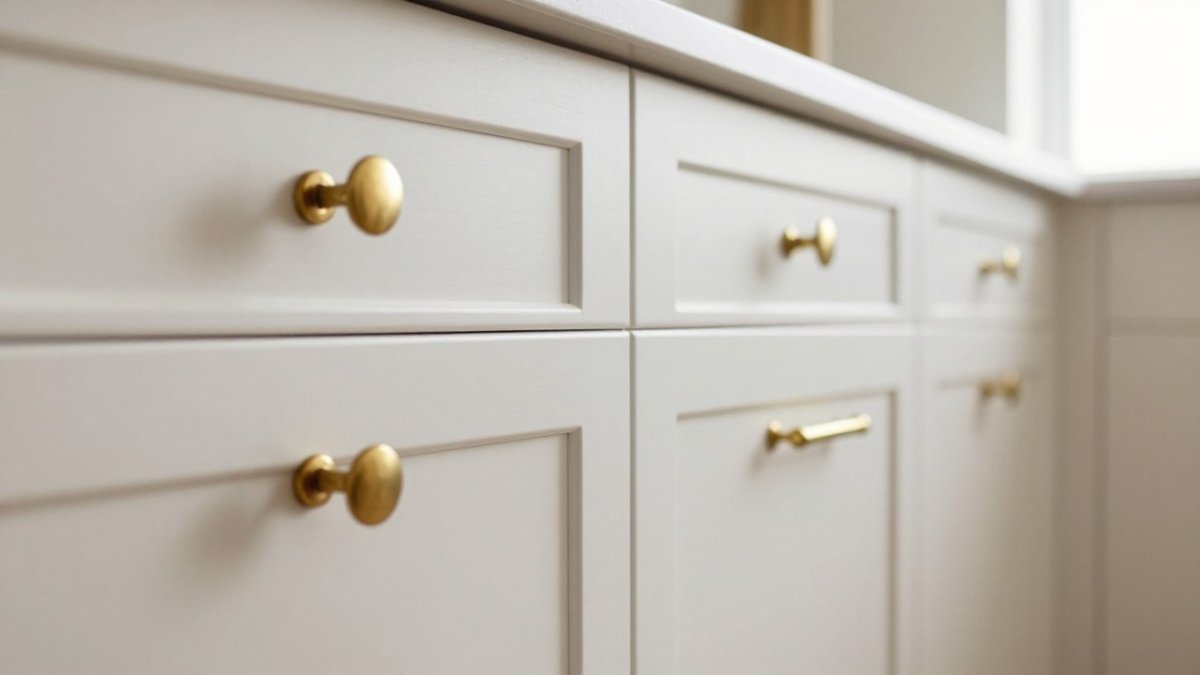
The mix also needs a shared finish or a deliberate contrast. Brass knobs with brass pulls look cohesive.
Where mixing goes wrong is randomness. If you want to avoid looks that will date fast, our rundown of outdated kitchen trends to retire is worth a read before you finalize the style.
How to Choose Cabinet Hardware Color and Finish
Finish choice comes down to coordination, not trend.
Warm metals like brass and bronze pair well with white, cream, and wood-tone cabinets. Cool metals like chrome and brushed nickel suit grey, blue, and modern slab doors.
Durability varies by finish. Polished chrome and stainless resist wear well. Lacquered brass can age and patina over time, which some homeowners love and others do not.
To see how a finish sits against real cabinetry, browse our wood and stain color options before you commit.
| Finish | Best Pairing | Durability | Maintenance |
|---|---|---|---|
| Polished chrome | Grey, blue, modern | High | Wipe with soft cloth |
| Brushed nickel | Transitional, neutral | High | Low |
| Matte black | Any, especially white | High | Hides marks well |
| Brass, lacquered | White, cream, wood tone | Medium | Avoid abrasive cleaners |
| Oil-rubbed bronze | Traditional, rustic | Medium | Patina develops over time |
Planning Your Hardware Project With PIONEER WOODWERX
Hardware is small, but the project around it is not. A full kitchen run can mean dozens of pieces, and getting the count, spacing, and finish right takes planning before the first hole is drilled. This is the step most guides skip, and it is the one that decides whether your order arrives complete.
Count Every Piece
Walk the kitchen and tally each door and drawer separately, then note the width of each on the same list. That list drives three things at once: pull lengths, total quantity, and the order itself. Counting carefully matters, since a miscount can cost time.
Add Spares
Consider ordering a few extra pieces. Spares can cover a stripped screw, a piece that arrives with a finish flaw, or a door added later in the project. Matching a finish two years after the original order is harder than most homeowners expect, because dye lots and plating runs shift.
Build a Simple Budget Framework
A practical way to plan is to separate the budget into four lines:
- Pieces: the per-piece price multiplied by your counted quantity plus spares
- Screws and anchors: usually included with the hardware, but confirm before ordering
- Drilling template and bits: a one-time purchase if you are installing yourself
- Installation labor: quoted separately if a contractor is doing the work
Solid brass and stainless steel generally cost more per piece than plated alternatives, and they are often more durable in daily use.
Order and Install in the Right Sequence
Place the hardware order after the cabinet order is confirmed but before the cabinets are installed, so the pieces arrive in time for the install crew.
For homeowners in Old Bridge and across Central Jersey, we handle the full kitchen renovation, from cabinetry and countertops to hardware installation. You can explore our kitchen remodeling services to see how the pieces fit together, or browse our virtual showroom to picture hardware on real cabinetry before you decide.
Hardware decisions look small until you live with them for a decade. If you want the type, size, finish, and placement handled correctly the first time, PIONEER WOODWERX can help.
Frequently Asked Questions
What is the one-third rule for cabinet hardware?
The one-third rule sizes a pull to the cabinet it sits on: the pull's length should be roughly one-third of the drawer width or door height. A 24-inch drawer takes about an 8-inch pull, and a 30-inch-tall door takes about a 10-inch pull. Use it as a starting point, then check the hardware against the cabinet in person, since a pull that looks right on paper can feel short or oversized once mounted.
Should kitchen cabinets have knobs or pulls?
It depends on the cabinet. Knobs suit doors, where a single grip point is enough, and they cost less per piece. Pulls give a fuller grip and work better on wide drawers, deep pots drawers, and anything a homeowner opens with a full hand. Many kitchens use both: knobs on doors and pulls on drawers. If anyone in the home has limited grip strength, pulls throughout are the easier choice.
Can you mix knobs and pulls on kitchen cabinets?
Yes, and most kitchens do. The usual approach is knobs on cabinet doors and pulls on drawers, kept in the same finish and design family so the room reads as one set. Mixing works when the two shapes share a material or color. It looks accidental when a polished nickel knob sits next to an oil-rubbed bronze pull with a different profile. Decide the split before you order so quantities match your cabinet layout.
How do I choose a cabinet hardware color?
Start with what is already fixed in the room: cabinet color, faucet and sink finish, lighting, and floor tone. Match the hardware to the faucet for a coordinated look, or contrast it deliberately, such as black pulls on white cabinets. Warm metals like brass and bronze suit traditional and transitional kitchens; matte black and brushed nickel read modern. Order one sample in each contender and view it under your kitchen lighting before committing.