 blog
Outdated Kitchen Trends: 12 Looks to Retire in 2026
Table of Contents
- Outdated Kitchen Trends: 12 Looks Designers Are Retiring in 2026
- What Makes a Kitchen Look Outdated?
- Outdated Kitchen Features Buyers Notice First
- Kitchen Trends to Avoid in 2026
- Timeless Kitchen Design Ideas That Hold Their Value
- How to Update an Outdated Kitchen Without a Full Remodel
- Choosing Replacements That Last: Durability, Maintenance, and Aging-in-Place
- Conclusion
- Frequently Asked Questions
Last Updated: October 9, 2026
Outdated Kitchen Trends: 12 Looks Designers Are Retiring in 2026
Outdated kitchen trends are the design choices that instantly date a room, from all-white monotone palettes to barn doors and distressed cabinets. At Pioneer Woodwerx, we walk through Central New Jersey kitchens every week and can usually spot the decade a kitchen was built in from the doorway.
Below, we list 12 looks to retire in 2026 and what to choose instead, plus how to tell a dated detail from a personal preference and how to prioritize updates by budget and resale impact.
What Makes a Kitchen Look Outdated?
A kitchen looks outdated when its color, materials, scale, and layout no longer match how people cook and gather today. Kitchens age in layers, and some layers are far cheaper to change than others, which is why two kitchens built in the same year can feel a decade apart.
The Four Signals: Color, Material, Scale, and Layout
Color is the fastest signal and the cheapest to fix. A monotone palette carried from floor to ceiling across cabinets, walls, counters, and backsplash flattens the room because the eye has nothing to anchor on.
Material carries a timestamp because finishes track to specific decades.
Scale is the signal most homeowners miss, and it's the one that makes a room feel small.
Layout is the slowest and most expensive signal.
Dated Look or Personal Preference? How to Tell the Difference
Not every unfashionable detail is a problem. The test we use: if a detail is doing a job, keep it. If it's only there because it was there in 2005, retire it.
Ask three questions:
- Does it improve how you cook, store, or move through the room? A deep drawer bank that holds pots beats a trendy shallow cabinet every time.
- Would you choose it again today, from scratch? If the honest answer is no, it's a candidate for updating.
- Does it affect resale, or just your taste? Cabinet color, countertop material, and layout affect how buyers read the home. A bold backsplash or a specific hardware finish is a personal call that a future buyer can change in a weekend.
A dark wood island your family gathers around every night isn't automatically outdated. A dark wood island nobody uses, blocking the walkway, is. The distinction is function, not fashion.
Why This Matters Before You Spend Anything
Sorting a kitchen into these four layers tells you where to put your effort. Color and material changes are surface-level and reversible. Scale changes sit in the middle. Layout changes are structural and permanent. Most outdated kitchens only need work on the top two layers, which is exactly why the update plan below starts there.
Outdated Kitchen Features Buyers Notice First
Buyers spot two things before anything else: a flat, colorless room and fussy decorative trim. Both read as "this kitchen needs work" in the first ten seconds of a showing.
National Association of Realtors remodeling impact research
The All-White Kitchen and the Monotone Palette Problem
The all-white kitchen isn't dead, but the flat version of it is. When cabinets, walls, counters, and backsplash all sit in the same tone with no contrast, the room loses depth and starts to look like a rental.
The fix is contrast, not a full repaint. Add a wood island, a darker lower cabinet, or a warmer backsplash. One or two contrast points wake the room up.
Decorative Corbels, Columns, and Cabinet Cutouts
Decorative corbels, faux columns, and cabinet cutouts were meant to add character. In practice, they add visual clutter, corbels under every upper cabinet, columns flanking a pass-through that isn't structural, and cutouts and arches that collect dust and block sightlines. Modern kitchens use clean lines and let the wood or the countertop be the detail.
Kitchen Trends to Avoid in 2026
Three finishes dominate the "avoid" list this year: high-gloss cabinetry, dark wood, and distressed cabinets. Each is hard to blend with anything else, which is exactly why they date so fast.
High-Gloss Cabinetry, Dark Wood, and Distressed Finishes
High-gloss cabinets show every fingerprint and smudge. Dark wood soaks up light in an already-dark room. Distressed finishes were designed to look worn, and now they just look tired.
What to choose instead:
- Matte or satin painted cabinets in warm white, sage, or greige
- Medium-tone real wood for islands and open shelves
- Flat-panel or simple shaker doors that won't fight the rest of the room
Barn Doors, Farmhouse Style, and Open Shelving Trade-Offs
Barn doors on a kitchen entry were a signature farmhouse move. They're also loud, heavy, and awkward in a small galley.
Open shelving has a real trade-off too. It looks great styled, but it puts every plate and mug on display.
Farmhouse style itself isn't the problem. The problem is farmhouse applied to every surface at once: shiplap, barn door, apron sink, and distressed wood all in one room.
Timeless Kitchen Design Ideas That Hold Their Value
Timeless kitchen design ideas share one trait: they don't chase a single decade. They use materials that age well and let the layout do the work.
Cabinet Colors, Finishes, and Hardware That Age Well
Warm whites, soft greens, and natural wood tones hold up better than trend colors. So does simple hardware.
- Cabinet colors: warm white, sage, greige, natural wood
- Cabinet finishes: matte or satin, easy to touch up
- Cabinet hardware: bar pulls and simple knobs in brushed nickel or matte black
Backsplash Tile, Countertops, and the Waterfall Edge Question
Subway tile in a classic size still works. Patterned tile can work too, as long as it's the one bold element in the room.
Countertops come down to how you cook. Quartz is low-maintenance; marble is beautiful but stains; butcher block is warm but needs care.
The waterfall edge is the detail people ask about most.
U.S. Department of Energy guidance on kitchen ventilation and indoor air
How to Update an Outdated Kitchen Without a Full Remodel
You can update an outdated kitchen without a full remodel by working in stages, from the cheapest reversible changes to the most permanent ones.
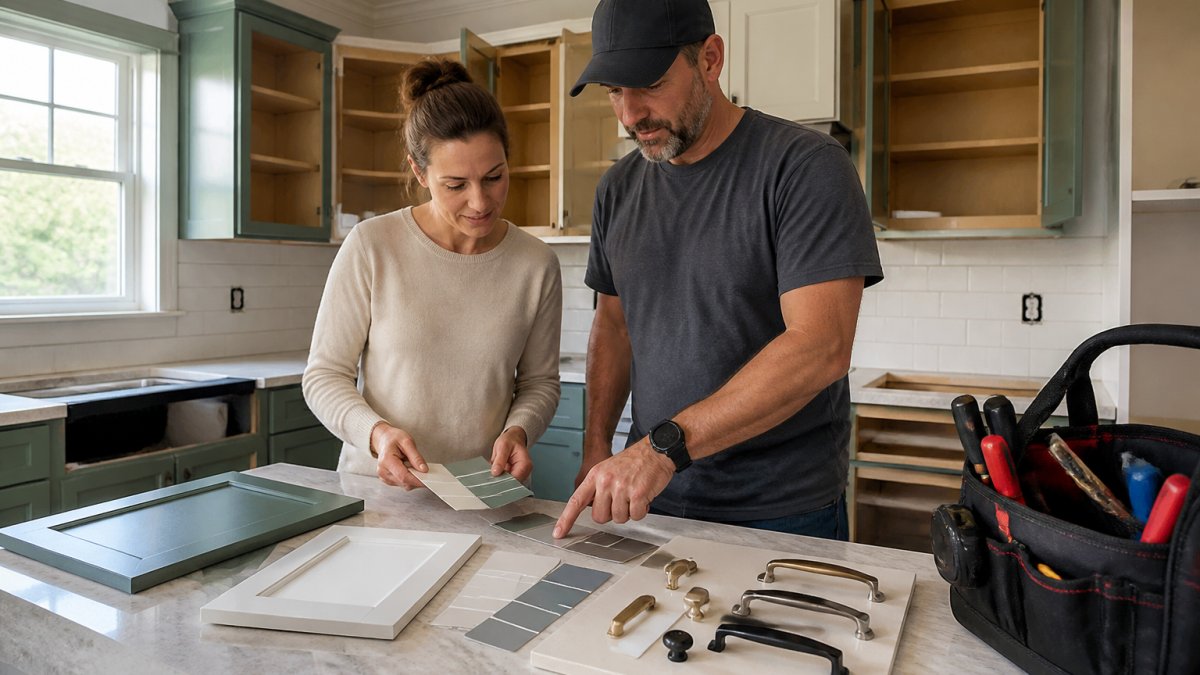
Stage 1: The Weekend Changes (Highest Impact, Lowest Commitment)
These are the changes you can make in a single weekend and reverse if you don't like them.
- Swap cabinet hardware. Moving from skinny 3-inch pulls to 5-inch bar pulls or simple knobs instantly changes the scale of the room, the single highest-impact, lowest-cost change in most kitchens.
- Replace the kitchen faucet. A simple pull-down model in a matte or brushed finish modernizes the sink area and improves daily function.
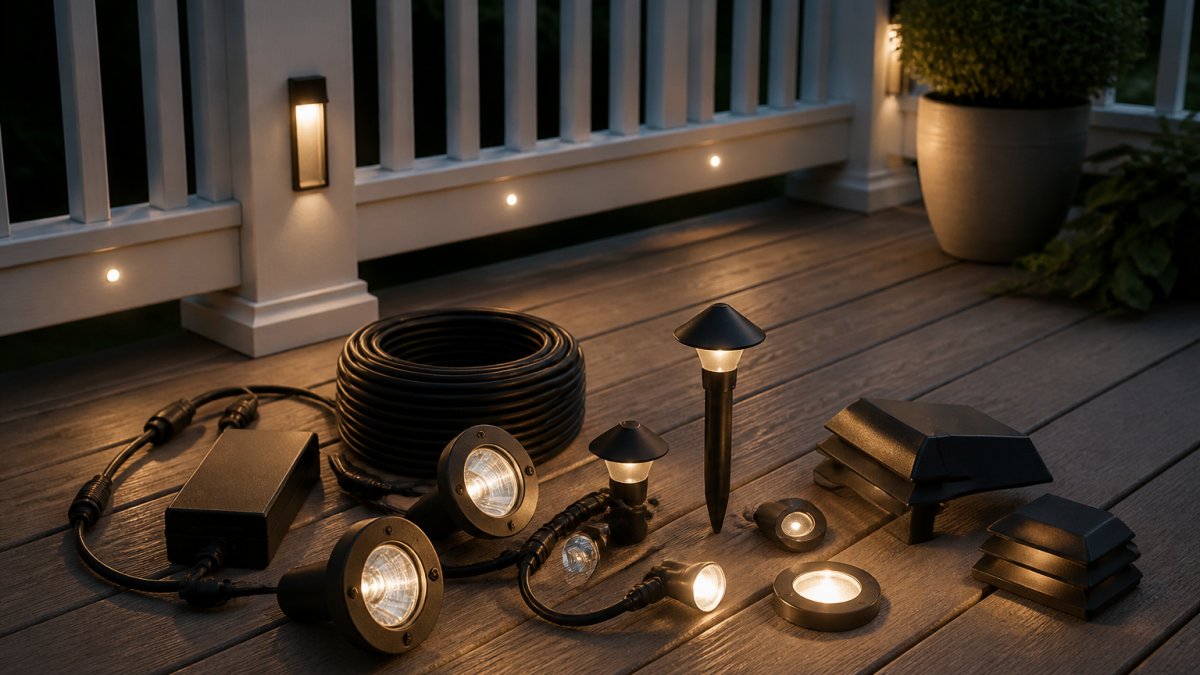
- Update lighting. Layered lighting, under-cabinet task strips, a statement pendant over the island, and dimmable ambient fixtures, does more for how a kitchen feels than almost any surface change. A single builder-grade flush mount is the most common giveaway of an untouched kitchen.
- Remove decorative trim. Corbels, faux columns, and cabinet cutouts can usually be removed without structural work; filling and painting the holes is a one-day job.
Stage 2: The Mid-Level Changes (A Few Weekends, Some Skill Required)
These changes are still reversible but require more planning and a bit more budget.
- Repaint cabinet doors and frames. A warm white, sage, or greige in a matte or satin finish reads current and hides imperfections better than gloss. If the cabinet boxes are solid, painting is far cheaper than replacing doors, but check the frames first, because a fresh door on a worn box looks mismatched.
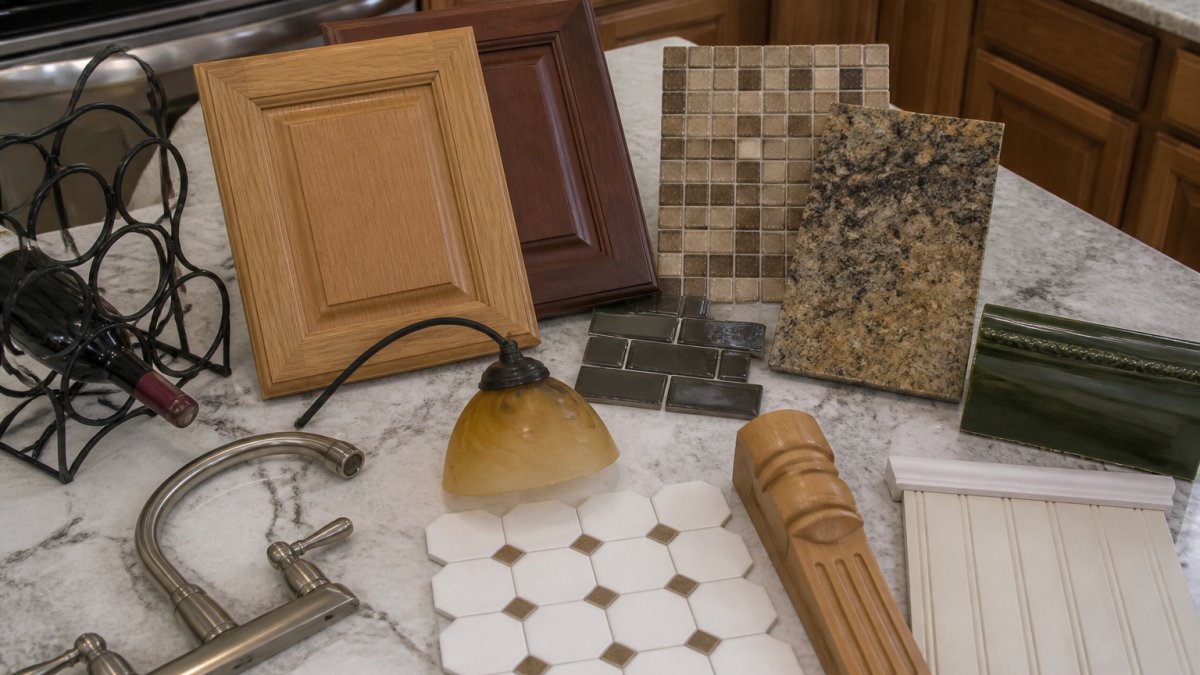
- Add or replace the backsplash. Choose a tile that contrasts the countertop rather than matching it. A classic subway in a standard size still works; a large-format slab is a stronger current choice. Keep the backsplash as the one bold element.
- Change the countertop. This is the biggest mid-level spend. Quartz is low-maintenance and resists staining, making it the safest choice for resale. Butcher block is warm but needs periodic oiling. Marble is beautiful but stains and etches, which matters with heavy daily use.
Stage 3: The Structural Changes (Only If the Layout Is the Problem)
- Open the layout, only if a wall is truly non-structural. Removing a wall between the kitchen and dining or living area is the single biggest change you can make, but it requires engineering review, permits, and a contractor. If the layout already works, skip this stage.
How to Prioritize When You Can't Do Everything
Most homeowners can't do all three stages at once. A practical priority order:
- If the kitchen feels dark and flat: start with lighting and paint, which alone fix most monotone rooms.
- If the kitchen feels small: start with hardware scale and backsplash; larger pulls and larger tile visually expand the room.
- If the kitchen feels closed off: the layout is the real issue, and no surface change will fix it. Plan for Stage 3.
What to Skip
Not every update is worth doing. Skip anything that only matches a trend you saw last month, skip decorative trim that adds visual clutter without function, and skip surface changes on cabinets whose boxes are failing, you'll spend money twice.
If your kitchen is in Old Bridge or anywhere in Middlesex County, we can walk the room with you and tell you which stages will actually move the needle for your layout and your plans for the home.
Choosing Replacements That Last: Durability, Maintenance, and Aging-in-Place
Durability should drive every replacement decision, especially if you plan to stay in the home.
- Cabinets: solid wood and plywood boxes outlast particle board
- Countertops: quartz resists staining; wood and marble need more care
- Hardware: solid metal beats plated finishes over time
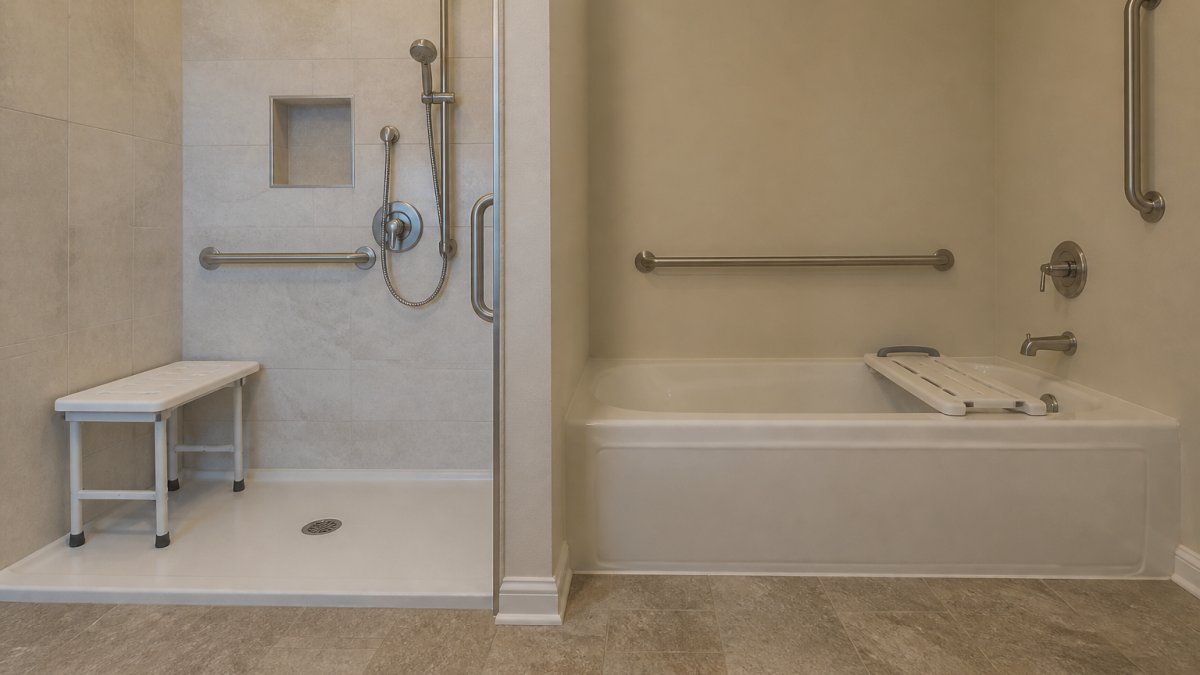
For homeowners planning to age in place, kitchen design matters as much as the bathroom.
If you're updating a kitchen in Old Bridge for parents or for your own retirement years, tell your contractor up front.
AARP home and community design resources for aging in place
Conclusion
Kitchen trends cycle fast, and guessing which ones will last is a losing game. The better move is to build around contrast, durable materials, and a layout that fits how your family actually lives.
At Pioneer Woodwerx, we handle full kitchen renovations across Central New Jersey, plus the aging-in-place updates that keep a home workable for decades.
Frequently Asked Questions
What kitchen trends will be outdated in 2026?
Several looks are already reading as dated: all-white kitchens with no color contrast, high-gloss cabinetry, distressed or heavily glazed cabinet finishes, and dark wood upper cabinets. Decorative corbels, columns, and cabinet cutouts also signal an older era. Barn doors on kitchen entries and open shelving used as primary storage are on the way out too. None of these are disasters, but each one dates a room the way a popcorn ceiling does.
What makes a kitchen look outdated?
Four things do most of the work: color, material, scale, and layout. A monotone palette with no contrast flattens a room. Materials like high-gloss laminate or orange-toned oak read as a specific decade. Oversized decorative hoods, corbels, and columns add visual clutter. And a closed, compartmentalized kitchen layout feels dated next to an open-plan kitchen. If two or more of these signals appear together, the room will feel older than its appliances actually are, no matter how recently they were installed.
How can I update my kitchen without following short-lived trends?
Stick to choices that have stayed current for decades. Shaker and flat-panel cabinet doors in warm white, soft green, or natural wood tones hold up. Subway tile and simple slab countertops in marble or quartz remain safe. Update cabinet hardware, kitchen faucet, and lighting first, since those changes are inexpensive and reversible. Then repaint walls and add contrast through a kitchen island in a different finish. Timeless kitchen design ideas are less about a single look and more about proportion, contrast, and materials that patina well.
Are all-white kitchens going out of style?
The all-white kitchen is not disappearing, but the version with no contrast is. White cabinets with white counters, white backsplash, and white walls now read as flat and dated. The current approach keeps white cabinetry but adds a wood island, a darker countertop, or a patterned tile backsplash to create depth. If you already have an all-white kitchen, you do not need to replace cabinets. Adding a contrasting island, new cabinet hardware, and warmer lighting restores visual interest at a fraction of the cost.