 blog
Walk-In Shower vs Bathtub for Elderly: Safety & Accessibility
Table of Contents
- Walk-In Shower vs Bathtub for Elderly: Core Differences
- Safety and Fall-Risk Reduction
- Accessibility Features: Entry, Transfer, and Mobility
- Curbless Shower for Aging in Place: Design and Benefits
- Comfort, Soaking, and Hydrotherapy Considerations
- Installation, Space Requirements, and Bathroom Conversion
- Making Your Decision: Needs-Based Guidance
- Frequently Asked Questions
Last Updated: October 10, 2026
Walk-In Shower vs Bathtub for Elderly: Core Differences
Choosing in the walk-in shower vs bathtub for elderly decision is one of the most important bathroom choices you'll make. The answer depends entirely on mobility, health needs, and lifestyle.
A walk-in shower is a bathing space with a low threshold or no threshold at all, allowing easy entry without stepping over a rim. A walk-in tub (or walk-in bathtub) is a traditional bathtub with a sealed door on the side that opens inward, letting you step in at ground level rather than climb over the edge. Both exist to solve the same core problem: the standard bathtub rim presents a genuine fall hazard for seniors.
The key difference isn't comfort or cleanliness, both accomplish that. The real distinction is in daily usability and what your body can realistically do. A person with significant balance issues faces a different set of challenges than someone with limited hip mobility. A caregiver managing a dependent adult has different workflow needs than someone bathing independently.
This guide walks you through the safety features, accessibility specs, and real-world trade-offs so you can make a decision that actually fits your situation.
Safety and Fall-Risk Reduction
Falls in the bathroom account for a significant portion of serious injuries among older adults. The culprit isn't usually the tub itself, it's the transition in and out of it. A standard bathtub requires you to lift one leg high, balance on the other, and lower yourself into a slippery basin.
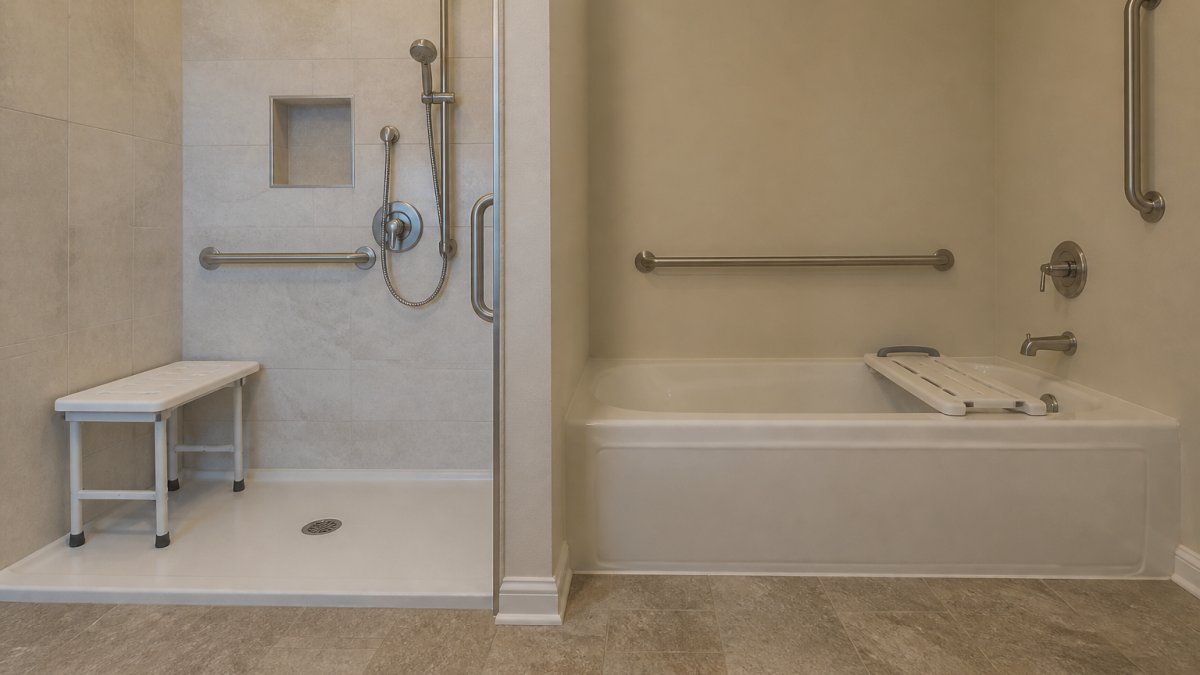
Walk-in showers eliminate this risk almost entirely by removing the barrier. You step in at the same level as the bathroom floor. No climbing, no balancing on one leg, no awkward lowering motion. If you have a handheld showerhead and grab bars installed, you can shower standing or seated with minimal risk.
Walk-in tubs reduce risk differently. You still step over a threshold (though much lower than a standard tub), but once inside, you're in a controlled environment. The door closes and seals. You're not standing on a wet floor. You can sit in the tub and soak without the constant balance effort required to stand in a shower.
The trade-off: walk-in showers require better balance and mobility to use safely. Walk-in tubs require the strength to step over a threshold and the ability to transfer in and out of a seated position. Neither is risk-free; both are dramatically safer than a standard bathtub.
Accessibility Features: Entry, Transfer, and Mobility
Walk-In Tub vs. Shower for Seniors: Entry and Exit
Entry difficulty is the first practical difference you'll notice. A walk-in tub has a door that opens inward, typically on a hinge or swing mechanism. You step over a threshold (usually 10-12 inches high, compared to 30+ inches on a standard tub) and step into the tub. The door closes behind you.
For someone with limited hip flexibility or knee arthritis, that 10-12 inch step can still be challenging. You're lifting your leg and balancing on the other foot. If you have a cane or walker, you need to manage it while stepping over.
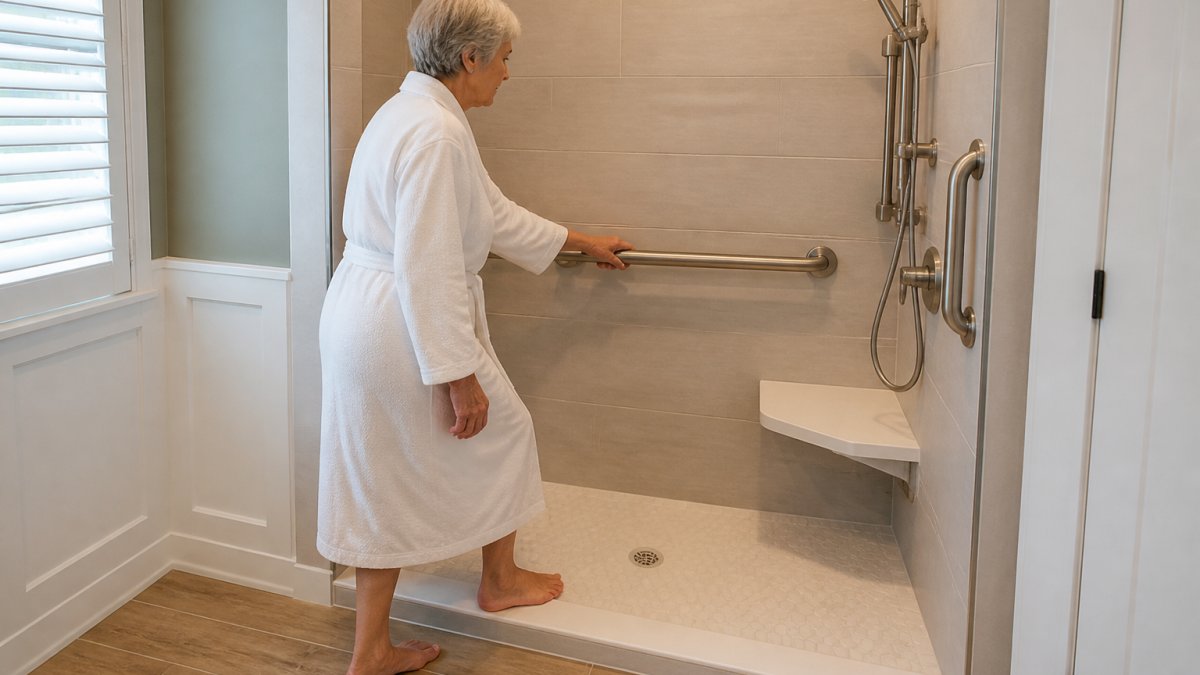
A walk-in shower with a curbless or low-threshold entry (typically 0-2 inches) removes this step entirely. You walk in the same way you walk anywhere else in your home. No lift, no balance requirement, just forward motion.
Exit is where the difference reverses. Stepping out of a shower means standing up from a seated position (if you've been sitting) or simply stepping out onto a potentially wet floor. You're wet, the floor is slippery, and you need to move carefully.
Wheelchair Access and Roll-In Options
If wheelchair access is a requirement, a walk-in shower is the only realistic option. A roll-in shower (a type of curbless shower designed specifically for wheelchair users) allows someone to wheel directly into the shower space without any threshold. The floor is level, the space is wide enough for turning, and grab bars are positioned for transfer from chair to seat or for standing with support.
A walk-in tub cannot accommodate a wheelchair. Even if you could somehow get a wheelchair into the bathroom, the tub itself requires stepping or transferring, neither of which works for someone who cannot stand or walk.
For aging in place in a home where mobility aids are already in use, a curbless or roll-in shower is the only choice that maintains independence and dignity.
Curbless Shower for Aging in Place: Design and Benefits
A curbless shower is a bathing space with no threshold or a threshold so low (under 0.5 inches) that it's essentially level with the bathroom floor. Water drains via a floor drain positioned to slope slightly toward the drain point. The entire floor is slip-resistant.
The design benefit is immediate: anyone, wheelchair user, person with a walker, someone with severe balance issues, can enter the shower the same way they enter any other room. No special equipment, no transfer, no risk. For families managing multiple generations or multiple mobility levels, a curbless shower accommodates everyone.
The practical benefit is that curbless showers are easier to keep clean and maintain. There's no threshold to trap water, debris, or soap scum. You can mop the entire bathroom floor as one space. For caregivers, this matters.
The main design consideration is water containment. A curbless shower relies on proper slope and drainage to keep water from flowing into the rest of the bathroom. This requires professional installation and careful attention to floor pitch. If installed incorrectly, water will leak into adjacent rooms or under the floor. This is not a DIY project, and it's why working with experienced contractors in Old Bridge and the surrounding area is essential.
Comfort, Soaking, and Hydrotherapy Considerations
Here's where walk-in tubs shine. A long, warm soak is genuinely therapeutic for chronic pain, arthritis, and muscle tension. Warm water reduces pain perception, increases blood flow, and gives your joints and muscles time to relax.
A walk-in shower, even one with a built-in seat, doesn't offer this. You can sit and let warm water run over you, but you're not soaking. The therapeutic effect is different.
However, soaking requires the ability to get in and out of the tub reliably. If entry is difficult, painful, or risky, the comfort benefit disappears. You end up avoiding the tub, and it becomes an unused luxury.
For someone with both mobility limitations and chronic pain, the decision often comes down to which limitation is more significant. If mobility is the bigger issue, a shower is safer. If pain management is the bigger issue, a tub might be worth the entry difficulty.
Many families solve this by installing both: a walk-in shower for daily bathing and a walk-in tub in a second bathroom for occasional soaking. This isn't always possible in a smaller home, but when space allows, it's the best of both options.
Installation, Space Requirements, and Bathroom Conversion
Both walk-in showers and walk-in tubs require professional installation. Neither is a simple swap for a standard fixture.
A walk-in shower conversion typically requires:
- Removing the existing tub
- Reconfiguring the drain and plumbing
- Installing a new floor with proper slope and drainage
- Installing a new shower enclosure or barrier
- Installing grab bars and safety fixtures
A walk-in tub installation requires:
- Removing the existing tub
- Reinforcing the floor (walk-in tubs are heavier than standard tubs)
- Reconfiguring plumbing for the new tub's drain and fill
- Installing the tub and sealing the door mechanism
- Installing grab bars and safety fixtures
Both projects depend on the complexity of your existing plumbing and whether any structural issues are discovered during the work. In Old Bridge and the surrounding areas, bathroom conversions are common enough that experienced contractors understand local building codes and permit requirements.
Space is the other consideration. A walk-in shower can be smaller than a standard shower. A walk-in tub typically requires the same footprint as a standard bathtub.
If your bathroom is small, a walk-in shower is often the only realistic option. If you have space, either works, but the conversion cost and timeline may differ.
Making Your Decision: Needs-Based Guidance
The best choice depends on your specific situation. Here's how to think through it:
| Factor | Walk-In Shower | Walk-In Tub |
|---|---|---|
| Balance/Mobility | Better for limited balance | Requires stepping ability |
| Wheelchair Access | Yes (roll-in option) | No |
| Chronic Pain/Soaking | Limited | Excellent |
| Daily Speed | Fast (5-10 min) | Slower (fill, soak, drain) |
| Caregiver Assistance | Easier to assist standing | Easier to assist seated |
| Space Required | Smaller footprint possible | Standard tub footprint |
| Maintenance | Minimal | Drain/seal maintenance |
Choose a walk-in shower if:
- Balance or leg strength is your primary limitation
- You use a wheelchair or walker
- You want fast, independent bathing
- Your bathroom is small
- You prefer standing to soaking
Choose a walk-in tub if:
- You can step over a low threshold
- Chronic pain or arthritis makes soaking therapeutic
- You prefer seated bathing
- You want water containment and a dry exit
- You have space and your budget allows
Consider both if:
- You have space in your home
- Multiple people with different needs use the bathroom
- You want maximum flexibility as your mobility changes
At PIONEER WOODWERX, we help families navigate this decision by understanding not just what's possible, but what actually works for your daily life. A bathroom renovation isn't just about installing fixtures, it's about creating a space where you can bathe safely, comfortably, and independently for as long as possible.
Aging in place means maintaining your independence and dignity in your own home. The right bathroom setup, whether that's a walk-in shower, a walk-in tub, or a combination of both, is a cornerstone of that independence. PIONEER WOODWERX specializes in bathroom renovations that prioritize safety and accessibility while maintaining the quality and craftsmanship your home deserves. Request a free consultation to discuss your specific needs and explore the options that work best for your home and your family.
Frequently Asked Questions
Is a walk-in shower safer than a bathtub for older adults?
Walk-in showers generally offer better safety for seniors because they eliminate the high step needed to enter a traditional tub, reducing fall risk. A curbless shower with grab bars, slip-resistant flooring, and a built-in seat provides easier entry and support during bathing. However, a walk-in tub can be safer if the senior has limited balance and prefers to bathe while seated in a filled tub rather than standing under running water. The safest choice depends on individual mobility, balance, and bathing preferences.
What bathroom safety modifications for seniors are most important?
Critical modifications include grab bars installed at grab points near the shower or tub, slip-resistant flooring to prevent falls, adequate lighting, and a handheld showerhead for control. For walk-in showers, a low or curbless threshold is essential. A built-in seat or shower chair allows bathing without standing the entire time. Non-slip mats, raised toilet seats, and clear pathways also reduce hazards. Consult a professional to assess your parent's specific mobility needs and home layout.
Can a walk-in shower accommodate a wheelchair or mobility device?
Yes, a roll-in or curbless shower is designed for wheelchair access. The threshold is flush with the bathroom floor, allowing a wheelchair to roll directly into the shower area. Grab bars, a fold-down seat, and a handheld showerhead support safe bathing from a seated position. A professional contractor can assess your bathroom layout and ensure the shower meets accessibility standards.
What should we consider when planning an aging-in-place bathroom renovation?
Evaluate the senior's current and anticipated mobility needs, balance, and any chronic pain or arthritis. Measure your bathroom to determine if you have space for a walk-in shower or tub, or if you need to convert an existing bathtub. Consider plumbing and structural changes required. Budget for professional installation, permits, and any grab bars or accessibility features. A consultation with a remodeling contractor experienced in aging-in-place design ensures your space meets safety codes and your family's long-term needs.