 How-to
7 Things Medicare Covers for Home Safety Modifications
Last Updated: November 16, 2026
Quick Summary
Original Medicare generally does not cover medicare home safety modifications such as grab bars, walk-in showers, or permanent wheelchair ramps, because Part A and Part B pay for medical services and equipment, not construction. Medicare Advantage plans may offer supplemental benefits for some home safety items, so always confirm coverage in writing.
- Medicare covers medical services and equipment, not building materials and labor.
- A portable commode may be covered as durable medical equipment with a doctor's order.
- Medicare Advantage supplemental benefits often come as a capped allowance, vendor network, assessment, or flex card.
- Only the plan's Evidence of Coverage document and written confirmation count as proof.
- Benefits reset every January 1, so verify the current plan year before building.
Table of Contents
- What Medicare Covers for Home Safety Modifications
- Does Medicare Cover Bathroom Modifications?
- Does Medicare Cover Wheelchair Ramps?
- Medicare Advantage Home Modifications and Supplemental Benefits
- How to Make a Bathroom Wheelchair Accessible
- How to Verify Your Plan's Coverage Before You Build
- Planning Your Accessibility Project with PIONEER WOODWERX
- Frequently Asked Questions
What Medicare Covers for Home Safety Modifications
Most families ask the same question after a parent falls: does Medicare cover home safety modifications? The short answer is that Original Medicare generally does not pay for permanent changes to your house, like grab bars screwed into tile or a ramp built onto the front steps. This guide breaks down what Medicare does cover, what it does not, and how to check your own plan before you build anything.
Original Medicare splits into two parts. Medicare Part B covers doctor visits, outpatient care, and some medical equipment. Medicare Part A covers hospital stays and limited home health services. Neither part pays for construction.
Here is the line that matters most. Medicare covers medical services and equipment, not building materials and labor. A physical therapist who visits your home may be covered. The shower seat that therapist recommends usually is not.
That distinction trips up a lot of families. Below, we explain what falls on each side of it.
Does Medicare Cover Bathroom Modifications?
No. Original Medicare does not cover bathroom modifications such as walk-in showers, widened doorways, or new grab bars. Those are permanent fixtures tied to the home, not to a medical treatment.
Some items walk a finer line:
- Portable toilet or commode chair: may be covered under durable medical equipment rules with a doctor's order
- Grab bars: generally not covered as permanent fixtures
- Walk-in tub: not covered by Original Medicare
- Low-threshold shower conversion: not covered
A common mistake is assuming a doctor's note unlocks any safety upgrade. It does not. Medical necessity has to attach to a covered service or a piece of equipment, not to a remodeling project.
The official Medicare.gov coverage pages spell out the equipment categories. Read them before you assume a bathroom item qualifies.
Does Medicare Cover Wheelchair Ramps?
Original Medicare does not cover a permanent wheelchair ramp built onto a home. Ramps are considered home modifications, and home modifications sit outside Part A and Part B.
Durable medical equipment is a different story. Durable medical equipment means reusable medical gear prescribed by a doctor, like a wheelchair or a walker. Medicare Part B may help with the equipment itself. It does not pay to build the ramp the wheelchair rolls up.
What about a portable ramp? Some plans treat a removable ramp as equipment rather than construction. Coverage depends on your plan and the paperwork. Get it in writing before you buy.
This is where families lose time. They order a ramp, then learn the plan treats it as a home improvement. Ask first, build second.
Medicare Advantage Home Modifications and Supplemental Benefits
Medicare Advantage (Part C) is the real exception in this conversation. Unlike Original Medicare, MA plans are allowed to offer supplemental benefits beyond what Part A and Part B cover, and a growing number use that flexibility for home safety items (CMS finalizes Medicare Advantage and Part D payment and policy updates to maximize...).
The catch is that "Medicare Advantage" is not one plan. It is thousands of plan filings, each with its own benefit design, service area, and plan year.
How the benefit is usually structured. Most MA supplemental benefits for the home fall into one of four shapes:
- A capped allowance. The plan sets a dollar maximum per year for approved home safety items and you shop from a list.
- A vendor-network benefit. The plan contracts with a home safety company, and you must use that vendor to be covered.
- An assessment-first benefit. The plan pays for an in-home safety assessment, then approves specific items based on the assessor's findings.
- A flex-card benefit. The plan issues a prepaid card for approved health-related items, and home safety products may be on the eligible list.
What usually triggers approval. Plans generally want three things on file: a diagnosis or functional limitation that justifies the item, a clinician's recommendation (often from a physical or occupational therapist), and documentation that the item is for use in the home. Prior authorization is common. Some plans cap the benefit annually, limit it to certain categories, or require you to use an in-network vendor.
Where Medicaid fits. Medicaid is a separate program with its own home- and community-based services waivers, and the pathway runs through the state, not through Medicare. A household can sometimes stack an MA supplemental benefit with a Medicaid waiver, but the two are approved separately and neither one is guaranteed.
The Old Bridge and Middlesex County angle. Local aging offices can help you find resources. Confirm the current plan details with your plan directly before you call a contractor.
Watch out: when it comes to medicare home safety, a plan's marketing flyer, a broker's summary, or a benefits comparison website is not proof of coverage. Only the plan's Evidence of Coverage document and a written coverage confirmation count.
If you are comparing plans during Open Enrollment, pull the Evidence of Coverage for each plan you are considering and search it for terms like "home safety," "home modification," "accessibility," and "supplemental benefits." That single step separates real coverage from marketing language.
How to Make a Bathroom Wheelchair Accessible
A wheelchair-friendly bathroom comes down to a few core changes. The goal is simple: remove the step, add support, and widen the path.
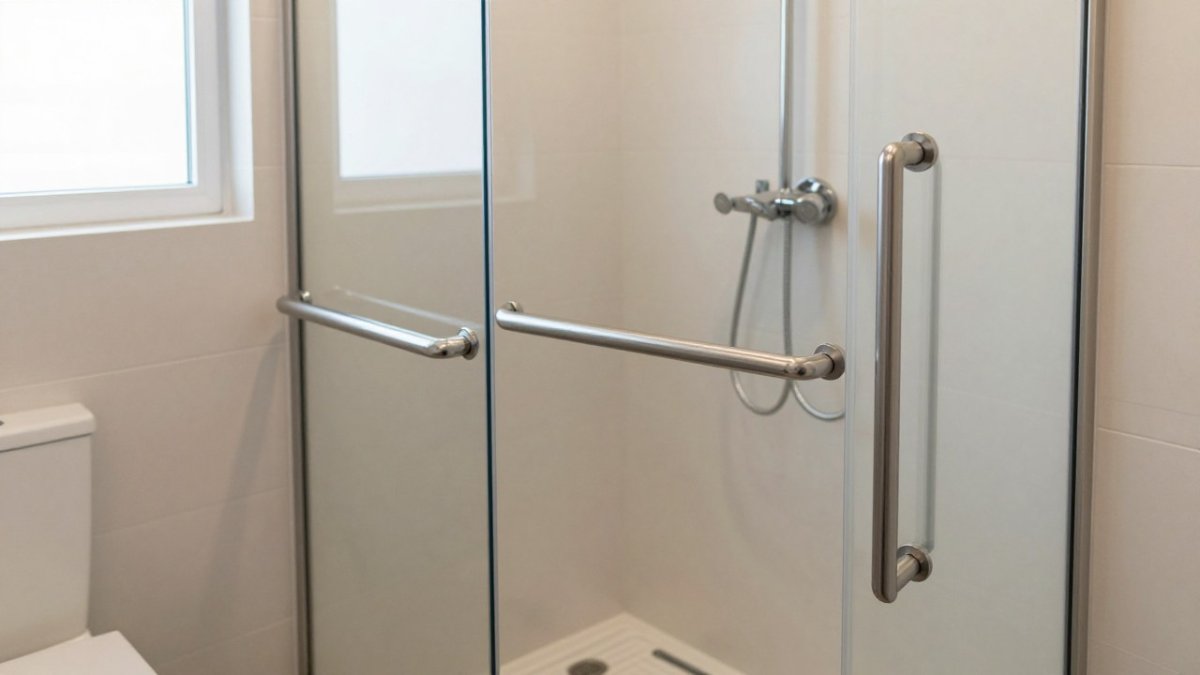
Here is the practical list we walk clients through:
- Convert to a low-threshold or roll-in shower. Removing the curb lets a wheelchair roll straight in.
- Add blocking and grab bars. Vertical and horizontal bars near the toilet and shower.
- Install a fold-down shower seat. Fixed benches work for some; fold-down seats free up floor space.
- Widen the doorway. A wider opening gives clearance for a chair.
- Swap the faucet and showerhead. A handheld showerhead and lever handle are easier to reach.
- Check ventilation and drainage. Proper prep here prevents bigger problems later.
Tile and grout alone do not make a shower waterproof. The waterproofing behind the tile is what protects the framing. At PIONEER WOODWERX, we treat that hidden layer as a critical part of the job.
For a full walkthrough, see our guide on how to make a bathroom wheelchair accessible.
How to Verify Your Plan's Coverage Before You Build
Call your plan before you call a contractor. That order saves money and heartache, and it is the single step most families skip.
Step 1, Identify the exact plan and plan year. Pull your Medicare Advantage or Part D card and write down the plan name, the contract number, and the plan year.
Step 3, Call the plan and use a script. Ask these questions in this order and write down the representative's name, the date, and the call reference number:
- What is the exact benefit name for home safety or home modification items in my plan for this plan year?
- Is the item I want classified as durable medical equipment, a supplemental benefit, or an exclusion?
- Is prior authorization required, and who submits it, me, my doctor, or the vendor?
- Is there an annual dollar cap, a quantity limit, or a vendor-network requirement?
- Can you send me written confirmation of this answer?
Step 4, Request written confirmation. Ask for the answer by mail or secure message, not just verbally.
Step 5, Get the clinical documentation on file first. Ask your physician or therapist for a plan of care that states the functional limitation and the recommended item.
Step 6, Document everything for a possible appeal. Save the written confirmation, the denial letter if one comes, the clinical plan of care, receipts, and the call log. If a claim is denied, you have the right to appeal, and the appeal is far stronger with a paper trail (Filing an appeal).
Step 7, Confirm the contractor side separately. A plan approval does not confirm a contractor is qualified to do the work.
| Item | Original Medicare (Part A/B) | Medicare Advantage | What to ask the plan |
|---|---|---|---|
| Grab bars | Not covered | Sometimes, plan-specific supplemental benefit | Benefit name, cap, prior authorization |
| Walk-in shower conversion | Not covered | Rarely covered; usually an exclusion | Whether any home modification benefit exists |
| Portable commode | May be covered as DME with a doctor's order | Often covered as DME | DME classification and vendor |
| Wheelchair ramp (permanent) | Not covered | Sometimes, plan-specific | Whether classified as equipment or modification |
| Stairlift | Not covered | Rarely covered | Any supplemental benefit or exclusion |
| Home safety assessment | Not covered as a standalone | Sometimes covered as a supplemental benefit | Whether an assessment-first benefit applies |
The 2026 assessment question. An assessment is not the same as payment for construction, a covered assessment tells you what the home needs, not who pays to build it.
If you are weighing how to pay for the work, our guide on financing home accessibility renovations covers the options.
Planning Your Accessibility Project with PIONEER WOODWERX
Medicare answers are only half the job. Someone still has to build the ramp, widen the door, and waterproof the shower correctly.
At PIONEER WOODWERX, we are a veteran-owned general contractor serving Central New Jersey. We handle bathroom remodeling, aging-in-place modifications, and full home renovations. We work directly with homeowners to explain options and build solutions that fit the house.
Two things we tell every family:
- The lowest estimate is not always the best value. A detailed scope of work matters more than a low number.
- Ask who does the work, how changes are handled, and what the schedule looks like.
Before you hire anyone, confirm their New Jersey home improvement contractor registration and insurance. Our aging in place contractor guide for Middlesex County walks through what to check.
If you want a starting point, grab our free home safety checklist and we will send it over. You can also browse the aging-in-place modification checklist to see which upgrades may fit your home.
Medicare will not build your ramp, but the right contractor will build it right. PIONEER WOODWERX brings over 20 years of trade experience to bathroom remodeling, aging-in-place modifications, and whole home renovations across Central New Jersey. We handle the waterproofing, framing, and finish work that keep a project safe for the long run. Get started with PIONEER WOODWERX and build a home that works for every stage of life.
Frequently Asked Questions
What home modifications does Medicare cover?
Original Medicare generally does not pay for permanent structural changes such as widened doorways, ramps, or bathroom remodeling. It may cover durable medical equipment and some home health services when a doctor documents medical necessity and the plan approves them. Some Medicare Advantage plans add supplemental benefits for home safety items, but those vary by plan and year. Ask your plan in writing before you commit to any project.
Does Medicare cover shower grab bars for seniors?
Original Medicare treats grab bars as home safety equipment, not durable medical equipment, so it typically does not pay for them or their installation. A Medicare Advantage plan may include them as a supplemental benefit, and some plans bundle a home safety assessment with approved devices. Confirm plan-specific coverage and any prior authorization requirements before scheduling installation.
Can a Medicare Advantage plan help pay for home modifications?
Some Medicare Advantage plans offer supplemental benefits that can include home safety devices, bathroom safety equipment, or a home accessibility assessment. These benefits are plan-specific, often capped, and may require a doctor's recommendation or prior authorization. Request the current summary of benefits and a written coverage confirmation before you sign a contractor agreement.
How can I find financial assistance for home modifications in New Jersey?
Start with your county's Office on Aging, which can point you to state and local programs, and ask your Medicare Advantage plan about supplemental benefits. Medicaid may cover some home modifications for eligible enrollees through waiver programs. Veterans should also check VA housing grant programs. Get application steps and required documentation in writing before you schedule work.