 How-to
How to Finance Home Accessibility Renovations
Last Updated: October 28, 2026
Quick Summary
To finance home accessibility renovations, start by measuring the space and getting a written, line-item scope from a contractor before you apply for any funding. Then match the funding type to the project size, choosing among home equity loans, HELOCs, cash-out refinancing, FHA 203(k) loans, VA grants, or state and local grant programs.
- Measure doorway width, clear floor space, turning space, and shower entry width before applying for funding.
- VA SAH and SHA grants require VA approval before work begins; earlier work is generally not reimbursable.
- A home equity loan suits one large project with a known, fixed scope.
- A HELOC gives flexibility if you plan to tackle the bathroom now and the entryway later.
- Choose a retrofit when the layout already works and only fixtures need changing.
Table of Contents
- Start With a Clear Plan: Bathroom Accessibility Renovation Planning
- Home Accessibility Grants in New Jersey Worth Checking
- VA Grants for Home Modifications: What Veterans Can Claim
- Home Equity Financing for Renovations: Loans, HELOCs, and Cash-Out Refinancing
- How to Finance Home Accessibility Renovations When Equity Is Tight
- Retrofit or Full Remodel? Match the Loan to the Project
- Request a Free Consultation and Scope Your Accessible Bathroom
- Frequently Asked Questions
Start With a Clear Plan: Bathroom Accessibility Renovation Planning
Learning how to finance home accessibility renovations starts long before you talk to a lender. The loan you qualify for only matters if you know exactly what you are building.
Bathroom accessibility renovation planning is the process of measuring your space, listing the specific changes you need, and pricing those changes before you apply for any funding. Skip this step and you risk borrowing too little, too much, or for the wrong project.
Here is the order that works:
- Measure the room and every doorway
- List the changes that match the user's needs
- Get a written scope from a contractor
- Take that scope to a lender or grant program
- Match the funding type to the project size
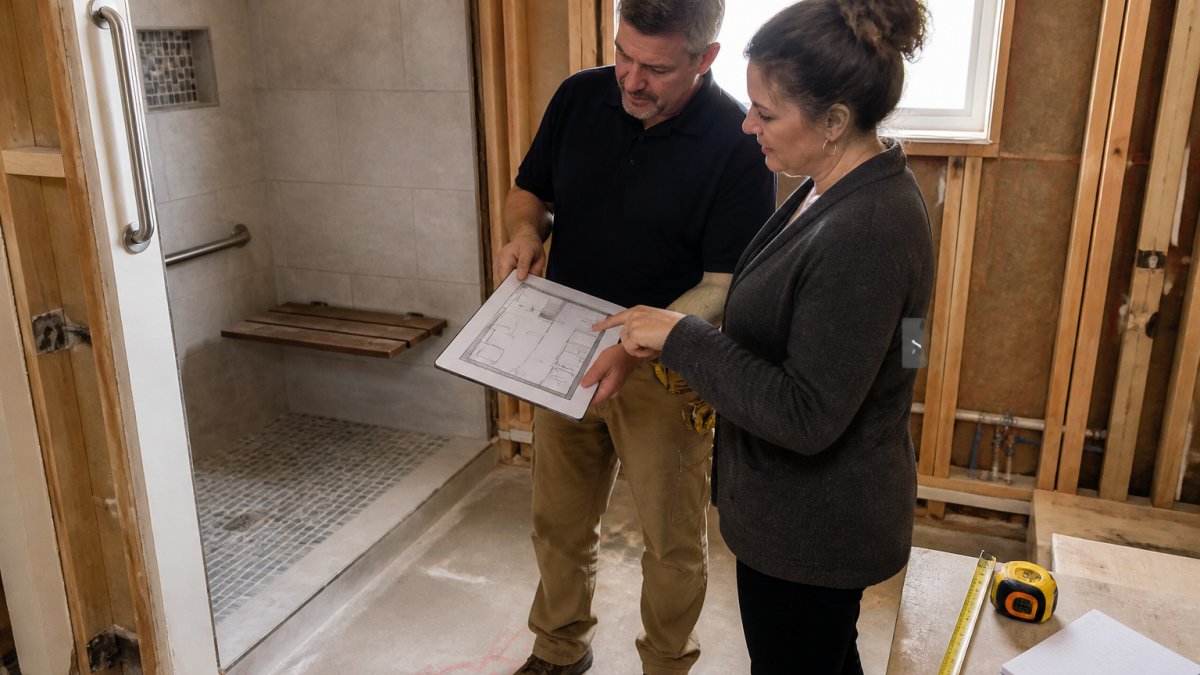
Measure First: Door Width, Turning Space, and Clear Floor Space
Grab a tape measure and write down four numbers: doorway width, clear floor space, turning space, and shower entry width. These four measurements decide whether a walker or wheelchair can actually get in and turn around.
A common mistake is measuring the door slab instead of the clear opening. Measure between the frame stops, not the door itself. For a fuller breakdown of how accessibility standards compare to standard residential construction, see our guide on ADA bathroom requirements vs residential standards.
Also check these spots:
- Toilet transfer space on at least one side
- Knee clearance under the sink if a wheelchair user will roll up
- Reachable height for towel bars, hooks, and the toilet paper holder
- Shower controls within arm's reach from a seated position
Build a Scope and Budget You Can Take to a Lender
A lender or grant reviewer may ask for a written scope. Ask your contractor what documentation is available.
For a realistic starting point on local figures, our aging in place renovation cost guide for Old Bridge breaks down what different modifications typically involve. Pair that with the aging in place home modification checklist so nothing gets left out of the scope.
Watch out: applying for financing before the scope is finalized can leave you without a clear project plan.
Home Accessibility Grants in New Jersey Worth Checking
Grant programs for accessibility work may be available, and eligibility rules vary.
Start with these sources:
- State and county programs. New Jersey and its counties periodically offer homeowner assistance for accessibility modifications. Rules and funding cycles change, so confirm current details directly with the administering agency.
- Local nonprofit and disability organizations. Regional centers for independent living often know which programs are open right now.
- Municipal senior services offices. Your town hall can point you to programs aimed at older residents.
Check each program's terms and coordinate applications with the relevant agencies and lenders.
VA Grants for Home Modifications: What Veterans Can Claim
Veterans have a funding path most homeowners do not: federal grant programs administered by the U.S. Department of Veterans Affairs that help pay for home modifications tied to a service-connected disability. Two programs do most of the work, and they serve different purposes.
- The Specially Adapted Housing (SAH) grant is for veterans with certain severe, permanent service-connected disabilities, for example, the loss or loss of use of both lower extremities, or blindness in both eyes along with loss of use of a lower extremity. It is designed for major structural changes: widening doorways, roll-in showers, accessible kitchens, and ramps.
- The Special Housing Adaptation (SHA) grant is for veterans with specific service-connected disabilities of the eyes or extremities. It is generally aimed at adaptations that make an existing home usable, such as bathroom and entryway modifications.
Both programs have statutory dollar limits that Congress adjusts periodically, and both cap how many times a veteran may use the benefit. Because those figures change, confirm the current limits and eligibility language directly on the VA's housing grants page before you build a budget around them.
How the VA Application Actually Works
The process and requirements depend on the program:
- Get a clinical recommendation. Check the VA's current application guidance for any documentation requirements.
- Apply through the VA. Check the VA's current application guidance for where to apply and what documentation is required.
- Get VA approval before work begins. This is the step that trips people up. Modifications started before approval are generally not reimbursable.
- Use an approved contractor. Check the VA's current guidance for contractor and inspection requirements.
What This Means for Your Timeline
Check the VA's current guidance for application timelines. If you are pursuing other financing or assistance, confirm how the applications may affect one another with the relevant agencies and lenders.
As a veteran-owned contractor based in Old Bridge, we serve Central New Jersey families.
Home Equity Financing for Renovations: Loans, HELOCs, and Cash-Out Refinancing
Home equity financing for renovations comes in three main forms, and each fits a different situation. Here is how they compare:
| Option | How It Works | Best For | Watch Out For |
|---|---|---|---|
| Home equity loan | Fixed lump sum, fixed rate | One large project with a known scope | You start paying interest right away |
| HELOC | Revolving line you draw from | Phased work over months | Variable rates can rise |
| Cash-out refinance | Replace your mortgage with a larger one | Borrowing a lot at a low rate | Closing costs and a new mortgage term |
A home equity loan suits a single bathroom remodel with a fixed scope. Before choosing a lender, you can review our flexible payment options. A HELOC gives flexibility if you plan to tackle the bathroom now and the entryway later. A cash-out refinance only makes sense when the numbers beat the alternatives.
How to Finance Home Accessibility Renovations When Equity Is Tight
Equity is not the only path. Consider which funding sources may fit the size and urgency of the job.
Government-Backed Renovation Loans
FHA 203(k) loans let you fold renovation costs into a government-backed mortgage. The limited version is designed for straightforward, non-structural work under a set threshold, while the standard version covers larger projects and requires a HUD consultant to oversee the scope. For accessibility work, the limited 203(k) often fits grab bars, curbless shower conversions, and doorway widening, while a structural bathroom rebuild may push you into the standard program. Expect more paperwork and a longer closing than a conventional loan.
Credit Union and Medical-Purpose Loans
Loan terms and costs vary by lender. Review the terms and fees for any financing option you consider.
Deferred Payment and Property-Tax Programs
Check with local agencies to learn whether any assistance programs are available and what their current terms and eligibility requirements are.
Family Lending Arrangements
If considering a family loan, discuss its terms and documentation with a qualified professional.
Phased Builds: The Underused Option
Phasing spreads work across multiple stages. Discuss the sequence with your contractor before work begins, especially if later changes could affect earlier work.
Whichever path you choose, confirm current program rules directly with the administering agency.
Retrofit or Full Remodel? Match the Loan to the Project
The right funding depends on the size of the job. A retrofit adjusts what is already there. A full remodel rebuilds the room around new accessibility goals.
Choose a retrofit when:
- The layout already works and only fixtures need changing
- The user's needs are stable
- Budget or timeline is tight
Choose a full remodel when:
- The doorway or room is too narrow to fix with fixtures alone
- You need a curbless shower with proper slope and drainage
- You want to combine accessibility with a kitchen or bath update
Consider the project scope and the terms of any financing option before deciding how to fund the work.
Request a Free Consultation and Scope Your Accessible Bathroom
The plan comes first, the funding second, and the build last.
If you are ready to move from planning to hiring, our aging-in-place remodeling services in Central New Jersey are where most families start. We are a veteran-owned general contractor based in Old Bridge, and we handle bathroom renovations, kitchen updates, basement remodeling, and decks across Middlesex, Monmouth, and Union Counties.
When you call, we can discuss the project and your needs. We use real wood, build to your specifications, and manage the project from the first consultation to final installation.
Get started with Pioneer Woodwerx and discuss your accessibility remodeling project.
Frequently Asked Questions
Can Medicare help pay for home accessibility renovations?
Check your Medicare and plan documents for current coverage information. Funding options and terms vary, so review them before deciding how to pay for home accessibility renovations.
Are there grants for accessibility modifications in New Jersey?
Check with relevant agencies and organizations to learn whether assistance is available and to confirm current eligibility and application requirements.
Can a home equity loan or line of credit fund accessibility renovations?
Loan terms and lender requirements vary. Review the terms and risks of any financing option with the lender before deciding.
How can veterans get help paying for home accessibility modifications?
Check the VA's current guidance for available programs, eligibility, application steps, and any documentation or contractor requirements.