 how-to
How to Vet Home Renovation Contractors
Table of Contents
- Why Vetting Home Renovation Contractors Matters
- Verify Licensing and Insurance Before You Hire
- Request References and Review Past Project Portfolios
- Questions to Ask Remodeling Contractors During Your Interview
- Get Multiple Written Estimates and Compare Scope Details
- Red Flags When Hiring a General Contractor
- Protect Your Investment with a Written Contract and Payment Schedule
- Check Online Reviews and Verify Contractor Reputation
- Frequently Asked Questions
Last Updated: September 27, 2026
Why Vetting Home Renovation Contractors Matters
Hiring the wrong contractor can cost you thousands and months of delays. The right one delivers on time and on budget. This guide from PIONEER WOODWERX breaks down exactly how to vet home renovation contractors so you hire someone you can trust. Most homeowners skip vetting, picking a name from Google or a neighbor's recommendation, then signing a contract. Vetting takes time, but it saves you from costly mistakes later.
Here's what you need to check before you hire anyone to work on your home.
Verify Licensing and Insurance Before You Hire
Before you meet with a contractor, confirm they're licensed and insured. A license proves they've met state and local requirements. Insurance protects you if someone gets hurt on your property or if work causes damage. Without both, you're exposed to serious risk.
How to Look Up Contractor Licenses in New Jersey
In New Jersey, home improvement contractors must be licensed by the New Jersey Division of Consumer Affairs. This is where you verify that a contractor is legitimate.
Here's how to check:
- Visit the New Jersey Division of Consumer Affairs website
- Search for the contractor's name and license number
- Confirm the license is active and current
- Check for any complaints or disciplinary actions against them
Write down the license number before you call them. Ask them to confirm it matches their records. If they hesitate or the numbers don't match, move on.
Confirm General Liability and Workers Compensation Coverage
General liability insurance covers damage to your home or property. Workers compensation covers medical costs if a worker gets injured on your job.
Ask for a current certificate of general liability insurance and workers compensation insurance, including the carrier name, policy limits, and expiration dates. Call the insurance company directly to verify the policy is active, don't accept a copy alone.
If a contractor says they're "self-insured" or don't carry insurance, don't hire them. If someone gets hurt on your property and they're uninsured, you could be liable for their medical bills and lost wages.
Request References and Review Past Project Portfolios
Ask for at least three recent references from similar projects completed in the last two years. A kitchen reference matters more than a deck reference if you're doing a kitchen.
Ask references: Did work stay on schedule? Were there unexpected costs? How did the contractor handle problems? Would you hire them again? Listen for hesitation or mentions of missed deadlines, both are red flags.
Ask to see a portfolio of completed work, many contractors have photos on their website or social media. For kitchen and bathroom renovations, ask specifically about tile work, plumbing integration, and finishing details. These areas reveal whether a contractor sweats the details or cuts corners.
Questions to Ask Remodeling Contractors During Your Interview
Schedule a site visit and ask: How long have you been doing this type of work? Who will be on my project day-to-day? What's your process for change orders? How often will you communicate? Do you pull permits? What warranty do you offer? Can you provide a detailed written estimate? A professional contractor gives clear, specific answers. Vagueness or defensiveness about timelines or costs is a red flag.
Ask about their experience with aging-in-place modifications if relevant, a contractor experienced in safety features and accessibility standards will understand your needs better. Also ask how they manage subcontractors and vet their subs.
Establish Communication Protocols Before Work Begins
Before signing, discuss and document communication protocols. Agree on update frequency (daily, weekly, etc.), designate one main point of contact, require written change orders signed by both parties, establish an escalation process for concerns, and clarify how unexpected issues will be handled and documented. Also agree on site cleanliness and safety expectations.
Document Everything in the Contract
Don't rely on verbal agreements. Add a communication and project management section to your written contract that includes:
- Scheduled meeting times and communication methods
- Response time expectations (e.g., contractor will respond to homeowner questions within 24 hours)
- How change orders will be requested, documented, and approved
- Daily or weekly reporting requirements
- Site inspection and sign-off procedures for each phase
This prevents the common scenario where a homeowner discovers work they didn't approve or materials that don't match expectations halfway through the project. Clear communication protocols catch problems early, when they're cheaper and easier to fix.
Get Multiple Written Estimates and Compare Scope Details
Never hire based on a single estimate. Get at least three. Comparing estimates reveals whether a contractor is overpriced or if their scope is incomplete.
A written estimate should include:
- A detailed breakdown of all work to be done
- Materials to be used (brand, type, quantity)
- Labor costs
- Timeline and start/end dates
- Payment schedule
- Any exclusions or assumptions
If one estimate is significantly lower than the others, ask why. Are they using cheaper materials? Cutting corners on labor? A lowball estimate often means trouble later.
Compare the scope carefully. If Estimate A includes tile removal and Estimate B doesn't, the numbers won't be apples-to-apples. Ask each contractor to clarify what's included and what isn't.
Watch for vague language like "labor as needed" or "materials TBD." You want specifics. If the estimate is unclear, ask for clarification in writing before you sign anything.
Red Flags When Hiring a General Contractor
Some warning signs tell you to walk away immediately.
A contractor who wants a large upfront deposit before work begins is a red flag. Many states limit how much a contractor can ask for in advance. Ask about their payment schedule and get it in writing.
A contractor who won't provide references or insurance information is hiding something. Don't hire them.
A contractor who pressures you to decide quickly or who seems annoyed by your questions is not someone you want working in your home for weeks or months. Trust your gut. If something feels off, it probably is.
A contractor who doesn't pull permits when required is cutting corners. Building permits exist to ensure work meets code and protects your home's safety and resale value. Ask whether permits are needed for your project and confirm the contractor will pull them.
A contractor who won't put the project scope and timeline in writing is setting you up for disputes. Everything should be documented.
Protect Your Investment with a Written Contract and Payment Schedule
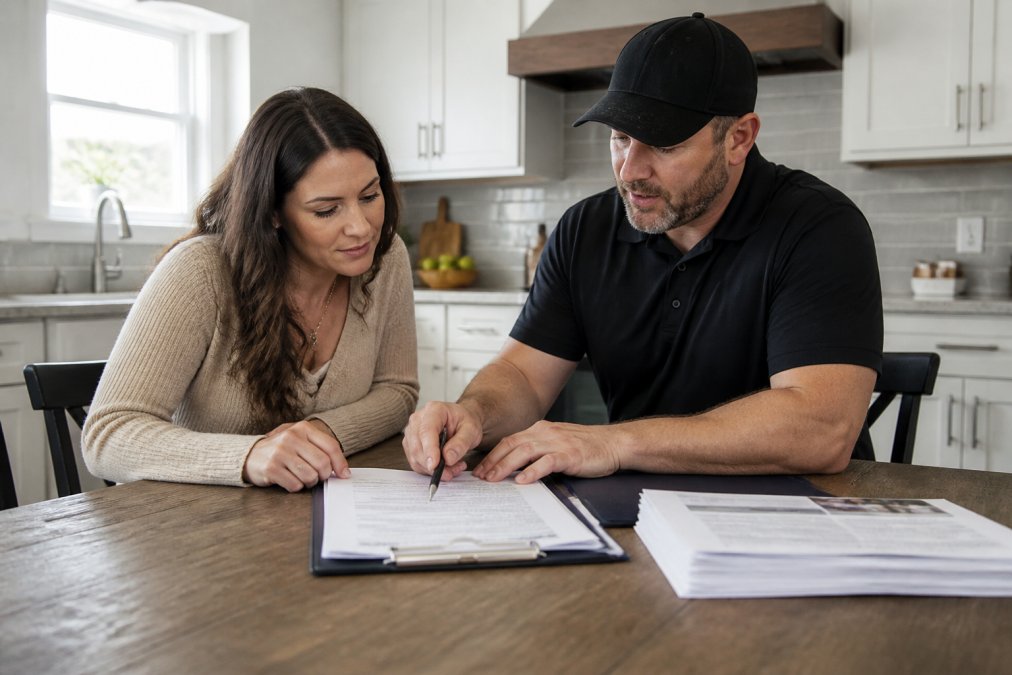
A written contract protects both you and the contractor. It spells out exactly what will happen and what happens if things go wrong.
Your contract should include:
- Project scope and materials
- Start and end dates
- Total cost and payment schedule
- Change order process
- Warranty on workmanship
- Insurance and licensing information
- Dispute resolution process
- A lien waiver clause
Understanding Lien Waivers and Mechanics Liens
One of the most overlooked protections in home renovation is the lien waiver. Here's why it matters: if your contractor doesn't pay their subcontractors or material suppliers, those subs and suppliers can file a mechanics lien against your home, even if you paid the contractor in full. A mechanics lien clouds your property title and can prevent you from selling or refinancing until it's resolved.
In New Jersey, subcontractors and suppliers have the legal right to file a mechanics lien if they aren't paid, regardless of whether you hired them directly.
Here's the process:
- Before the first payment, ask the contractor to provide a preliminary lien waiver confirming no work has been done yet (this is standard).
- Before each progress payment, request a conditional lien waiver from the contractor covering all work and materials paid for up to that point.
- Before final payment, require a final unconditional lien waiver signed by the contractor, and request waivers from all major subcontractors (plumber, electrician, HVAC, tile installer, etc.).
- Do not release final payment until you have received all lien waivers.
Payment Schedule and Milestone Tie-Ins
Never pay the full amount upfront. A typical payment schedule is:
- A typical payment schedule ties payments to specific, verifiable milestones.
Check Online Reviews and Verify Contractor Reputation
Online reviews give you insight into how a contractor treats customers. Check Google, Yelp, and the Better Business Bureau. Look for patterns in feedback, not just a single bad review.
Frequently Asked Questions
How do I verify a contractor's license in New Jersey?
Contact the New Jersey Division of Consumer Affairs or visit their online contractor license lookup portal. You'll need the contractor's name or license number. Verify that the license is current and matches the contractor's business name. Ask the contractor directly for their license number during your first conversation, and cross-check it against state records before signing any contract.
What are the biggest red flags when hiring a general contractor?
Watch for contractors who demand large upfront deposits, refuse to provide written estimates or contracts, lack proof of insurance, have no verifiable references, or pressure you to decide immediately. Contractors who avoid discussing timelines, change orders, or payment schedules are also warning signs. Trust your instincts if communication feels evasive or unprofessional.
Should I ask for references from a contractor's past kitchen or deck projects?
Yes, absolutely. Request at least three references from recent projects similar in scope to yours. Contact these homeowners directly and ask about the contractor's adherence to timeline and budget, communication style, and overall quality. Visit completed projects in person if possible to assess workmanship. References from similar project types are more valuable than generic testimonials.
What should be included in a professional home renovation contract?
A solid contract includes a detailed project scope, specific materials and specifications, start and completion dates, payment schedule with milestone payments tied to work completion, change order procedures, warranty terms, and proof of insurance and licensing. It should also address how disputes will be handled and include a lien waiver clause to protect you from subcontractor claims. Have an attorney review it if the project is substantial.
Vetting a contractor takes effort, but it's the best investment you can make before hiring. A thorough process now prevents costly problems later. When you're ready to move forward with a kitchen renovation, bathroom remodel, basement project, or aging-in-place modifications, PIONEER WOODWERX brings veteran-owned expertise, proven craftsmanship, and transparent communication from start to finish. Request a free consultation to discuss your project and see how we can help transform your home.