 listicle
7 Best Grab Bars for Elderly Bathroom Safety in 2026
Table of Contents
- Quick Comparison: 7 Best Grab Bars for Elderly Bathroom Safety
- How We Evaluated These Grab Bars
- 1. Moen Home Care Stainless Concealed Screw Grab Bar
- 2. Vive Metal Grab Bar
- 3. Delta Faucet Focus Grab Bar
- 4. Stander Wonder Pole Lite
- 5. HealthCraft Advantage Flip-Up Grab Bar
- 6. TAILI Suction Grab Bar
- 7. LEVERLOC Suction Shower Handle
- Professional Grab Bar Installation Services Old Bridge NJ
- Frequently Asked Questions
Last Updated: September 30, 2026

Quick Comparison: 7 Best Grab Bars for Elderly Bathroom Safety
The best grab bar for elderly bathroom safety matches the user's weight, the mounting surface, and the level of daily assistance needed. This guide from PIONEER WOODWERX compares seven options, from permanent wall-mounted bars to portable suction handles, for families in Old Bridge and across Central Jersey.
Here is how the seven picks stack up at a glance.
| Grab Bar | Mount Type | Weight Capacity | Best For | Approx. Price |
|---|---|---|---|---|
| Moen Home Care Stainless | Wall-mounted, concealed screw | 500 lbs | Permanent, ADA-compliant support | $45 |
| Vive Metal Grab Bar | Wall-mounted | ADA-rated | Budget-conscious households | $25 |
| Delta Faucet Focus | Wall-mounted, concealed hardware | ADA-rated | Matching modern fixtures | $60 |
| Stander Wonder Pole Lite | Tension-mounted pole | Vertical stability | Renters, no drilling | $150 |
| HealthCraft Advantage Flip-Up | Wall-mounted, folding | 350 lbs | Tight bathrooms | $200 |
| TAILI Suction Grab Bar | Suction cup | Balance only | Travel and temporary use | $30 |
| LEVERLOC Suction Shower Handle | Suction cup | Balance only | Smooth tile showers | $25 |
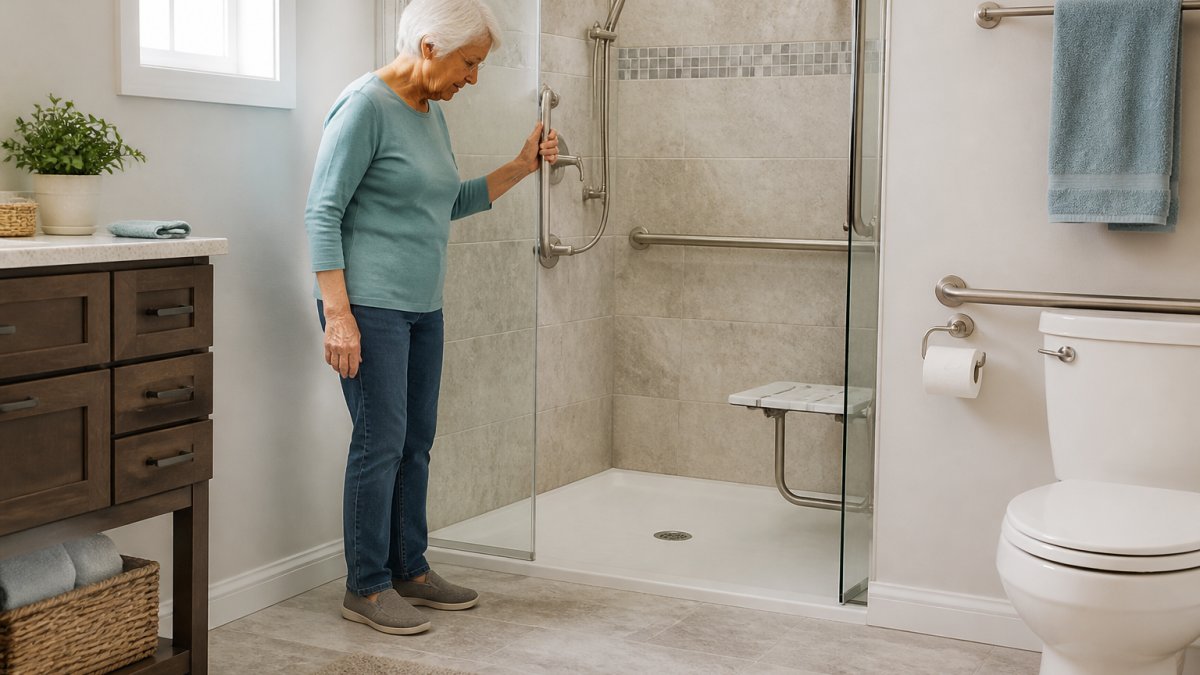
Grab bars are wall-mounted or suction-mounted safety rails that give a person something stable to hold while standing, sitting, or stepping in a wet bathroom. A suction handle and a stud-mounted bar serve completely different jobs, and mixing them up is how falls happen.
How We Evaluated These Grab Bars
We judged each bar on five factors: weight capacity, mounting method, ADA compliance, material durability, and fit with a real bathroom layout. The difference between a bar that holds and one that fails usually comes down to the details below.
The ADA Standards for Accessible Design set the baseline. Under the 2010 ADA Standards, a grab bar must withstand a 250-pound concentrated load applied at any point and in any direction, and that load must not cause the bar to become loose or its mounting to fail. That is a minimum, not a target. Many residential bars are rated well above it, which is why we separated the load-bearing bars from the balance-only handles in the table above.
Mounting method and what is behind the wall. A grab bar is only as strong as its anchor. A bar lag-bolted into a stud or solid blocking can carry full body weight; one anchored into drywall with plastic expansion anchors cannot, no matter what the box claims. Concealed-screw mounting hides the hardware but still requires the same solid backing, and when studs are not where you need them, blocking must be added before the wall is closed up.
Weight capacity and load direction. Capacity ratings assume correct installation; a 500-pound rating means nothing if the bar is screwed into hollow drywall. Load direction matters too: a horizontal bar beside a toilet is pulled or pushed sideways during a transfer, while a vertical bar is gripped to steady a person standing up.
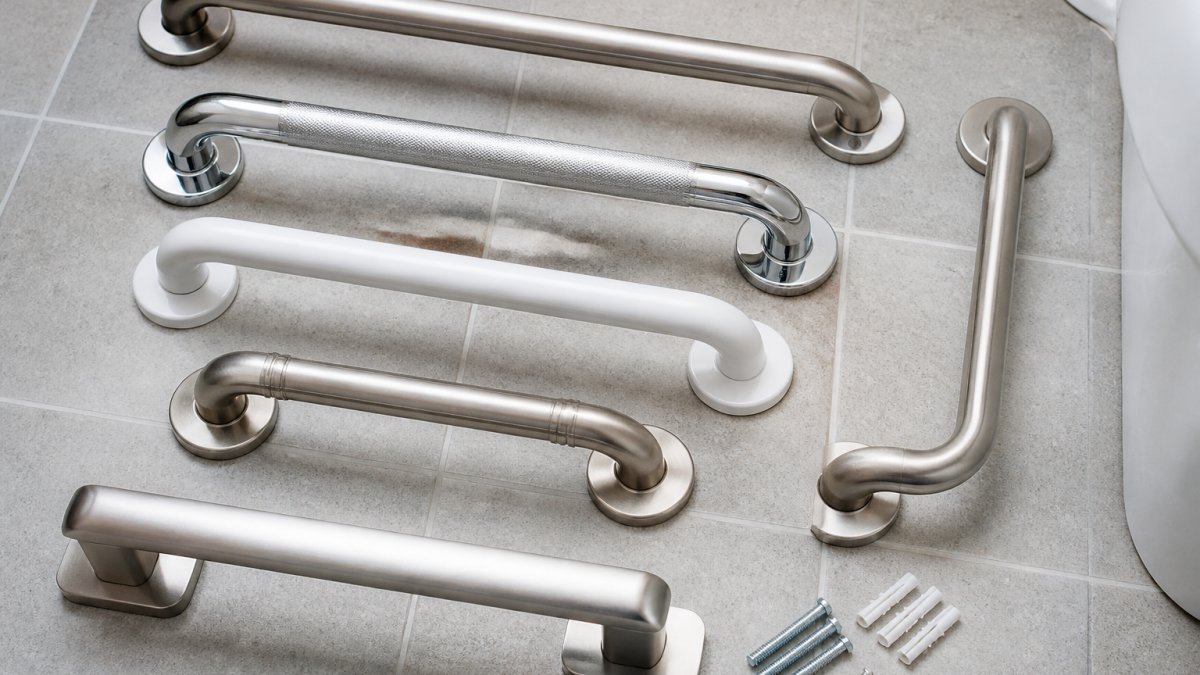
Grip surface. Textured or knurled grips give wet hands more traction than smooth polished bars, but texture traps soap residue and needs more frequent cleaning. Smooth bars wipe down easily but can be slippery when wet.
Material and corrosion resistance. Stainless steel and powder-coated or anodized finishes resist shower moisture far better than bare or thinly plated metal. A bar that rusts at the mounting flange is quietly weakening, so in a damp bathroom corrosion resistance is a safety feature, not a cosmetic one.
Fit with the real layout. A bar of the wrong length or height does not get used. Standard practice places horizontal bars roughly 33 to 36 inches above the floor, but the right height depends on the user's reach and mobility. A folding bar can solve a tight toilet or shower alcove where a fixed bar would block movement.
Aging-in-place remodeling is a specialty at PIONEER WOODWERX, so we evaluated these the way we would for a client's parent: durability first, appearance second, price last. When weighing a permanent bar against a portable one, the deciding question is whether the user needs to bear weight or only keep their balance.
1. Moen Home Care Stainless Concealed Screw Grab Bar
Our top pick for permanent bathroom safety. The Moen Home Care bar is ADA-compliant stainless steel with concealed screw mounting, so the hardware disappears behind a clean finish, and it supports up to 500 pounds, well above the ADA minimum. Corrosion-resistant construction holds up in a steamy shower, but the bar must be anchored into wall studs, which means professional installation or solid blocking behind the tile.
Pros: High weight capacity; professional, unobtrusive look. Cons: Requires stud mounting; not a DIY-friendly first project.
2. Vive Metal Grab Bar
If budget drives the decision, the Vive bar delivers reliable support at the lowest price on this list. It includes mounting hardware, comes in textured grip options, and meets ADA requirements. Finish options are limited compared to premium brands, so it suits a utility bathroom better than a design-forward one, but few bars match it on sturdy, simple function.
Pros: Excellent value; sturdy, straightforward design. Cons: Fewer finish choices.
3. Delta Faucet Focus Grab Bar
Delta's Focus bar is the pick for homeowners who care how the bathroom looks. It comes in chrome and brushed nickel, uses concealed mounting hardware, and matches modern Delta fixtures. You pay more for that finish quality, but the real selling point is aesthetic integration: the bar reads as part of the design, not a medical add-on.
Pros: Matches modern fixtures; durable finish. Cons: Higher price than basic utility bars.
4. Stander Wonder Pole Lite
Renters and anyone avoiding permanent wall modifications should look here. The Wonder Pole Lite is a tension-mounted floor-to-ceiling pole that provides vertical support without drilling a single hole. It adjusts to different ceiling heights and has a slim profile for tight spaces, but it needs solid floor and ceiling contact and offers vertical stability rather than a horizontal pull point.
Pros: No drilling; provides vertical stability. Cons: Requires ceiling and floor clearance.
5. HealthCraft Advantage Flip-Up Grab Bar
Small bathrooms are the enemy of fixed grab bars. The HealthCraft Advantage folds down when needed and tucks away when not, with heavy-duty steel construction and a 350-pound capacity.
It is the most expensive bar here, but for a narrow toilet or shower area, the space savings justify it.
6. TAILI Suction Grab Bar
A suction grab bar installs in seconds with no tools, which makes the TAILI a good travel companion or short-term solution, and a visual indicator shows when the vacuum seal is secure. The honest limitation: this bar is not built to support full body weight. It is for balance, not for pulling yourself up, so use it as a supplement, never as the primary safety rail.
7. LEVERLOC Suction Shower Handle
The LEVERLOC handle is a heavy-duty suction option for smooth, non-porous surfaces like glazed tile. Locking levers create a strong seal, and the ergonomic shape is easy to grip with wet hands. It only works on smooth, clean surfaces, though: grout lines, textured tile, or matte fiberglass will defeat the suction, so check the surface before buying.
Professional Grab Bar Installation Services Old Bridge NJ
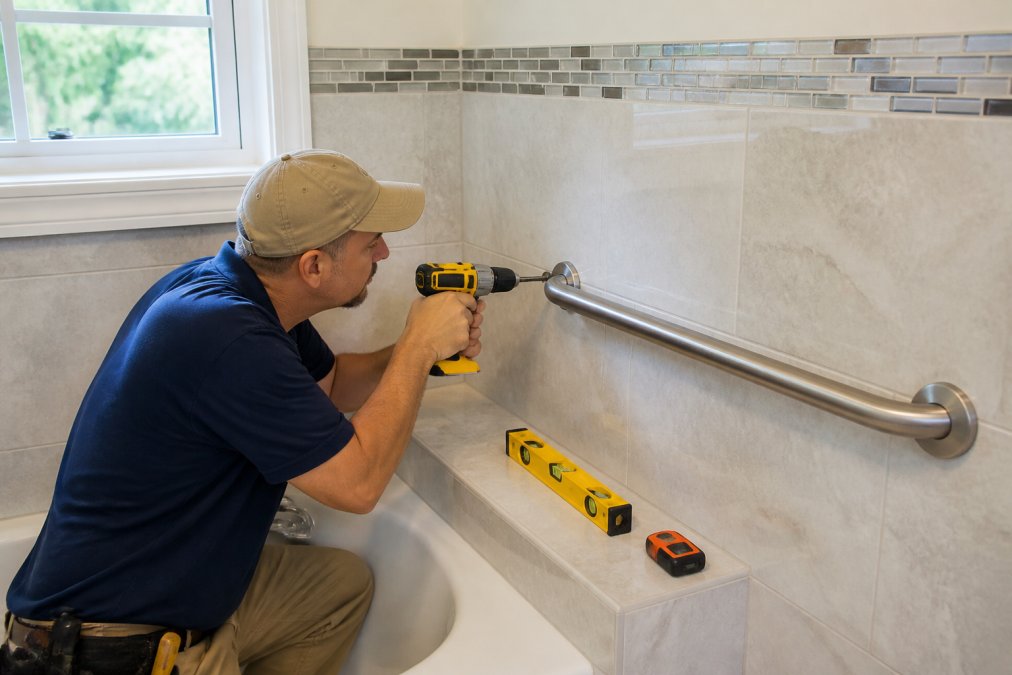
Keeping the bar safe over time. A grab bar is not a set-and-forget fixture. Once a month, grip the bar and push and pull firmly in each direction to check for wobble at the mounting points, and tighten or replace fasteners at the first sign of looseness. Wipe the bar with mild soap and water and dry it, since soap scum and hard-water film build up on textured grips and make them slick, and avoid abrasive cleaners and bleach-heavy sprays on plated or coated finishes. If you see rust, pitting, or a cracked mounting flange, stop using the bar until it is re-secured or replaced. A bar that has held for years can still loosen as a house settles, so the monthly check is the cheapest safety habit there is.
Frequently Asked Questions
What are the safest grab bars for seniors?
Wall-mounted stainless steel bars anchored into studs are the safest option. Products like the Moen Home Care bar support up to 500 pounds and meet ADA requirements. Suction cup models such as the TAILI bar are meant for balance only, not full body weight. For any permanent fixture, stud mounting with proper hardware is what keeps the bar secure under a real load.
Are suction cup grab bars safe for elderly bathroom use?
Suction cup bars work only as balance aids on smooth, non-porous tile. They are not rated to hold full body weight, and they can release if the surface is dirty or the seal loosens. Use them for travel or temporary support, and install a wall-mounted bar for daily shower or toilet use.
What is the difference between ADA-compliant grab bars and standard bars?
ADA-compliant bars meet specific federal standards for diameter, length, spacing and load capacity, typically 250 pounds or more. Standard decorative bars may look similar but are not tested to those requirements. If safety and code compliance matter, look for the ADA label and confirm the bar is rated for the weight it will support.
Do I need a professional contractor to install bathroom grab bars in New Jersey?
Not always, but professional installation is worth it when you need secure stud mounting, blocking behind tile, or multiple bars placed at correct heights. A contractor can also assess whether your walls can carry the load. For homeowners in Old Bridge and nearby Central Jersey towns, a local remodeling contractor can handle placement, anchoring and finish matching in one visit.
How do I choose the right length for a bathroom grab bar?
Measure the space where the bar will go and match it to the task. Shower bars are often 24 to 36 inches, toilet bars 24 to 42 inches. Longer bars give more hand positions, but they must land on studs or blocking. If studs are spaced awkwardly, a contractor can add blocking so a longer bar stays secure.