 listicle
5 Low-Maintenance Deck Materials for Beginners
Table of Contents
- Why Low-Maintenance Deck Materials Matter for Beginners
- Quick Comparison: 5 Low-Maintenance Deck Materials
- 1. Composite Decking: The Balanced Choice
- 2. PVC Decking: Maximum Weather Resistance
- 3. Aluminum Decking: Durability Without Rot
- 4. Pressure-Treated Wood: Traditional with Upkeep
- 5. Hardwood Decking: Premium Natural Option
- Composite Decking vs. Wood: Which Is Right for You?
- Frequently Asked Questions
Last Updated: October 19, 2026
Why Low-Maintenance Deck Materials Matter for Beginners
Choosing the right deck material shapes everything that follows: how much time you'll spend cleaning, how often you'll treat the surface, and whether your investment holds up through New Jersey's humid summers and freeze-thaw winters.
The difference between a material you'll enjoy and one you'll regret comes down to understanding what "low-maintenance" means for each option.
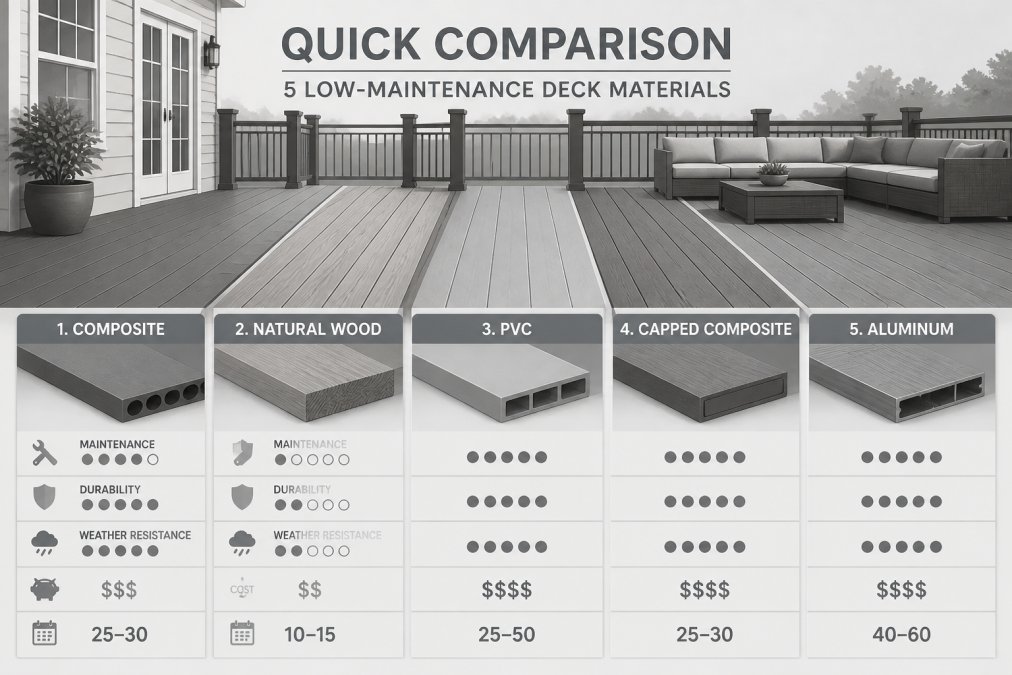
Quick Comparison: 5 Low-Maintenance Deck Materials
| Material | Weather Resistance | Routine Cleaning | Best For | Key Trade-Off |
|---|---|---|---|---|
| Composite Decking | Excellent | Mild soap and water | Most beginners | Higher upfront cost |
| PVC Decking | Excellent | Mild soap and water | Poolside areas | Limited color range |
| Aluminum Decking | Excellent | Occasional wiping | High-traffic areas | Industrial appearance |
| Pressure-Treated Wood | Good | Annual sealing required | Budget-conscious | Ongoing maintenance |
| Hardwood Decking | Good | Annual sealing required | Premium aesthetic | Most demanding upkeep |
Feature Comparison at a Glance
Low-maintenance deck materials fall into two categories: manufactured (composite, PVC, aluminum) and natural wood treated to resist the elements. Manufactured materials need minimal upkeep because they're engineered to resist moisture, UV damage, and biological growth. Natural wood, even pressure-treated or premium hardwood, needs periodic sealing.
The sweet spot for most beginners is composite decking: it combines the wood appearance homeowners want with durability that doesn't demand constant attention. But that's not universal. Near a pool, PVC's waterproof nature wins. If you prioritize a traditional wood look and don't mind annual maintenance, hardwood delivers premium aesthetics. Knowing your priorities, appearance, maintenance tolerance, climate resilience, narrows the field quickly.
1. Composite Decking: The Balanced Choice
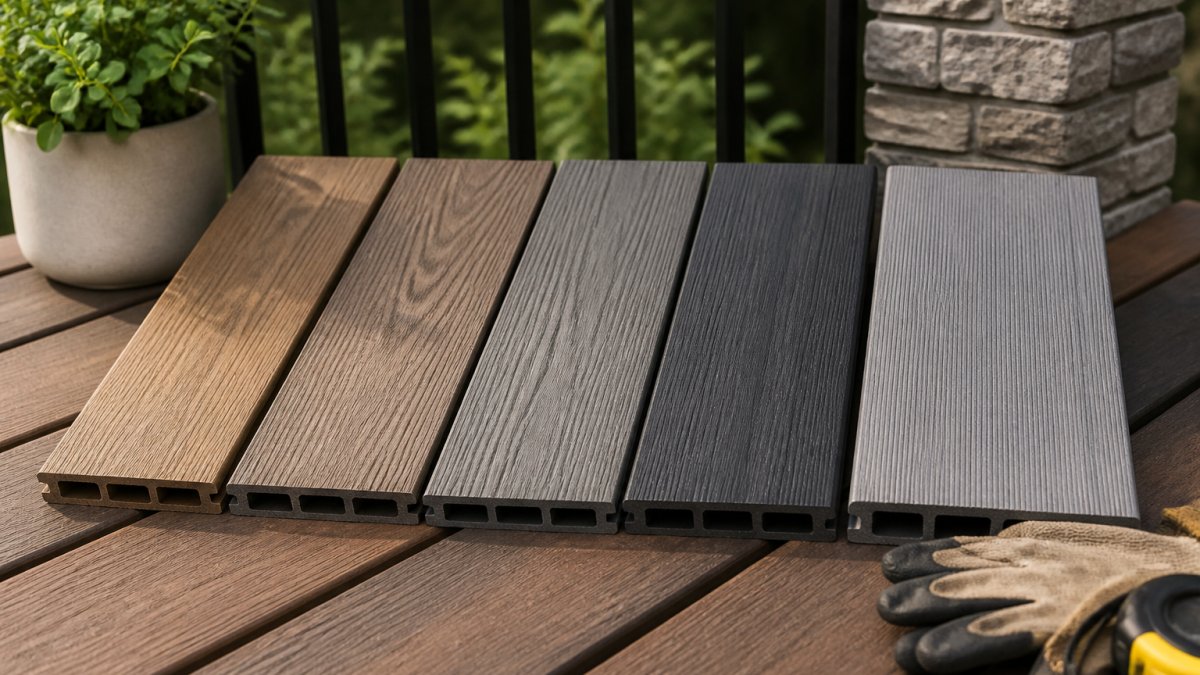
Composite decking blends wood fibers with recycled plastic to create boards that look like wood but perform like engineered material. The result resists fading, won't splinter, and handles moisture without rotting. Brands like Trex, TimberTech, Fiberon, Envision, and Deckorators dominate this category because the formula solves the core problems beginners face.
What Composite Decking Is
Composite decking is manufactured from wood fibers (often recycled) and plastic polymers, sometimes with mineral-based additives. The wood fibers give it authentic grain appearance and warmth; the plastic binder prevents water absorption and resists rot. Capped products add a protective shell around the core for extra stain and fade resistance.
Composition determines how the material ages. Uncapped composite can absorb surface stains over time; capped composite resists staining better but costs more upfront. In Old Bridge's humid climate, the capped option often justifies the investment.
Pros and Cons for Beginners
What works: Composite decking requires only mild soap and water for routine cleaning, no scrubbing mold or mildew the way you would with untreated wood. It won't splinter, so barefoot traffic is safe, and it resists UV fading better than pressure-treated wood.
What doesn't: Composite decking costs more upfront than pressure-treated wood. Some composites feel warm underfoot in direct summer sun, worth noting if you have young children.
For most beginners, composite decking delivers the best return on effort: a deck that looks good, requires minimal upkeep, and handles the New Jersey climate.
2. PVC Decking: Maximum Weather Resistance
PVC (polyvinyl chloride) decking is pure plastic, with no wood fibers at all. It's the most waterproof option available, making it the clear choice if your deck sits near a pool, hot tub, or low-lying area prone to standing water. PVC won't absorb moisture, rot, or support mold growth even in perpetually damp conditions.
Why PVC Stands Out
PVC decking is engineered for environments where wood-based materials fail. It's lightweight, durable, and essentially immune to water damage, performing where composite and wood would eventually degrade. It also resists salt spray better than other options, relevant near coastal areas.
Installation is similar to composite and straightforward for experienced deck contractors. The boards are stable across temperature swings, avoiding the expansion and contraction issues that plague some wood decks in New Jersey's freeze-thaw cycles.
Strengths and Limitations
Strengths: PVC is waterproof and mold-resistant, requiring only occasional rinsing with mild soap and water. It's lightweight, reducing installation labor, and won't splinter or rot. For poolside decks or chronic moisture problems, PVC is the only sensible low-maintenance choice.
Limitations: PVC has a narrower color palette than composite, mostly white, gray, or tan, without the warm brown tones or varied wood-grain patterns composite offers. It can feel plasticky underfoot, and some find the aesthetic too industrial for residential settings.
For a poolside deck in Old Bridge, PVC eliminates the maintenance headaches that plague wood. For a primary living deck where aesthetics matter equally to durability, composite is often the better choice.
3. Aluminum Decking: Durability Without Rot
Aluminum decking is the newest category in the low-maintenance space. It's lightweight, won't rot or splinter, and resists corrosion even in harsh conditions, ideal if you want a deck that genuinely outlasts your home with almost no upkeep. The trade-off is aesthetic: aluminum looks modern and industrial, not traditional wood.
How Aluminum Performs
Aluminum boards are manufactured from recycled aluminum, sometimes paired with composite or wood-grain veneers to improve appearance. The core advantage is durability: aluminum won't rot, absorb moisture, or support biological growth. An aluminum deck can last 50+ years with only occasional cleaning.
It's also lightweight, making installation faster and easier than wood or composite, and it won't get as hot underfoot in direct summer sun, a subtle advantage in Old Bridge's climate.
Best For and Trade-Offs
Best for: High-traffic applications, areas with extreme moisture, homeowners who prioritize durability over aesthetics, and anyone staying in their home 20+ years who never wants to think about deck maintenance again.
Trade-offs: Aluminum has a modern, industrial look that doesn't suit every home's architecture, and it's the most expensive low-maintenance option upfront. Footsteps can sound hollow on some aluminum decks. Installation requires contractors experienced with the material.
Aluminum is the right choice if you're willing to accept a contemporary aesthetic in exchange for genuine permanence and zero maintenance.
4. Pressure-Treated Wood: Traditional with Upkeep
Pressure-treated wood is the entry point for many beginners because it costs less upfront than composite, PVC, or aluminum. The wood is chemically treated to resist rot and insect damage, giving it a 15-20 year lifespan with proper care. It's a legitimate low-maintenance option if you commit to annual sealing.
What You Get with Treated Wood
Pressure-treated lumber is infused with preservatives that prevent rot and termite damage; modern treatments use copper-based compounds safer than older arsenic-based formulations. The wood keeps a traditional appearance, weathers to a pleasant gray if left unsealed, or can be stained to match your home's exterior.
It's widely available, easy to source, and familiar to most contractors, with straightforward installation. For homeowners who appreciate the authentic wood aesthetic and don't mind seasonal maintenance, pressure-treated wood is a sensible choice.
Maintenance Reality
Here's where pressure-treated wood diverges from truly low-maintenance options: it requires annual sealing or staining. Without regular treatment, the wood grays, absorbs moisture, and eventually develops soft spots.
In Old Bridge's humid climate, annual maintenance isn't optional. You'll inspect the deck each spring, clean off mold or mildew, and apply a fresh coat of sealer or stain.
Upkeep schedule: Clean and inspect in spring, apply sealer or stain in early summer (before peak humidity), and monitor through fall and winter for signs of moisture damage or biological growth.
Pressure-treated wood is the budget-conscious choice, but "low-maintenance" is relative. It requires more attention than composite, PVC, or aluminum.
5. Hardwood Decking: Premium Natural Option
Hardwood decking offers the most authentic wood aesthetic and superior durability compared to pressure-treated softwood. Premium hardwoods are naturally rot-resistant and can last 25-30 years. They're the choice for homeowners who prioritize beauty and longevity over minimal upkeep.
Why Hardwood Appeals to Homeowners
Hardwood decks develop a rich patina over time, aging gracefully rather than degrading. The wood is dense and stable, resisting cupping and warping, and some species have natural insect and rot resistance. For homeowners who view their deck as a long-term investment in their home's character, hardwood justifies the cost.
The aesthetic is unmatched. No composite or PVC product perfectly replicates the warmth and depth of genuine hardwood grain. If your home's architecture calls for premium materials, hardwood delivers that expectation.
Care and Longevity
Hardwood decking demands the most maintenance of any low-maintenance option. Annual sealing or staining protects the wood from UV damage and moisture penetration, in New Jersey's climate, every 12-18 months depending on sun exposure and weather severity.
The wood can splinter if not maintained and is susceptible to mold and mildew in shaded, damp areas. Scratches and dents show more than on composite, and some hardwoods are sensitive to salt spray.
Hardwood is the premium choice for homeowners willing to invest time in seasonal care. It's not the low-maintenance option for beginners who want to avoid thinking about their deck.
Composite Decking vs. Wood: Which Is Right for You?
The core decision for most beginners comes down to composite versus pressure-treated wood. Both are available and installed by local contractors.
Choose pressure-treated wood if: Your budget is tight, you enjoy seasonal home projects, and you're comfortable with annual sealing or staining.
Choose PVC if: Your deck sits in a perpetually damp location, near a pool, or in an area prone to standing water.
Choose aluminum if: You're planning to stay in your home for 20+ years and want a deck you'll never think about again.
Choose hardwood if: Aesthetics and authenticity matter more than convenience, and you're willing to maintain the deck annually.
The deck you choose today becomes part of your home's daily life. Ready to explore your options? PIONEER WOODWERX offers free consultations to discuss deck materials and design for homeowners in Central New Jersey planning their deck project. Request a free consultation and let's find the material that fits your home and your lifestyle.
Frequently Asked Questions
What is the lowest-maintenance material for a deck?
PVC and capped composite decking require the least maintenance. Both resist moisture, don't need staining or sealing, and rarely splinter or rot. PVC is waterproof and ideal for wet climates or poolside areas. Capped composite combines recycled wood fibers with a protective plastic shell, offering durability with minimal upkeep. Pressure-treated wood and hardwood demand regular staining and sealing to prevent weather damage, making them higher-maintenance choices.
Is composite decking easier to maintain than wood?
Yes. Composite decking resists fading, mold, and mildew far better than wood. You clean it with soap and water; no staining or sealing is needed. Wood decking, whether pressure-treated or hardwood, requires annual or biennial staining and sealing to maintain weather resistance and prevent rot. However, composite can still show dirt and may require periodic cleaning, and some homeowners report staining from leaves or algae in shaded areas.
Is PVC decking a good choice for New Jersey weather?
PVC decking performs well in the Northeast's freeze-thaw cycles and humidity. Its waterproof nature prevents moisture absorption, reducing rot risk during wet seasons. However, PVC can feel hot underfoot in direct summer sun and may expand slightly in extreme heat. For New Jersey's climate with moderate temperature swings and regular rainfall, PVC offers solid durability, though composite or capped options provide a middle ground if heat sensitivity concerns you.
Can you install new decking over existing concrete?
Yes, with proper preparation. Concrete must be clean, dry, and level. Many builders use pressure-treated sleepers or joists laid perpendicular to the concrete to create an air gap, preventing moisture accumulation. Composite and PVC materials work well over concrete since they resist moisture. Wood decking over concrete is riskier without excellent drainage and ventilation, as trapped moisture can lead to rot. A professional assessment ensures your concrete base can support the deck structure and drainage requirements.
How long does low-maintenance deck material typically last?
Composite decking lasts 20-30 years with minimal upkeep. PVC decking often exceeds 20-25 years. Aluminum can last 20+ years. Pressure-treated wood typically lasts 15-20 years with regular staining and sealing; hardwood can reach 15-25 years depending on the species and care. Lifespan depends on climate exposure, installation quality, and maintenance frequency. Materials that resist moisture and UV damage naturally last longer than those requiring regular protective treatments.