 listicle
7 Best Deck Railing Materials for Durability
Table of Contents
- Why Deck Railing Material Matters for Long-Term Durability
- Quick Comparison: Deck Railing Materials at a Glance
- 1. Wood Deck Railing: Traditional Beauty With Maintenance Demands
- 2. Aluminum vs. Vinyl Deck Railing: The Durability Showdown
- 3. Composite Deck Railing Pros and Cons
- 4. Cellular PVC Railing: Low-Maintenance Deck Railing Option
- 5. Cable Railing: Open Views and Modern Design
- 6. Glass Panel Railing: Unobstructed Visibility
- Frequently Asked Questions
Last Updated: October 13, 2026
Why Deck Railing Material Matters for Long-Term Durability
Choosing the right deck railing material is one of the most consequential decisions you'll make when building or upgrading your deck. The material you select determines not only how your deck looks for years to come, but also how much time and money you'll spend maintaining it.
The best deck railing materials for durability balance three competing demands: structural strength, weather resistance, and realistic maintenance expectations. In central New Jersey, where seasonal temperature swings, moisture, and salt exposure near coastal areas create harsh conditions, material choice becomes even more critical.
Below, we'll walk you through seven proven deck railing materials, each with distinct durability profiles, maintenance demands, and aesthetic options. By the end, you'll understand which material fits your climate, budget, and lifestyle.
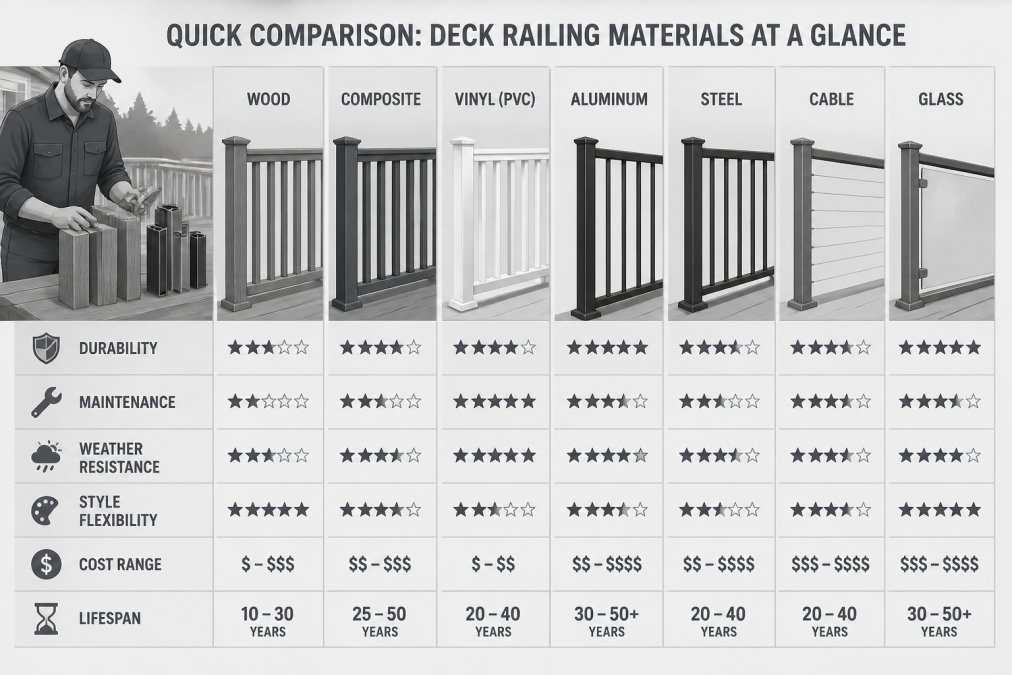
Quick Comparison: Deck Railing Materials at a Glance
Most railing comparisons stop at "low maintenance" and "high durability." Those labels don't help you decide. What matters is how long a system realistically lasts in central New Jersey's climate, what the manufacturer actually warrants, and how the material behaves through freeze-thaw cycles, summer humidity, and winter road-salt spray.
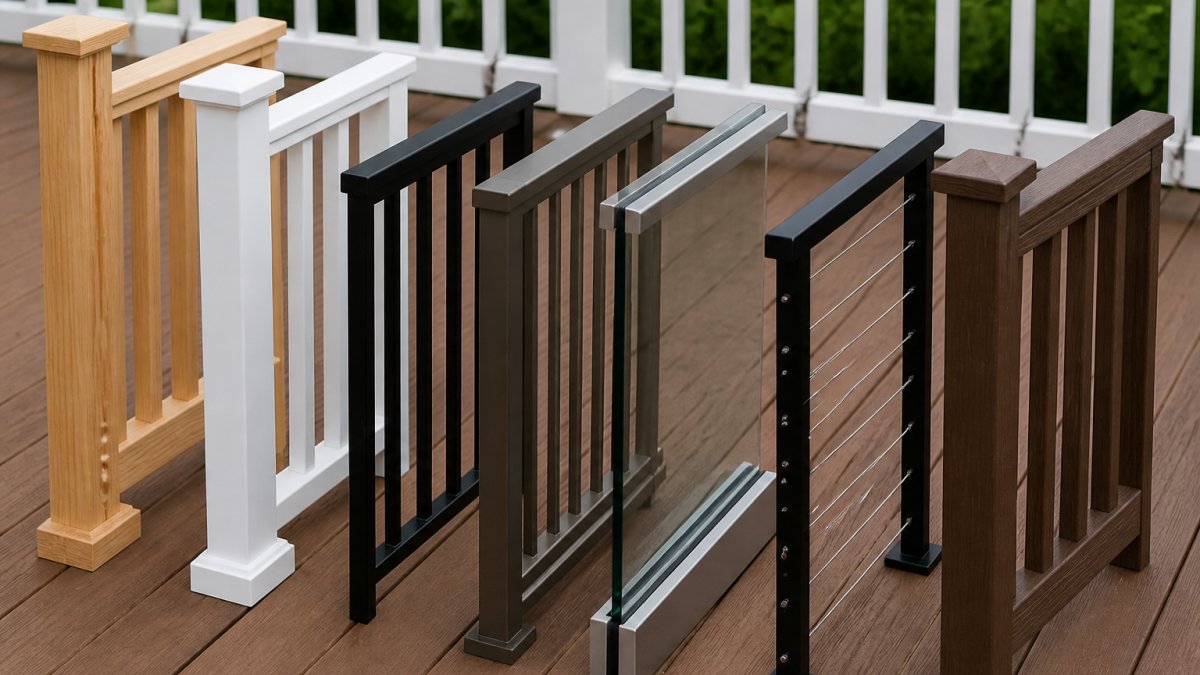
| Material | Realistic Service Life in Central NJ | Typical Warranty Coverage | Maintenance Rhythm | Best For | Key Consideration |
|---|---|---|---|---|---|
| Wood (Cedar) | 10-15 years with consistent sealing | Limited; usually against manufacturing defects only | Re-seal every 2-3 years | Traditional aesthetics, custom profiles | Rot and splintering at post bases and end grain |
| Pressure-Treated Pine | 8-12 years with consistent sealing | Limited; defect-only | Re-seal every 2 years | Budget-conscious builds | Checks, cracks, and warping accelerate in wet cycles |
| Aluminum | 25-40 years | Often 20 years to limited lifetime on finish and structure | Rinse 1-2 times per year | Modern looks, coastal exposure | Powder-coat quality determines fade and chalk resistance |
| Vinyl | 10-20 years depending on grade | Commonly 20 years to limited lifetime on premium lines | Soap-and-water wash 1-2 times per year | Low-maintenance preference | Budget vinyl becomes brittle in cold snaps |
| Composite | 20-30 years | Commonly 20-25 years | Wash 1-2 times per year | Deck-matching appearance | Fading and mildew staining in shaded, humid areas |
| Cellular PVC | 25-30+ years (limited field history) | Commonly limited lifetime on premium lines | Wash 1-2 times per year | Maximum durability with clean lines | Newer material; long-term data still accumulating |
| Cable (stainless) | 20-30+ years for cable; posts and hardware vary | Varies by component; marine-grade hardware carries the longest terms | Re-tension annually; inspect hardware | Unobstructed views, modern design | Corrosion risk concentrates at fittings and fasteners |
| Glass (tempered) | 30+ years for panels; hardware and seals vary | Varies by fabricator; typically 5-10 years on seals and hardware | Clean 3-4 times per year | Maximum visibility, luxury appearance | Wind-load engineering drives panel thickness and post spacing |
A few patterns worth noting before you read the material-by-material breakdown:
- Warranty length is not the same as service life. A limited lifetime warranty usually covers manufacturing defects, not fading, chalking, or damage from salt spray and freeze-thaw. Read the exclusions before you treat a warranty as a durability guarantee.
- Coastal proximity changes the math. In towns like Old Bridge, Matawan, and Sayreville, road-salt spray and humid summer air accelerate corrosion on fasteners and fittings long before the main rail shows wear. Marine-grade stainless hardware is the single biggest lever for extending metal railing life in this region.
- Freeze-thaw cycles punish wood and budget vinyl hardest. Water that enters end grain or micro-cracks expands when it freezes, widening the opening each season. Cedar and premium vinyl resist this better than pine or economy vinyl.
1. Wood Deck Railing: Traditional Beauty With Maintenance Demands
Wood remains the most popular choice for deck railings, and for good reason. It delivers the warmth and character that composite and vinyl can't replicate, and it allows for custom designs that match your home's architectural style. Cedar and pressure-treated pine are the two species you'll encounter most often.
Cedar naturally resists rot and insects better than most softwoods, making it the preferred choice for exposed outdoor railings. Pine is more affordable and easier to work with, but it demands more aggressive protection against moisture. Neither wood species is truly "maintenance-free." Both require regular staining or sealing every 2-3 years to maintain their appearance and protect against splintering, warping, and moisture damage.
Cedar vs. Pine: Durability and Rot Resistance
Cedar has inherent oils that provide natural rot resistance, which is why it performs better than pine in damp conditions. If you're building in Old Bridge or anywhere in central New Jersey where humidity and seasonal moisture are constant, cedar is the stronger choice. Pine requires pressure treatment to achieve similar durability, and even treated pine will eventually show signs of weathering if not sealed regularly.
The tradeoff is cost. Cedar costs more upfront, but it needs less frequent treatment and holds its appearance longer. Pine is budget-friendly initially, but the total cost of ownership climbs quickly once you factor in regular sealing and the shorter lifespan before replacement becomes necessary.
2. Aluminum vs. Vinyl Deck Railing: The Durability Showdown
Aluminum and vinyl represent the modern alternative to wood. Both are low-maintenance, both resist moisture, and both come in a range of colors and styles. But they perform differently under stress, and their durability profiles diverge significantly in harsh coastal climates.
Aluminum: Strength and Weather Resistance
Aluminum is the stronger of the two metals. It resists corrosion naturally, even in salt-heavy environments, which makes it especially valuable for decks near New Jersey's coastal areas. Aluminum railings are lightweight, don't splinter, and require nothing more than occasional cleaning with a soft brush and mild soap.
The catch is aesthetic. Aluminum has an industrial look unless paired with composite or wood infill panels. Many homeowners in Old Bridge who want a traditional appearance find pure aluminum too modern.
Aluminum railings also handle temperature swings without expanding or contracting the way wood does, so you won't experience the warping or cracking that can plague wood railings after several freeze-thaw cycles.
Vinyl: Performance Variation and Longevity
Standard vinyl deck railing materials vary widely in quality and durability. Lower-grade vinyl can become brittle in cold weather, fade rapidly under UV exposure, and develop stress cracks after a decade. Higher-quality vinyl systems perform much better, but the performance gap between budget vinyl and premium vinyl is substantial.
Vinyl's main advantage is its low-maintenance profile. It won't rot, splinter, or require sealing. The main disadvantage is that vinyl can sag or warp under direct sun exposure, especially darker colors. In central New Jersey's variable climate, lighter vinyl colors perform more consistently than darker options.
3. Composite Deck Railing Pros and Cons
Composite railing blends wood fibers with plastic to create a material that captures the look of wood without the maintenance burden. It's stronger than vinyl, more attractive than aluminum alone, and requires minimal upkeep.
The durability of composite railing depends on the core composition. Solid composite cores last longer than hollow ones. Higher wood-fiber content creates a more authentic appearance but may require occasional cleaning to prevent mildew in humid climates.
The primary drawback is cost. Composite railings typically cost more than wood or vinyl, and the upfront investment is significant.
Composite also fades over time, though premium brands fade more slowly than budget options. The color shift is gradual and usually subtle, but it's worth acknowledging if appearance consistency matters to you.
4. Cellular PVC Railing: Low-Maintenance Deck Railing Option
Cellular PVC is a newer technology that combines the low-maintenance profile of vinyl with the structural integrity of aluminum. It's a solid PVC core (not hollow like standard vinyl), which makes it stronger and more resistant to warping.
Cellular PVC railings are durable, don't require sealing or staining, and handle New Jersey's freeze-thaw cycles well. They're also more forgiving in direct sunlight than standard vinyl, resisting UV damage and color fading more effectively.
The trade-off is that cellular PVC is relatively new in the residential market, so there's less long-term field data compared to wood or aluminum. Early adopters report excellent durability and minimal maintenance, but we won't have true 20-year performance data for several more years.
5. Cable Railing: Open Views and Modern Design
Cable railing systems use stainless steel cables strung horizontally between posts to create an open, minimalist aesthetic. The primary appeal is visibility, cable railings don't obstruct your view of the landscape, which makes them ideal for decks with scenic vistas.
Stainless steel cable resists corrosion and lasts for decades with proper installation. The cables require periodic retensioning as they settle, but this is a simple adjustment that takes minutes. The real durability factor is the tensioning hardware and the posts themselves.
Cable railings are stronger than they appear, and they meet building codes in most jurisdictions. However, they do require more thoughtful design than solid railings.
6. Glass Panel Railing: Unobstructed Visibility
Glass panel railings offer the ultimate in visibility. Tempered glass panels mounted between posts create a transparent barrier that preserves sightlines while meeting safety requirements.
The durability advantage of glass is that it doesn't degrade from weather exposure. It won't fade, warp, splinter, or corrode.
The trade-offs are cost and installation complexity. Glass railings are more expensive than most other options, and installation requires precision to ensure proper alignment and seal integrity.
In Old Bridge and central New Jersey, glass railings perform well.
Selecting the right deck railing material depends on balancing durability, maintenance, aesthetics, and budget. Wood offers traditional beauty but demands ongoing care.
At PIONEER WOODWERX, we help homeowners in Old Bridge and throughout central New Jersey choose materials that fit their climate, lifestyle, and long-term vision. We recommend reviewing these guidelines with your contractor before finalizing your material choice. Request a free consultation with our team, and we'll walk you through each material's performance in our local climate and help you select the system that's right for your home.
Frequently Asked Questions
What deck railing material lasts the longest?
Aluminum and stainless steel cable railings typically offer the longest service life, often lasting 20+ years with minimal maintenance. Composite and cellular PVC railings also perform well, lasting 15-20+ years. Wood railings require the most maintenance and generally last 10-15 years depending on the species and climate exposure. Durability depends on material quality, installation, and local weather conditions.
Which is better, vinyl or aluminum railings?
Aluminum offers superior strength and weather resistance, making it ideal for durability-focused homeowners. Vinyl performance varies by system quality and may require more frequent cleaning. Aluminum resists rust better in most conditions, while vinyl can fade over time. Your choice depends on whether you prioritize strength and minimal maintenance (aluminum) or prefer a specific aesthetic vinyl provides.
What deck railing material requires the least maintenance?
Cellular PVC and composite railings are the lowest-maintenance deck railing options, requiring only occasional cleaning with soap and water. Aluminum railings also demand minimal upkeep. Wood railings require the most maintenance, including regular painting, staining, and inspection for rot and splintering. Vinyl falls between these extremes, depending on the specific product quality.
How long do composite deck railings last?
Composite deck railing systems typically last 15-20+ years with proper care. They resist splintering, warping, and rot better than wood, and require only occasional cleaning. Composite railings can fade slightly over time with UV exposure, but this does not affect durability. Warranty periods often reflect this lifespan, though actual performance depends on material quality and climate conditions.
Are wood or metal deck railings more durable?
Metal railings, particularly aluminum and stainless steel, are more durable than wood. Metal resists moisture, rot, and insect damage, while wood requires regular maintenance to prevent splintering and decay. Metal railings typically last 20+ years, whereas wood railings last 10-15 years. However, wood offers a traditional aesthetic that appeals to many homeowners despite higher maintenance demands.