 comparison
Alternatives to Pressure Treated Lumber for Decks
Table of Contents
- Why Homeowners Choose Alternatives to Pressure-Treated Lumber for Decks
- Cedar Decking: Pros and Cons
- Black Locust Decking for Long-Term Durability
- Composite Decking vs Wood: What You Need to Know
- PVC and Plastic Lumber Options
- Best Decking Material for Durability and Maintenance
- How to Choose the Right Alternative Material for Your Deck
- Frequently Asked Questions
Last Updated: October 20, 2026
Why Homeowners Choose Alternatives to Pressure-Treated Lumber for Decks
When you're planning a deck in Old Bridge or across Central New Jersey, the material you choose determines how long it lasts, how much maintenance you'll do, and how your outdoor space feels underfoot.
At Pioneer Woodwerx, we've worked with homeowners who assumed pressure-treated was their only choice. Once they learned what else was available, most shifted toward materials that matched their priorities, natural wood warmth, composite durability, or steel framing where strength and straightness matter most.
Cedar Decking: Pros and Cons
Cedar is the natural wood alternative most homeowners consider first. It's warm, attractive, and genuinely durable when treated properly, resisting rot better than pressure-treated lumber thanks to naturally occurring oils.
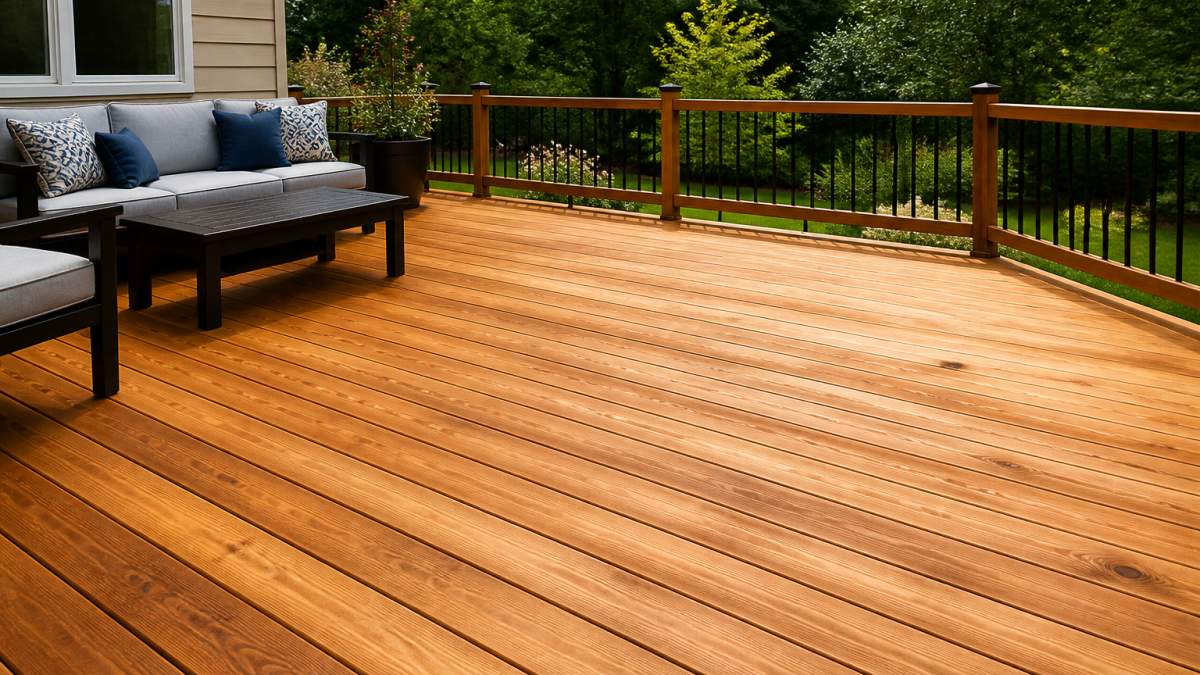
Cedar isn't one material: premium heartwood is genuinely rot-resistant, while lower grades mix in sapwood that lacks protective oils and fails quickly in wet climates like New Jersey's.
Cedar Decking Pros:
- Natural appearance with distinctive grain and color
- Naturally resistant to rot and insects
- Machines cleanly for custom details
Cedar Decking Cons:
- Higher upfront cost than pressure-treated lumber
- Requires regular sealing to maintain appearance and durability
- Sapwood grades fail quickly in moisture
Black Locust Decking for Long-Term Durability
Black Locust is the material you choose when durability is your only real concern. This dense hardwood is naturally resistant to rot, insects, and weathering without chemical treatment, it was historically used for railroad ties and fence posts.
The trade-off is cost and availability. Black Locust is significantly more expensive than pressure-treated lumber or cedar and harder to source near Old Bridge, so plan ahead.
Black Locust Decking Pros:
- Naturally rot-resistant without chemical treatment
- Extremely long lifespan (50+ years common)
- Resistant to insects and weathering
Black Locust Decking Cons:
- Significantly higher cost than pressure-treated lumber
- Heavy material requiring more labor to install
- Harder to machine and work with
Composite Decking vs Wood: What You Need to Know
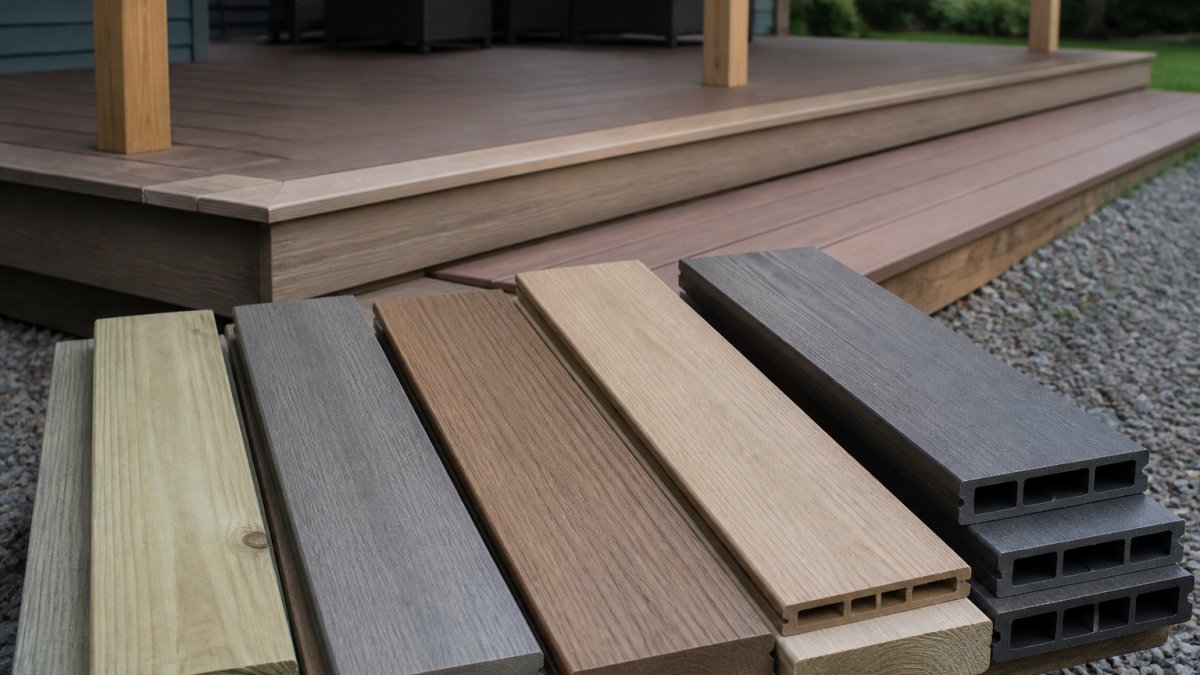
Composite decking blends wood fibers with plastic binders to create a material that looks like wood but doesn't rot, splinter, or require sealing. Higher-quality composites use more wood content and better plastic formulations; lower-quality ones feel plastic-y and fade faster. Even the best composites expand and contract with temperature, show dirt and algae in shaded areas, and cost more upfront than pressure-treated lumber.
Composite Decking Pros:
- No rot, splinter, or insect damage
- Minimal maintenance (no sealing required)
- Consistent appearance and color
Composite Decking Cons:
- Higher upfront cost than wood alternatives
- Can fade or discolor over time
- Expands and contracts with temperature
PVC and Plastic Lumber Options
PVC (polyvinyl chloride) decking is the premium non-wood option: completely waterproof, virtually maintenance-free, and it won't rot, swell, or warp. In wet environments or areas with poor drainage, PVC performs where wood fails. The downside is cost, a higher initial investment than composite or wood, and it feels plastic underfoot. Plastic lumber (HDPE) is the budget non-wood option: cheaper than PVC or composite but softer and less durable, fine for nonstructural applications like railings or steps, not ideal for deck boards bearing weight and foot traffic.
PVC Decking Pros:
- Completely waterproof and rot-proof
- Minimal maintenance required
- Long lifespan (25-30+ years)
PVC Decking Cons:
- Highest upfront cost of decking options
- Plastic appearance and feel underfoot
- Can become slippery when wet
Best Decking Material for Durability and Maintenance
The material that wins depends on what you're optimizing for. If durability is the priority and budget allows, Black Locust is unmatched. For the lowest maintenance with acceptable durability, composite or PVC delivers. For natural wood aesthetics with reasonable durability, cedar works if you commit to maintenance. Maintenance is the hidden cost of wood decking, cedar and pressure-treated lumber both require sealing, staining, or pressure washing.
Structural framing versus deck boards, the distinction most guides skip
One of the biggest mistakes homeowners make is treating every material as interchangeable. Deck boards and structural framing are different jobs, and most alternatives are only appropriate for one of them.
- Structural framing (joists, beams, posts, ledger): Must carry load and meet span requirements. In practice, this is where pressure-treated lumber, steel framing, and, for some applications, Black Locust are used. Composite and PVC are generally not approved for structural framing.
- Deck boards (the walking surface): Cedar, Black Locust, composite, PVC, and plastic lumber are all used here. The choice comes down to appearance, slip resistance, heat retention, and maintenance.
A common pattern in Central New Jersey is a hybrid deck: pressure-treated or steel framing underneath with cedar, composite, or PVC boards on top. It's legitimate, but it must be designed so the two materials age and move consistently, mixing without planning for differential expansion and fastener compatibility is where hybrid decks go wrong.
Installation compatibility details that affect longevity
- Fastener compatibility: Stainless steel or hot-dip galvanized fasteners are the safe default for cedar, Black Locust, and most composites. Standard coated screws can react with tannins in some woods and with the chemistry in some composites, causing staining or premature corrosion. Follow the manufacturer's fastener spec, it's usually a condition of the warranty.
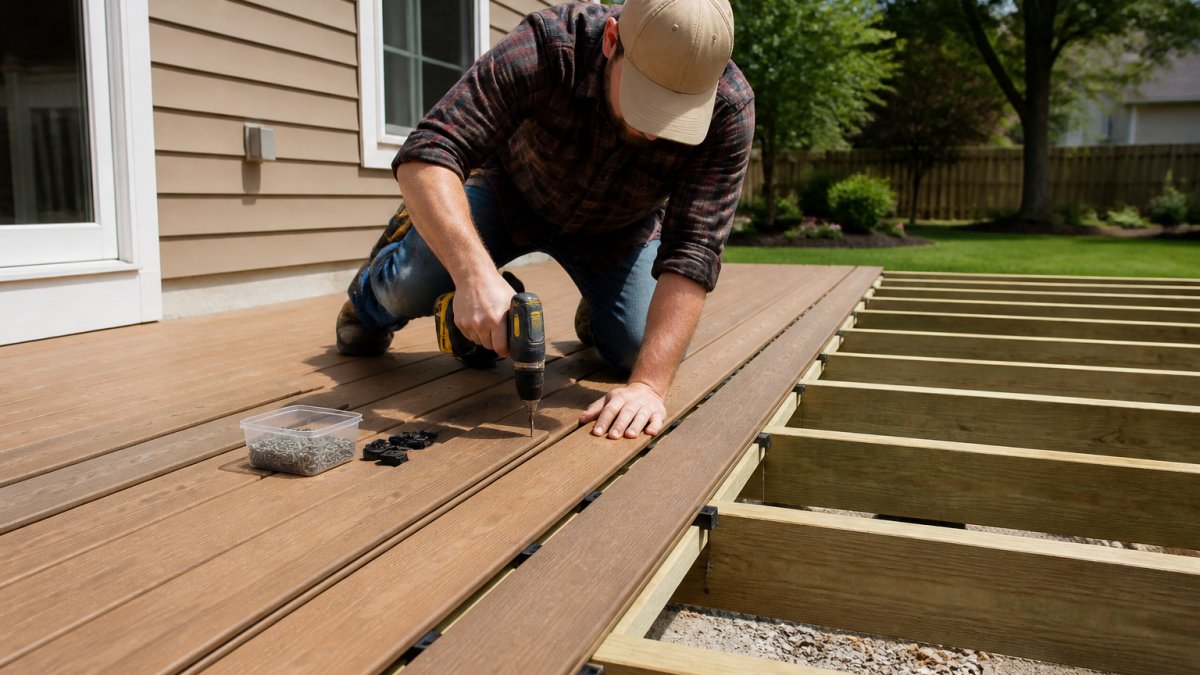
- Joist spacing: Composite and PVC typically require closer joist spacing than wood to prevent sagging and satisfy manufacturer requirements. If you're switching from wood boards to composite on an existing frame, verify joist spacing before you buy.
- Slip resistance: Composite and PVC can be slippery when wet, especially in shaded areas where algae film develops. Textured or capped surfaces and grooved profiles help. Cedar and Black Locust offer better natural traction but can still be slick when wet.
Lifecycle thinking, not just sticker price
Upfront material cost is only one line in the budget. A more useful comparison looks at the full picture over the deck's life:
- Material cost: Cedar and Black Locust cost more per board than pressure-treated lumber. Composite sits between wood and PVC. PVC is the highest upfront material cost among common decking options.
- Labor and installation: Dense hardwoods like Black Locust take longer to install due to weight and pilot-hole requirements. Composite and PVC install faster but may require closer joist spacing, adding framing labor.
- Fasteners and accessories: Hidden fastener systems, stainless screws, and matching trim add cost, especially for composite and PVC. Budget for these as part of the material package.
Comparison at a glance
| Material | Typical service life | Maintenance profile | Appearance | Structural use |
|---|---|---|---|---|
| Pressure-treated lumber | 15-20 years | Periodic sealing or staining | Industrial, greenish cast when new | Yes, framing and boards |
| Cedar | 15-20 years with maintenance | Sealing every 2-3 years | Natural, warm, silver patina if unsealed | Boards; limited framing |
| Black Locust | 50+ years | Very low | Natural, dense grain | Boards; some framing applications |
| Composite | 20-30 years | Periodic cleaning | Wood-like, consistent color | Boards only |
| PVC | 25-30+ years | Minimal cleaning | Clean, modern, plastic feel | Boards only |
| Steel framing | 50+ years | Minimal | Hidden under decking | Framing only |
How to Choose the Right Alternative Material for Your Deck
Most guides tell you to "consider your climate" and "think about your budget" and stop there. That's not useful when you're standing in a lumber yard in Old Bridge deciding between cedar and composite. Here's a concrete framework built around Central New Jersey's actual conditions.
Step 1: Match the material to the Central New Jersey climate
Old Bridge sits in a humid continental climate with four distinct seasons, and that combination, not just "wet" or "cold", is what stresses deck materials.
- Humidity and rainfall: Summer humidity and regular rain keep wood surfaces damp for extended periods. Cedar's sapwood and lower grades of any wood fail first here; Black Locust and composite handle sustained moisture better.
- Freeze-thaw cycles: Water that gets into wood grain, end cuts, and fastener holes expands when it freezes, causing checking, splitting, and fastener loosening over many winters. Sealing cedar and pressure-treated lumber helps; dense hardwoods and non-wood materials resist this better.
- Seasonal temperature swings: Composite and PVC expand and contract more than wood, which is why manufacturer requirements specify gaps at board ends and along edges. Ignoring those gaps leads to buckling in summer and gapping in winter.
Step 2: Separate framing decisions from surface decisions
As covered above, structural framing and deck boards are different jobs. Decide them separately:
- Framing: Pressure-treated lumber and steel framing are the mainstream choices. Steel offers straightness, dimensional stability, and resistance to rot and insects, but requires specific connectors, engineering, and installer familiarity. Confirm with your builder and local code official before committing.
- Surface: Cedar, Black Locust, composite, PVC, and plastic lumber are all surface options. Choose based on appearance, maintenance tolerance, slip resistance, and heat retention.
Step 3: Verify code and permit requirements before you buy
Deck projects in New Jersey are subject to state and local building code requirements, and many municipalities, including in Middlesex County, require permits for new decks, structural changes, and certain replacements. Verify with the Old Bridge Township construction office before ordering materials. Key items to confirm:
- Whether your project requires a permit and inspections
- Required footing depth and frost line considerations
- Ledger attachment and flashing requirements
This step matters most when you're choosing a non-standard material. A material that's fine for deck boards may not be accepted for structural framing without documentation.
Step 4: Check local availability and lead times
Availability is where national buying guides fall apart. What's stocked at a big-box store in Central New Jersey isn't the same as what a specialty supplier can order.
- Cedar: Widely available through lumber yards and box stores, but grade and heartwood content vary significantly. Ask for the grade and inspect for sapwood before buying.
- Black Locust: Rarely stocked. Expect to source through specialty hardwood dealers or mills, with lead times measured in weeks, not days.
- Composite and PVC: Stocked at most building suppliers and box stores, but specific colors and profiles may need ordering. Confirm the full package, boards, fascia, trim, hidden fasteners, is available together.
A practical rule: order the full material package, boards, fasteners, trim, flashing, and connectors, from one source when possible. Mixed sourcing is where color mismatches and fastener incompatibilities creep in.
Step 5: Build a decision matrix for your priorities
Rank these five factors for your project, then match the material:
| Priority | Strongest fit | Runner-up |
|---|---|---|
| Lowest maintenance | PVC | Composite |
| Longest service life | Black Locust | Steel framing (structure) |
| Natural wood appearance | Cedar | Black Locust |
| Lowest upfront material cost | Pressure-treated lumber | Plastic lumber (nonstructural) |
| Best slip resistance | Cedar / Black Locust | Textured composite |
No material wins on every row. The point of the matrix is to make the trade-off explicit before you commit.
Pioneer Woodwerx helps homeowners work through these decisions by evaluating your budget, your site conditions in Central New Jersey, how you'll use the space, and what matters most to you visually. The right material for your neighbor's deck might not be right for yours, a consultation before you commit to materials saves time and money.
Frequently Asked Questions
What can I use instead of pressure-treated lumber for deck framing and boards?
Several alternatives to pressure-treated lumber work well for decks. Cedar and black locust are naturally rot-resistant wood options that age gracefully. Composite decking combines wood fibers and plastic for low maintenance and durability. PVC decking offers a fully synthetic, non-wood option. Each material has different lifespans, maintenance needs, and upfront costs. The best choice depends on your budget, desired aesthetics, and how much maintenance you're willing to do.
Is cedar a good alternative to pressure-treated wood for decks?
Cedar is an excellent natural alternative to pressure-treated lumber. It resists rot and insects naturally, weathers to an attractive silver-gray color, and requires only periodic sealing to maintain appearance. Cedar decking pros include its beautiful grain and warmth compared to treated wood. The cons include higher upfront cost and the need for regular maintenance to prevent weathering and color fading. Cedar typically lasts 15-20 years with proper care.
How does black locust decking compare with pressure-treated lumber?
Black locust is one of the most durable domestic hardwoods available and naturally resists rot and insects without chemical treatment. It outlasts pressure-treated lumber significantly, often lasting 25-30+ years. Black locust costs more upfront than pressure-treated wood but requires minimal maintenance. It's harder and denser than cedar, making it ideal for high-traffic decks. The main drawback is limited availability and higher initial investment compared to treated lumber.
Is composite decking better than pressure-treated wood for durability?
Composite decking offers superior durability and lower maintenance compared to pressure-treated wood. It resists rot, insects, and weathering without staining or sealing. Composite typically lasts 25-30 years versus 15-20 years for pressure-treated lumber. However, composite has a higher upfront cost. It also resists fading better and won't splinter, making it safer for families. The trade-off is that composite can feel less natural and may show mold in very shaded areas.