 comparison
Is Professional Deck Installation Worth It?
Table of Contents
- Why Professional Deck Installation Matters
- DIY Deck vs. Professional Installation: Key Differences
- Deck Building Permits in New Jersey: What You Need to Know
- Structural Integrity and Safety Standards
- Deck Installation Timeline: What to Expect
- Questions to Ask Your Deck Contractor
- Making the Decision: When Professional Installation Pays Off
- Frequently Asked Questions
Last Updated: October 15, 2026
Why Professional Deck Installation Matters
A well-built deck becomes the heart of outdoor living, and whether it lasts 20 years or fails in five often comes down to one decision: hire a professional or DIY.
At PIONEER WOODWERX, we've worked with Central New Jersey homeowners facing this exact question. Professional deck installation isn't about convenience, it's about structural integrity, safety, and long-term value.
A professional contractor brings three things DIY rarely delivers: knowledge of local building codes, understanding of load-bearing construction, and accountability if something goes wrong. In New Jersey, missing these standards risks failed inspections and serious safety hazards.
DIY Deck vs. Professional Installation: Key Differences
The choice between DIY and hiring a professional comes down to skill, time, tools, and risk tolerance.
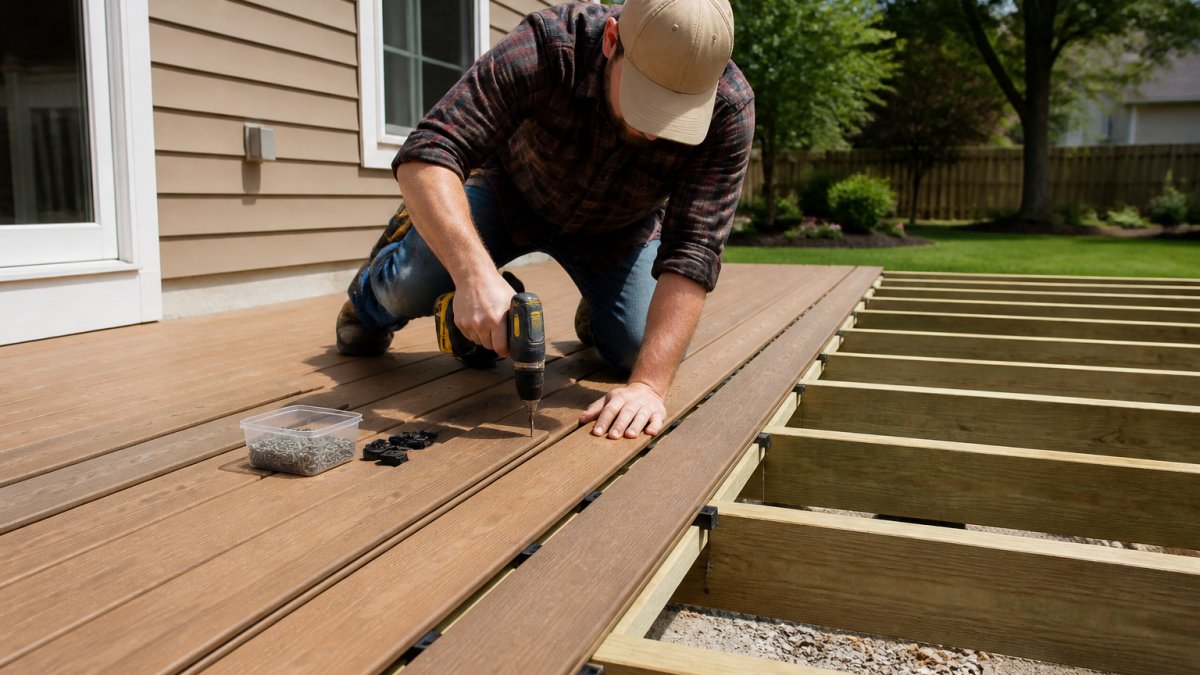
DIY deck building appeals to homeowners who enjoy hands-on projects and want to save on labor costs. The downside is significant: decks require specialized knowledge about footings, ledger board attachment, joist spacing, and load calculations. One footing-depth mistake, especially where frost heave is a concern, can compromise the entire structure within a few years. You'll also need tools, permits, and inspections.
Professional installation means hiring a contractor who handles permits, inspections, and construction from start to finish. They build for your site conditions, local weather, and building codes, carry liability insurance, and warranty their work. The trade-off is upfront cost and less day-to-day control.
| Aspect | DIY Deck | Professional Installation |
|---|---|---|
| Upfront labor cost | Lower | Higher |
| Permit and inspection handling | You manage | Contractor manages |
| Specialized tools required | Yes, may need to rent/buy | Contractor equipped |
| Timeline | Flexible, often extended | Scheduled, predictable |
| Structural knowledge required | High (risky if lacking) | Built-in expertise |
| Warranty/liability | None | Yes, contractor insured |
| Long-term durability risk | Higher if mistakes made | Lower with proper build |
Deck Building Permits in New Jersey: What You Need to Know
In New Jersey, a deck is generally treated as an addition to the structure, so it typically requires a construction permit from the local enforcing agency before work begins. The state administers its construction code through the Department of Community Affairs, and most municipalities, including Old Bridge Township, run their own code enforcement office that reviews applications, issues permits, and performs inspections.
How the process actually works in Old Bridge. A homeowner or contractor submits a permit application to the Old Bridge Township code enforcement office with drawings showing footing locations and depths, framing layout, joist sizing and spacing, ledger attachment, stair and railing configuration, and materials.
The inspection sequence you should expect. Most New Jersey municipalities require a series of inspections, not a single final visit:
- Footing inspection, after the holes are dug and any reinforcing steel is placed, but before concrete is poured. The inspector verifies depth relative to the local frost line and footing size relative to the load.
- Framing inspection, after the ledger, beams, and joists are installed but before decking covers them. Joist spacing, hanger hardware, flashing at the ledger, and beam bearing get checked here.
- Final inspection, after decking, stairs, and guardrails are complete. Railing height, baluster spacing, stair rise and run, and graspable handrails are the common failure points.
Each inspection must be requested and passed before the next phase is covered up, so a deck that looks finished can still be weeks from being legally usable.
Why this matters for the DIY decision. If you pull the permit yourself, you own the drawings, corrections, and inspection scheduling. If a footing fails inspection, you dig it out and start over; if framing flags undersized joists or missing hardware, you redo that work.
How to verify requirements for your address. Rules can vary by municipality and by the specifics of your lot, so confirm before you build. You can also review the New Jersey Department of Community Affairs construction code resources at New Jersey construction code and permit guidance for the statewide framework that local offices enforce.
Structural Integrity and Safety Standards
The stakes of deck construction are higher than many homeowners realize. A deck failure isn't just property damage, it's a safety emergency that has caused serious injuries and deaths.
Structural integrity depends on critical elements: proper footing depth to prevent frost heave, correctly sized and spaced joists for live loads, secure ledger board attachment, and proper railing construction to prevent falls.
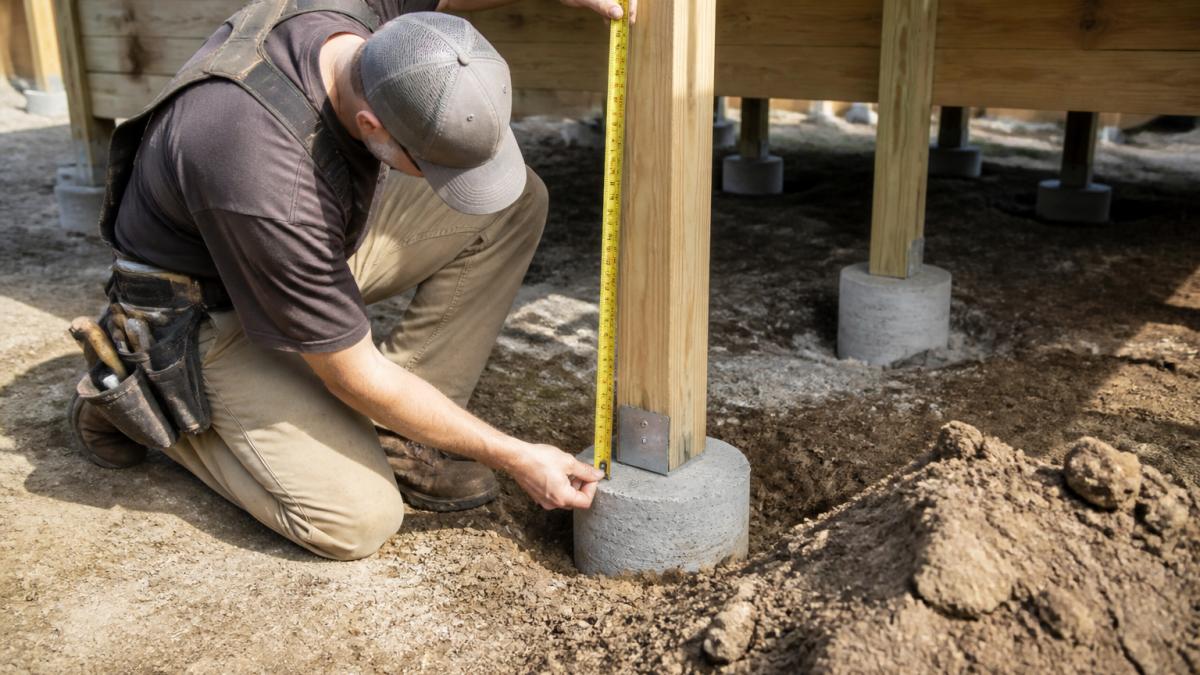
A professional contractor understands load-bearing principles: they calculate how much weight the deck must support based on occupancy and regional snow load, size framing members accordingly, and install fasteners that won't fail over time. They also account for New Jersey's freeze-thaw cycles, humidity, and seasonal extremes.
DIY builders often underestimate these requirements, spacing joists too far apart, using undersized beams, or attaching the ledger board with nails instead of bolts. These shortcuts create a ticking clock: a compromised deck might feel fine for a year or two, then suddenly shift or sag.
Professional installation includes inspections at critical stages, before covering footings, after framing, and before final approval, catching problems before they become expensive or dangerous.
Deck Installation Timeline: What to Expect
A professionally built deck moves through four phases, and the calendar is driven less by construction speed than by permit review and inspection scheduling. Here is the sequence for a typical Old Bridge-area project.
Phase 1, Design and permit review (roughly two to five weeks). Once drawings are submitted to the local code enforcement office, review time depends on that office's workload and whether plans come back with comments.
Phase 2, Site prep and footings (roughly one to two weeks). Layout, excavation, footing holes, inspection, and concrete pour.
Phase 3, Framing and decking (roughly two to four weeks). Ledger attachment and flashing, beam and joist installation, framing inspection, then decking. The framing inspection is a hard stop: decking cannot cover framing until it passes.
Phase 4, Stairs, railing, and final inspection (roughly one to two weeks). Stair construction, guardrails, handrails, and finishing details, followed by the final inspection.
What this means in practice. A straightforward single-level deck often lands in the six-to-ten-week range from signed contract to final inspection, with permit review and inspection scheduling accounting for most of the variability.
Disruption to expect. Excavation and framing are the loudest, dirtiest phases. Expect equipment access through a side yard or gate, a staging area for lumber and materials, and some lawn disturbance along the access path.
DIY timelines run longer for a different reason. A homeowner working evenings and weekends stretches the same phases across months, and every inspection must be scheduled around their availability.
Questions to Ask Your Deck Contractor
Choosing the right contractor matters as much as choosing to hire one. Before signing, ask these questions.
1. Are you licensed and insured? A legitimate contractor carries liability insurance and any required state or local licenses. Ask to see proof; this protects you if someone is injured on the job.
2. Do you handle permits and inspections? A contractor who manages applications, submissions, and inspection scheduling knows the local code and builds to standard. If they expect you to handle permits, that's a red flag.
3. Can you provide references from recent deck projects? Ask for at least three references from deck installations completed in the last two years. Call them.
4. What's your warranty? Professional contractors warranty their workmanship for a specific period, typically one to two years. If something fails due to construction error, they'll fix it at no cost. Get the warranty in writing.
5. How do you handle site cleanup and debris removal? A professional removes debris daily and leaves the site clean at the end. If they don't mention this, clarify expectations upfront.
6. What materials do you use, and why? A contractor should explain their material choices, whether pressure-treated lumber, composite decking, or another option, and why those suit your situation and budget.
7. What's the total cost and payment schedule? Get a detailed written estimate that breaks down labor, materials, and other costs, and understand the payment schedule, typically a deposit, progress payments, and a final payment upon completion.
Making the Decision: When Professional Installation Pays Off
Professional deck installation makes sense if any of these apply:
You lack construction experience. If you've never framed a structure, calculated load capacity, or worked with building codes, the learning curve is steep. The cost of mistakes, structural failure, failed inspection, and rebuilding far exceeds the upfront cost of hiring a professional.
You value your time. A professional completes the work in weeks; DIY stretches across months. If your time has value, professional installation saves money overall.
You want the work done right the first time. A professional contractor has built dozens of decks and knows what works, what fails, and how to build for your site and climate, reducing the risk of problems down the road.
You're planning to sell your home. A professionally built deck, with permits and inspections documented, adds resale value. A DIY deck raises questions for buyers and inspectors. If you're building for long-term value, professional installation pays for itself.
You want a warranty and peace of mind. A professional contractor warrants their work and fixes failures. DIY work comes with no backup if problems emerge.
For homeowners in Old Bridge and across Central New Jersey, PIONEER WOODWERX brings veteran-owned expertise and local knowledge. We handle permits, manage inspections, and build decks that last, accounting for New Jersey's frost lines, seasonal weather, and local code requirements from the start.
The answer to "Is professional deck installation worth it?" depends on your situation, but for most homeowners the combination of safety, durability, warranty, and peace of mind makes it a sound investment.
A quality deck is one of the best additions you can make to your home. If you're ready to build a deck that you'll enjoy for years to come, consult the New Jersey building code standards to understand local requirements, then reach out to PIONEER WOODWERX for a free consultation.
Frequently Asked Questions
When is it worth hiring a professional deck installer?
Professional deck installation is worth the investment when your project requires permits, involves complex structural requirements, or you lack experience with building codes and safety standards. If your deck attaches to your home, requires multiple levels, or sits on challenging terrain, a professional ensures proper load-bearing capacity, correct ledger board installation, and compliance with local codes. Professionals also handle inspections and warranty issues, protecting your home's long-term value.
Do I need a permit to build a deck in New Jersey?
Most deck projects in New Jersey require building permits, especially decks attached to your home or exceeding 200 square feet. Permits ensure your deck meets structural and safety codes, protects your property investment, and maintains homeowner insurance coverage. A professional deck contractor handles the permit application and inspection process, saving you time and reducing the risk of code violations that could delay the project or require costly corrections.
What should I check before hiring a deck contractor?
Ask potential contractors about their experience with local building codes, whether they handle permits and inspections, their warranty coverage, and references from similar projects. Request a detailed written estimate that breaks down materials and labor. Verify they carry liability insurance and understand structural requirements like proper footings, ledger board installation, and load-bearing capacity. Check how they plan the project timeline and what happens if schedules slip.
How long does professional deck installation typically take?
A standard professional deck installation typically takes 2-4 weeks from start to finish, depending on size, complexity, and weather. This timeline includes site preparation, foundation work, framing, decking installation, railings, and final inspections. Larger or more complex projects may take longer. A professional contractor provides a realistic schedule upfront and coordinates permit inspections, which can add time but ensures code compliance and structural safety.