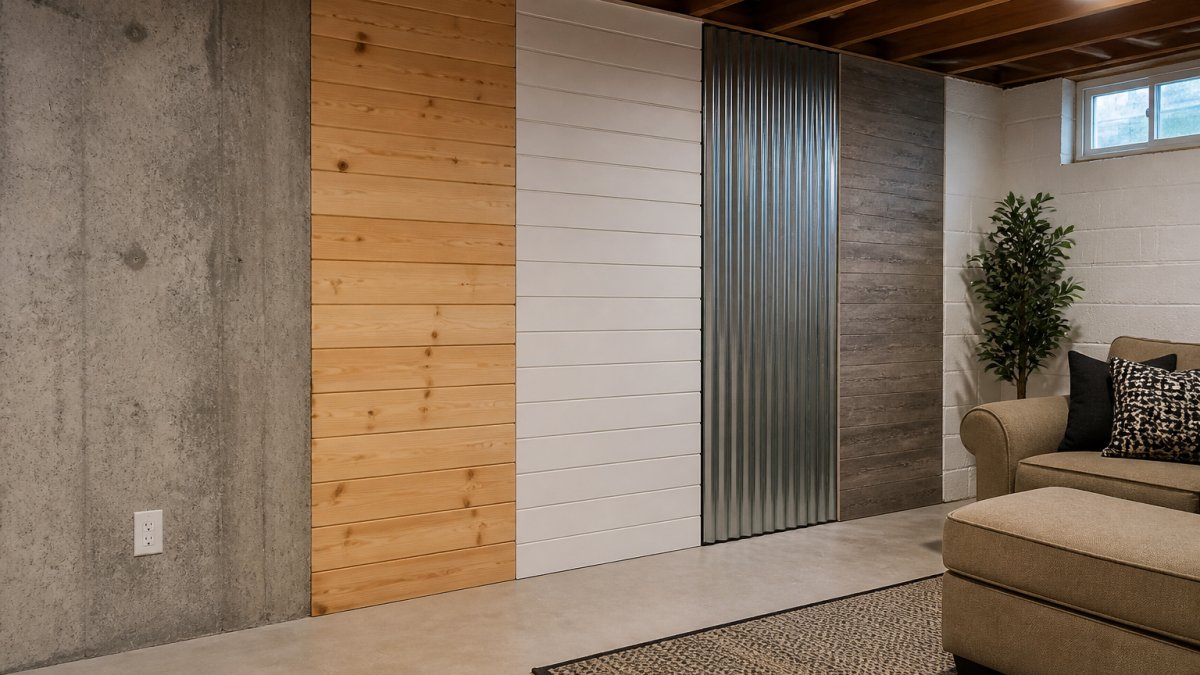
 comparison
Drywall Alternatives for Basement Walls: A 2026 Guide
Table of Contents
- Why Drywall Fails in Basements
- Basement Wall Panels: Your Main Options
- Moisture-Resistant Basement Wall Materials: Pros and Cons
- Basement Wall Insulation Options Before You Finish
- Waterproofing a Basement Before Finishing Walls
- Choosing the Right Drywall Alternative for Your Space
- Installation and Professional Guidance
- Frequently Asked Questions
Last Updated: October 16, 2026
Why Drywall Fails in Basements
Drywall is the default choice for walls everywhere else in your home. In basements, it becomes a liability. The material absorbs moisture like a sponge, swells, and eventually crumbles. Mold follows.
This guide explores the best drywall alternatives basement options and helps you understand which drywall alternatives basement walls fit your space, budget, and long-term plans. Whether you're finishing a basement in Old Bridge or anywhere in Central New Jersey, the material you choose will determine how long your investment lasts.
Basements are inherently damp. Even "dry" basements experience humidity swings. Concrete foundation walls wick moisture upward. Water seeps in during heavy rain. Standard drywall cannot handle this environment. It deteriorates within a few years, forcing expensive removal and replacement.
The good news: proven alternatives exist. Some are moisture-resistant panels designed for below-grade spaces. Others are rigid foam boards that insulate while resisting water. A few are traditional materials that have worked in basements for decades. Each has trade-offs in cost, durability, appearance, and installation complexity.
Basement Wall Panels: Your Main Options
Basement wall panels come in several varieties, each solving the moisture problem differently. The right choice depends on your climate, the wall's exposure to water, your budget, and how finished you want the space to look.
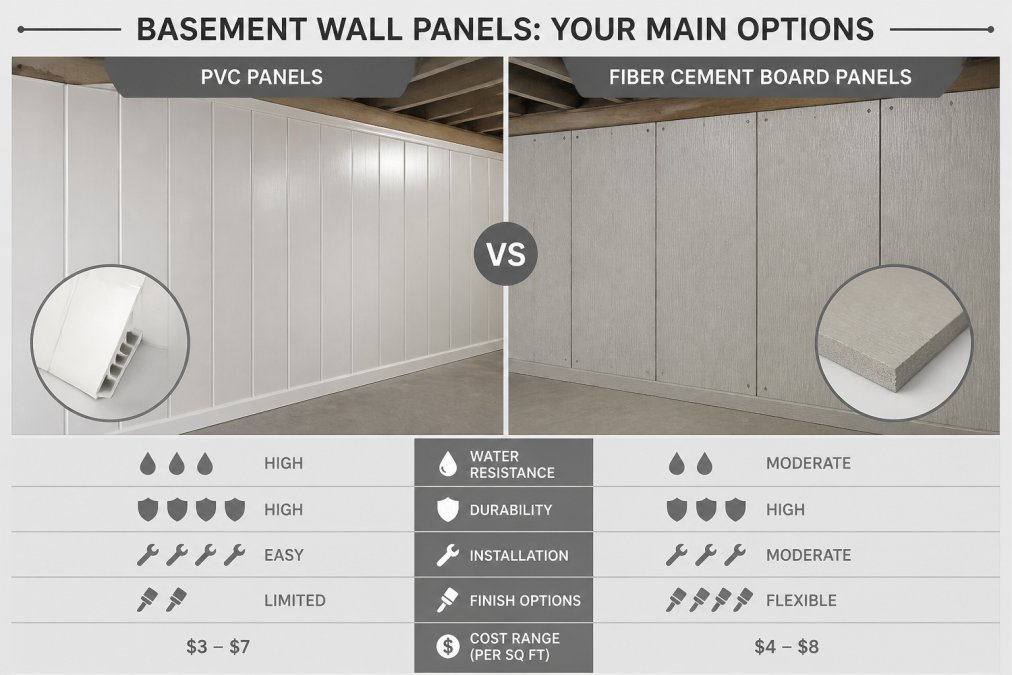
PVC Wall Panels
PVC (polyvinyl chloride) panels are engineered specifically for wet environments. They're non-porous, meaning water cannot penetrate or be absorbed. They resist mold, mildew, and bacterial growth naturally.
PVC panels install over framing or directly to concrete with minimal preparation. They lock together at seams, creating a moisture barrier. The material is lightweight, easy to cut, and forgiving for DIY installation. Panels come in various finishes, from plain white to wood-grain or tile-look designs.
The trade-off: PVC can feel plastic-like, and some homeowners find the aesthetic less warm than wood or natural materials. The panels are also susceptible to impact damage, though they're more durable than drywall. Over time, PVC can discolor if exposed to direct sunlight, though basement panels rarely face this issue.
Pros:
- Completely waterproof and mold-resistant
- Fast installation with minimal prep work
- Lightweight and easy to handle
- Available in multiple finishes
- No painting or finishing required
- Durable for 20+ years in basement conditions
Cons:
- Plastic appearance may not suit all design preferences
- Can be damaged by sharp impacts
- More expensive than plywood or OSB
- Requires proper ventilation behind panels to prevent condensation
Fiber-Reinforced Plastic (FRP) Panels
FRP panels combine plastic resin with fiberglass reinforcement, creating a material stronger than PVC alone. They're designed for high-moisture areas and are commonly used in commercial kitchens and bathrooms.
FRP panels resist moisture, mold, and chemical damage. They're tougher than PVC and less likely to dent from impacts. Installation is similar to PVC: panels attach to framing with fasteners or adhesive, and seams are sealed.
The limitation: FRP is heavier than PVC, making installation more labor-intensive. The material is also more expensive. Aesthetically, FRP comes in fewer finish options than PVC, though the available choices are professional-looking.
Pros:
- Stronger and more impact-resistant than PVC
- Excellent moisture and mold resistance
- Durable and long-lasting
- Good for high-traffic or rough-use basements
- Easy to clean and maintain
Cons:
- Heavier and more difficult to install
- Limited color and finish options
- Higher cost than PVC
- Can require professional installation
Plywood and OSB
Plywood and oriented strand board (OSB) are wood-based panels made by laminating or pressing wood fibers together. Both are cheaper than PVC or FRP, making them attractive for budget-conscious projects.
Plywood is denser and slightly more moisture-resistant than OSB. OSB is lighter and less expensive. Neither is naturally waterproof, but both can be treated or sealed to improve moisture resistance. Many basements in Old Bridge have used plywood successfully when proper ventilation and drainage are in place.
The catch: these materials still absorb some moisture over time. In very wet basements, they'll eventually swell, warp, or support mold growth. They work best in basements with good drainage and low humidity, or when combined with a vapor barrier and insulation system.
Pros:
- Most affordable option
- Easy to install with standard tools
- Can be painted or stained
- Provides some structural support
- Works well in drier basements
Cons:
- Not truly waterproof without additional treatment
- Susceptible to mold in high-humidity environments
- Can warp or swell if moisture penetrates
- Requires ongoing maintenance and sealing
- Not ideal for basements with active water issues
Fiber Cement Board
Fiber cement is a composite of Portland cement, sand, and cellulose fibers. It's extremely durable and resists moisture far better than drywall. It's commonly used for exterior siding and in wet areas like bathrooms.
Fiber cement panels are rigid, strong, and won't deteriorate when exposed to moisture. They don't rot, don't support mold growth, and don't require paint to protect them (though they can be painted for aesthetics). Installation requires fastening to framing, and seams need proper sealing.
The drawback: fiber cement is heavy and brittle. Cutting and handling requires care and the right tools. Installation is slower and more physically demanding than PVC or plywood. The material is also more expensive than wood panels but often less than PVC.
Pros:
- Extremely moisture-resistant
- Won't rot or support mold
- Very durable (30+ year lifespan)
- Can be painted any color
- Provides good structural rigidity
- Works in any basement condition
Cons:
- Heavy and difficult to handle
- Requires specialized cutting tools
- Slower installation process
- More expensive than wood panels
- Dusty when cut (requires respiratory protection)
- Professional installation often recommended
Moisture-Resistant Basement Wall Materials: Pros and Cons
Choosing a basement wall material is ultimately about managing moisture. The best materials either shed water entirely or resist its effects. Here's how the main options compare:
| Material | Moisture Resistance | Durability | Cost | Installation Difficulty | Best For |
|---|---|---|---|---|---|
| PVC Panels | Excellent | 20+ years | Higher | Easy | Wet basements, quick projects |
| FRP Panels | Excellent | 25+ years | Higher | Moderate | High-traffic, durable finish |
| Plywood | Moderate | 10-15 years | Lower | Easy | Drier basements, budget projects |
| Fiber Cement | Excellent | 30+ years | Moderate | Difficult | Permanent solution, wet conditions |
The trade-off is always between upfront cost and long-term durability. A cheaper material might save money initially but fail faster in a wet basement, requiring removal and replacement. A more expensive, durable material costs more upfront but lasts decades with minimal maintenance.
In Old Bridge and Central New Jersey, basements often deal with seasonal water intrusion and high humidity. This argues for PVC, FRP, or fiber cement, materials that won't degrade if moisture does seep in.
Basement Wall Insulation Options Before You Finish
Before installing wall panels, you need to consider insulation. An uninsulated basement wall loses heat, making the space cold and uncomfortable. Insulation also helps manage moisture by creating a temperature buffer that reduces condensation.
Common basement insulation approaches include rigid foam boards (XPS, EPS, or polyiso) attached directly to the concrete, or fiberglass batts installed between framing.
Rigid foam is popular because it provides insulation AND moisture resistance. A 1-2 inch layer of rigid foam against the concrete foundation, sealed at seams, creates a thermal and moisture barrier.
The key: insulation must be paired with proper drainage and ventilation. Insulation alone won't solve water intrusion from outside. It only works when the basement's drainage system is functioning and humidity is managed.
Waterproofing a Basement Before Finishing Walls
This is the step most homeowners skip, and it's the most critical. Waterproofing must happen before wall panels go up.
Start with the foundation exterior. If water is entering from outside, no interior wall system will solve it permanently. Grading around the foundation should slope away from the house.
Interior waterproofing includes sump pumps, interior drain systems, and vapor barriers. A sump pump in a pit at the basement's lowest point collects groundwater and pumps it away.
Before installing panels, apply a vapor barrier, typically heavy plastic sheeting, over the floor and up the walls. This reduces moisture migration from the concrete into the wall assembly. Seal all seams with tape.
Only after these steps are complete should you install insulation and wall panels.
Choosing the Right Drywall Alternative for Your Space
The best material depends on your specific situation. Ask yourself these questions:
How wet is your basement? If you've had water intrusion or active leaks, choose PVC, FRP, or fiber cement. These handle moisture without degrading. If your basement stays dry but humid, plywood with good ventilation might work.
What's your budget? Plywood is cheapest. PVC and FRP are mid-range. Fiber cement costs more but lasts longest. Factor in replacement costs over 20-30 years.
How finished do you want it? If aesthetics matter and you want a painted or stained look, plywood or fiber cement work.
Will you do it yourself? PVC is the most DIY-friendly. Fiber cement requires experience and proper tools. Plywood and FRP fall in between.
What's the basement's purpose? A storage area needs durability but not aesthetics. A recreation room or bedroom needs both. This affects material choice.
For most basements in Old Bridge and Central New Jersey, PIONEER WOODWERX recommends starting with a conversation about your specific conditions. Moisture levels, drainage, budget, and timeline all influence the best choice.
Installation and Professional Guidance
DIY installation is possible for some materials, particularly PVC and plywood. However, mistakes in moisture management or framing can lead to mold, structural damage, or premature failure.
Professional installation ensures proper framing, insulation placement, vapor barrier sealing, and panel fastening. It also guarantees the work meets local building codes and is done safely.
For a basement remodel in Old Bridge, the process typically includes:
- Assessing current moisture conditions and drainage
- Planning the wall layout and insulation strategy
- Installing or improving drainage and waterproofing
- Framing walls or preparing concrete surfaces
- Installing insulation and vapor barriers
- Installing wall panels and finishing seams
- Adding electrical, utilities, and final touches
The timeline depends on the basement's size and complexity. A straightforward panel installation might take a few days. A full waterproofing and insulation project takes longer.
PIONEER WOODWERX provides full-service basement remodeling, from planning through completion. We handle waterproofing, insulation, wall installation, and finishing work, ensuring your basement stays dry and comfortable for years to come.
Choosing the right drywall alternatives basement solutions is an investment in your home's durability and livability.
Frequently Asked Questions
What can I use other than drywall for basement walls?
Several drywall alternatives work well in basements: PVC panels, fiber-reinforced plastic (FRP), plywood, fiber cement board, and rigid foam insulation boards. Each handles moisture differently. PVC and FRP resist water and mold growth, making them ideal for damp spaces. Plywood and OSB are budget-friendly but require moisture protection. Fiber cement board offers durability without the water sensitivity of standard drywall. Your choice depends on your basement's moisture levels, budget, and intended use.
Which basement wall materials handle moisture best?
PVC panels and FRP are the top performers for moisture resistance. Both resist water absorption, mold growth, and humidity damage. Fiber cement board also stands up well to dampness better than standard drywall. If you're in a high-moisture environment, moisture-resistant basement wall materials like these should be prioritized. Plywood and OSB absorb water and can swell or warp, so they need a moisture barrier underneath. Always waterproof your basement before finishing walls, regardless of material choice.
Do I need insulation before I finish my basement walls?
Yes. Basement wall insulation options should be considered before installing your wall finish. Rigid foam boards (XPS, EPS, or polyiso) provide both insulation and moisture control when installed against foundation walls. Insulation improves energy efficiency, reduces cold spots that encourage condensation, and helps maintain comfortable temperatures. Install insulation first, then add your moisture barrier and wall finish material on top. This assembly prevents moisture from entering the insulation and keeps your basement comfortable year-round.
Can I install wall panels directly over concrete basement walls?
Not safely without preparation. Always waterproof a basement before finishing by sealing cracks, applying a moisture barrier, and ensuring proper drainage around the foundation. Once waterproofing is complete, you can install rigid foam insulation boards directly to the concrete, then add your wall panels over them. This assembly keeps moisture out and insulation in. Skipping waterproofing leads to mold, rot, and premature failure of your wall finish, regardless of the material you choose.
What is the cheapest way to cover basement walls?
Plywood and OSB are the most affordable drywall alternatives upfront. However, cost extends beyond material price, installation, durability, and maintenance matter too. While cheaper initially, plywood and OSB require careful moisture protection and may need replacement if water damage occurs. PVC and FRP cost more but last longer and resist moisture, reducing long-term maintenance. Consider lifecycle value, not just purchase price, when planning your basement wall project.