 ultimate-guide
Basement Insulation Benefits for NJ Homes
Table of Contents
- Why Basement Insulation Matters in New Jersey Homes
- Energy Efficiency and Lower Heating Costs
- Understanding Basement Insulation R-Value in New Jersey
- How to Insulate Basement Walls Correctly
- Basement Insulation and Moisture Control
- Basement Waterproofing Before Finishing and Insulating
- Comfort, Indoor Air Quality, and Home Value
- Getting Started with Your Basement Insulation Project
- Frequently Asked Questions
Last Updated: October 14, 2026
Why Basement Insulation Matters in New Jersey Homes
Basement insulation benefits New Jersey homeowners well beyond comfort. Your basement is roughly one-third of your home's square footage, yet most people treat it as an afterthought.
At PIONEER WOODWERX, we help homeowners in Old Bridge and across Central New Jersey with basement remodeling, which can impact utility bills, indoor air quality, and home value. A finished, insulated basement is a functional living space; an unfinished one is wasted square footage.
New Jersey's cold winters and humid summers create temperature swings and moisture challenges that demand proper insulation and vapor control. Without it, you fight condensation, mold risk, and energy waste; with it, you gain usable space and lower heating costs.
Energy Efficiency and Lower Heating Costs
Your basement's foundation walls and rim joist are major thermal weak points. Because the basement contacts the ground directly, heat loss happens constantly in winter.
Insulating basement walls properly reduces the workload on your heating system, lowering monthly energy bills, especially during New Jersey's cold winter months.
An uninsulated basement in Old Bridge loses heat through the foundation walls, band board, and rim joist.
Understanding Basement Insulation R-Value in New Jersey
R-value measures thermal resistance, or how well a material slows heat flow. In a New Jersey basement, your target depends on three things: foundation type, moisture condition, and whether the space will be finished.
Start with the foundation, not the R-value
The right insulation strategy changes with what your basement walls are made of:
- Poured concrete: The most predictable substrate. Rigid foam board or closed-cell spray foam installs directly against the wall, and smooth, uniform walls make air sealing at the top plate and rim straightforward.
- Concrete block (CMU): Block walls are porous with hollow cores that wick and channel moisture. Treat block as a moisture-first wall: confirm it is dry through a full wet season before insulating, then use continuous rigid foam or spray foam rather than batts.
- Stone or rubble foundation: Common in older Central New Jersey housing stock. These walls are uneven, mortared, and often damp, so insulation is usually a custom assembly: many contractors recommend a drainage mat plus rigid foam rather than a sealed cavity.
Recommended R-value targets
For basement walls in New Jersey's climate zone, the commonly referenced target is roughly R-10 to R-15 for the wall assembly, with higher values (up to about R-21) where the space is fully conditioned and finished. For rim joists and band boards, most practitioners aim for the same R-value as the wall above, since that band is a major air-leak path.
Material-by-material comparison
| Material | R-value per inch | Moisture suitability | Durability | Notes |
|---|---|---|---|---|
| Closed-cell spray foam | About R-6 to R-7 | Excellent; acts as its own air and vapor barrier | Very high; adds structural rigidity | Requires professional installation and ventilation |
| Rigid foam board (XPS, polyiso) | About R-4 to R-6.5 | Good when seams are sealed; XPS handles incidental moisture better than polyiso | High | Needs taped or caulked seams and a code-compliant thermal barrier |
| Fiberglass batts | About R-3 to R-4 | Poor in damp conditions; loses R-value when wet | Low if moisture is present | Requires a separate air barrier and careful moisture management |
| Mineral wool | About R-3.5 to R-4 | Better than fiberglass when damp; resists mold growth | Moderate to high | Still needs air sealing and a vapor strategy |
The moisture-first decision rule
Before you pick an R-value, answer one question: is the wall dry? If not, or you are unsure, moisture assessment comes first. Insulation traps heat and slows drying, so a damp wall that gets insulated stays damp longer.
If the wall is dry, the decision comes down to budget and finish level. Spray foam offers the best R-value, air sealing, and moisture tolerance but requires a pro.
Why this matters more in New Jersey than in a dry climate
New Jersey's humid summers and freeze-thaw winters mean the wall assembly must handle moisture in both directions. A material that performs well in a dry climate can fail here if the vapor strategy is wrong, which is why the R-value conversation in New Jersey always includes moisture.
How to Insulate Basement Walls Correctly
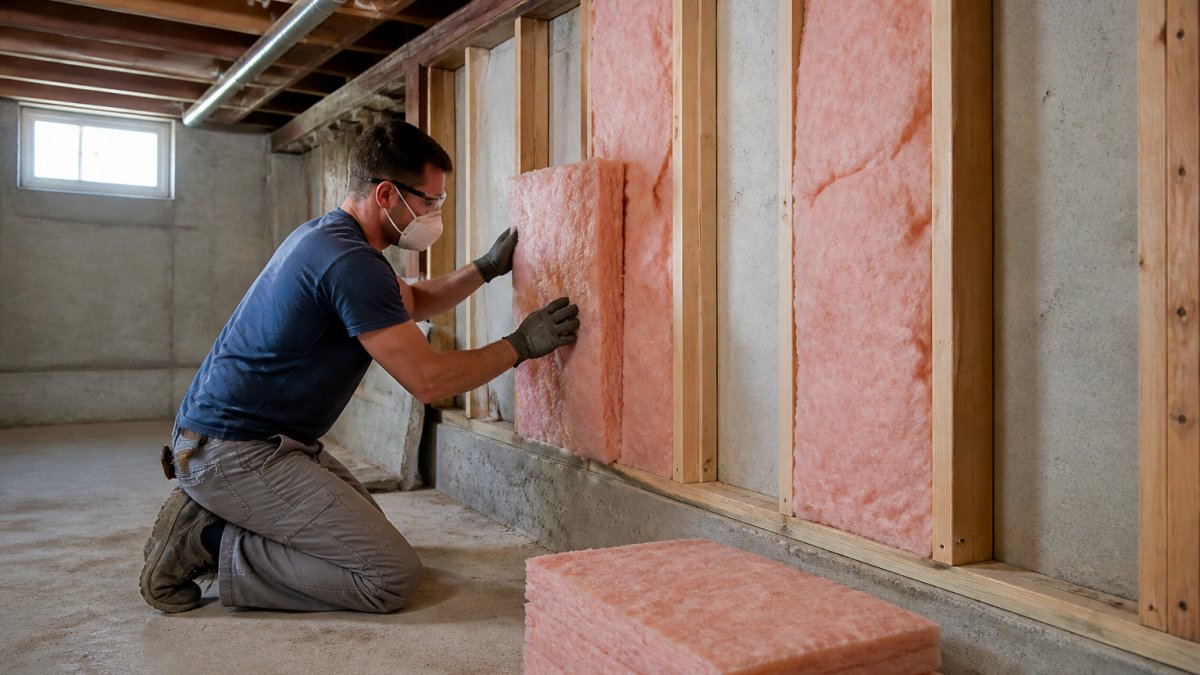
Proper installation is where most basement insulation projects succeed or fail. Materials matter, but so do air sealing, thermal bridging, fire protection, pest control, and vapor placement.
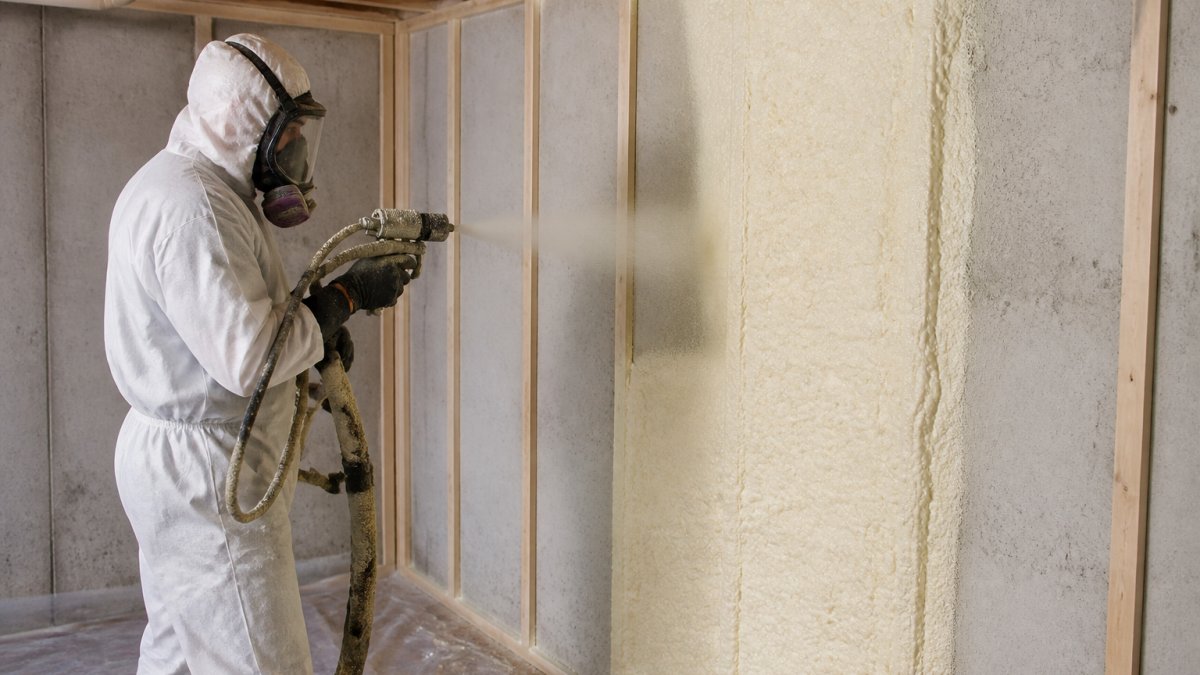
Step 1: Air seal before you insulate
Air leaks waste more energy than conduction in most basements. Before insulation goes up, seal:
- Cracks and joints in the foundation wall
- The rim joist and band board area, where the floor framing meets the foundation
- Gaps around utility penetrations (plumbing, electrical, HVAC lines)
- The top plate where the wall meets the floor above
Use caulk for small gaps and spray foam sealant for larger ones. This step alone meaningfully reduces air infiltration, and it is the step most DIY attempts skip.
Step 2: Control thermal bridging
Wood studs and concrete are poor insulators. Frame a wall and fill the cavities with batts, and heat still escapes through the studs, a path called thermal bridging. The fix is a continuous layer of rigid foam or spray foam on the interior side of the wall, separating the framing from the cold foundation.
Step 3: Get the vapor layer right
In New Jersey's climate, the vapor retarder generally goes on the interior (warm) side of the insulation, but exact placement depends on the material:
- Closed-cell spray foam: Acts as its own air and vapor barrier. No separate poly is needed, and adding one can trap moisture.
- Rigid foam board: Seams and edges must be sealed with caulk or foam tape. A separate vapor retarder is often unnecessary if the foam is thick enough.
- Fiberglass and mineral wool: Require a separate vapor retarder and excellent air sealing. This is why many contractors avoid them in basements.
The most common failure mode is a vapor barrier in the wrong place, trapping moisture inside the assembly and leading to mold. When in doubt, follow the manufacturer's instructions for a below-grade application.
Step 4: Protect against fire and pests
- Fire protection: Most rigid foam and spray foam products require a code-compliant thermal barrier (typically drywall) over the insulation in occupied spaces. Never leave exposed foam in a finished basement.
- Pest gaps: Leave no unsealed gaps at the sill plate or rim area. Mice and insects use these as entry points, and non-continuous foam creates a highway.
- Termite awareness: In New Jersey, foam insulation can hide termite activity. Keep a visible inspection gap where required by local code and avoid direct foam-to-soil contact.
Step 5: Match the method to the space
- Finishing the basement: Insulate the walls and rim joist with closed-cell spray foam or rigid foam board, then frame and finish.
- Leaving it unfinished: Insulating the basement ceiling (the floor above) may be the better choice, keeping the living space above warmer while leaving the basement cooler.
- Partial finish: Insulate only the walls of the rooms you will use, and seal the rim joist across the whole basement.
Common failure modes to avoid
- Vapor barrier on the wrong side of the assembly
- Batts compressed into cavities, which reduces R-value
- Foam left exposed without a thermal barrier
- Rim joist left unsealed, which undermines the whole wall
A contractor experienced in New Jersey basements will walk the space, check moisture, and specify the assembly that fits your foundation and finish plan.
Basement Insulation and Moisture Control
Moisture separates a successful basement project from a failed one. New Jersey basements are naturally damp: the water table is high, seasonal rain is heavy, and humidity is constant.
Moisture control starts with understanding your basement's current condition. Is water actively seeping in? Is the concrete damp to the touch? Does the space smell musty?
A vapor barrier (or vapor retarder) prevents warm indoor air from migrating into the insulation and condensing against the cold foundation wall.
Condensation risk increases when you insulate without addressing humidity.
Basement Waterproofing Before Finishing and Insulating
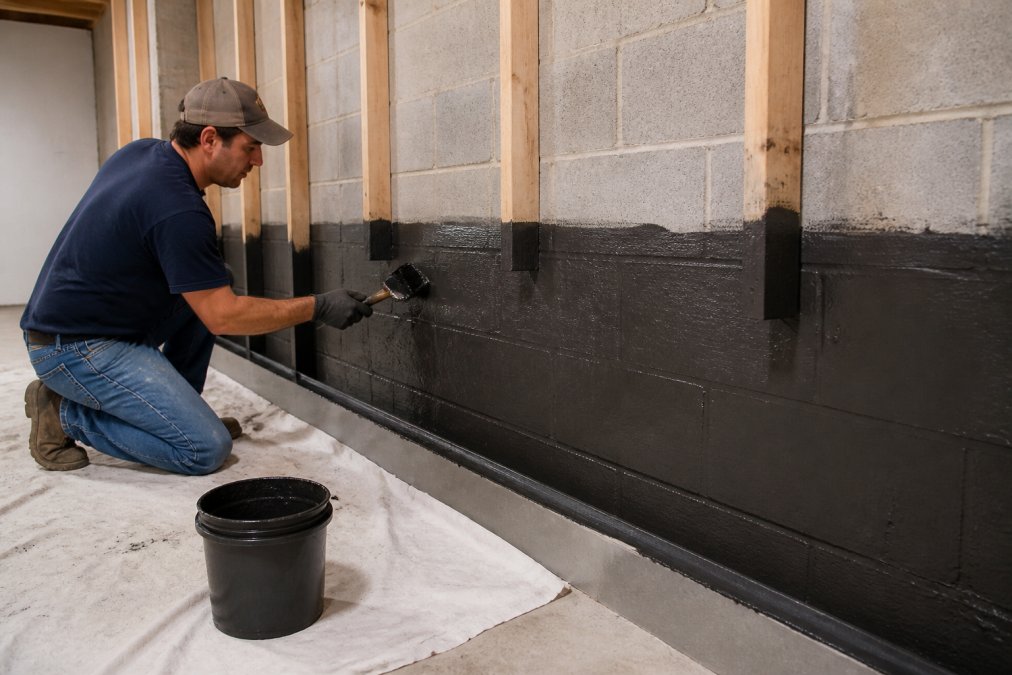
Waterproofing must come before insulation. Water and insulation are incompatible: wet insulation loses its thermal value and becomes a breeding ground for mold.
Start with a moisture assessment.
Common waterproofing approaches include interior and exterior drainage systems, sump pumps, and foundation sealers.
Once your basement stays dry through a full season of rain and snow melt, you're ready to insulate.
Comfort, Indoor Air Quality, and Home Value
An insulated, finished basement transforms how your home feels and functions.
Indoor air quality improves when your basement is properly insulated and sealed. Reduced air leakage means fewer drafts carrying dust and allergens inside, and better humidity control reduces mold and musty odors.
A finished, insulated basement adds significant resale value.
A finished basement also improves daily life, becoming a gathering space, playroom, workout area, or guest suite.
Getting Started with Your Basement Insulation Project
The first step is a professional assessment.
Next, address existing moisture problems. If your basement shows dampness, water seepage, or high humidity, solve those before insulating.
Once moisture is controlled, choose your insulation strategy. Finishing the basement as living space?
PIONEER WOODWERX specializes in basement remodeling across Old Bridge and Central New Jersey, handling everything from moisture assessment and waterproofing through insulation installation and finishing.
If you're ready to transform your basement into a comfortable, energy-efficient part of your home, the EPA's guidance on basement moisture and ventilation offers additional resources. You can also consult the International Energy Conservation Code (IECC) recommendations for basement insulation R-values to understand current standards for your region.
Frequently Asked Questions
What R-value is required for basement walls in New Jersey?
New Jersey building codes require basement insulation to meet energy efficiency standards that typically call for R-15 to R-21 in foundation walls, depending on the insulation method and your specific location within the state. Spray foam and rigid foam board both achieve these values effectively. The exact requirement depends on whether you're insulating the rim joist, band board, or foundation walls themselves. A local energy audit or consultation with your contractor will clarify the right R-value for your home's foundation type and climate zone.
How can basement insulation improve comfort in a New Jersey home?
Basement insulation stops cold air from radiating through foundation walls and eliminates drafts that make basements feel damp and uncomfortable. In winter, insulation keeps warm air circulating instead of being lost through uninsulated concrete. In summer, it reduces heat gain and keeps cooling costs down. Proper insulation also stabilizes temperature swings that occur throughout the day and season, making finished basements genuinely usable year-round rather than seasonal spaces.
Does basement insulation help reduce energy use and heating costs?
Yes. Basements are a major source of heat loss in homes because concrete foundation walls conduct cold directly into living spaces above. Insulating basement walls and the rim joist reduces the workload on your heating system, which lowers monthly energy bills. The savings depend on your current insulation level, the R-value you install, and your local climate, but many homeowners see noticeable reductions in winter heating costs within the first season.
What should I do before insulating my basement to prevent moisture problems?
Waterproofing must come before insulation. Check your foundation for cracks, efflorescence (white mineral deposits), or active water seepage. Address any drainage issues around the exterior of your home first. Install or upgrade gutters and downspouts to direct water away from the foundation. Once the basement stays dry, you can safely install vapor barriers and insulation. Skipping waterproofing leads to condensation, mold, and insulation failure, so it's the essential first step.
A cold, damp basement isn't something you have to accept. The combination of proper waterproofing, quality insulation, and professional installation creates a basement that actually serves your family, whether as storage, living space, or both. PIONEER WOODWERX has helped homeowners throughout Central New Jersey achieve exactly that. Request a free consultation to discuss your basement and learn how insulation can improve your home's comfort, efficiency, and value.