 ultimate-guide
Bathroom Remodel NJ: 2026 Guide to Costs & Contractors
Table of Contents
- What a Bathroom Remodel NJ Homeowners Plan Actually Involves
- Bathroom Remodeling Timeline: What to Expect Week by Week
- Hiring a General Contractor in New Jersey: What to Check Before You Sign
- Aging-in-Place Bathroom Design NJ Options for Multigenerational Homes
- Permits, Inspections, and Code Requirements for a Bathroom Remodel NJ Project
- How to Set a Realistic Bathroom Remodel NJ Budget Without Hidden Costs
- Frequently Asked Questions
Last Updated: September 17, 2026
What a Bathroom Remodel NJ Homeowners Plan Actually Involves
A bathroom remodel NJ homeowners undertake is rarely just new tile and a vanity. It is a plumbing, electrical, and waterproofing project wearing a cosmetic disguise. At PIONEER WOODWERX, we walk Old Bridge homeowners through the same sequence every time, and the projects that go smoothly are the ones where the homeowner understood that sequence before demolition day.
The scope usually breaks into four layers:
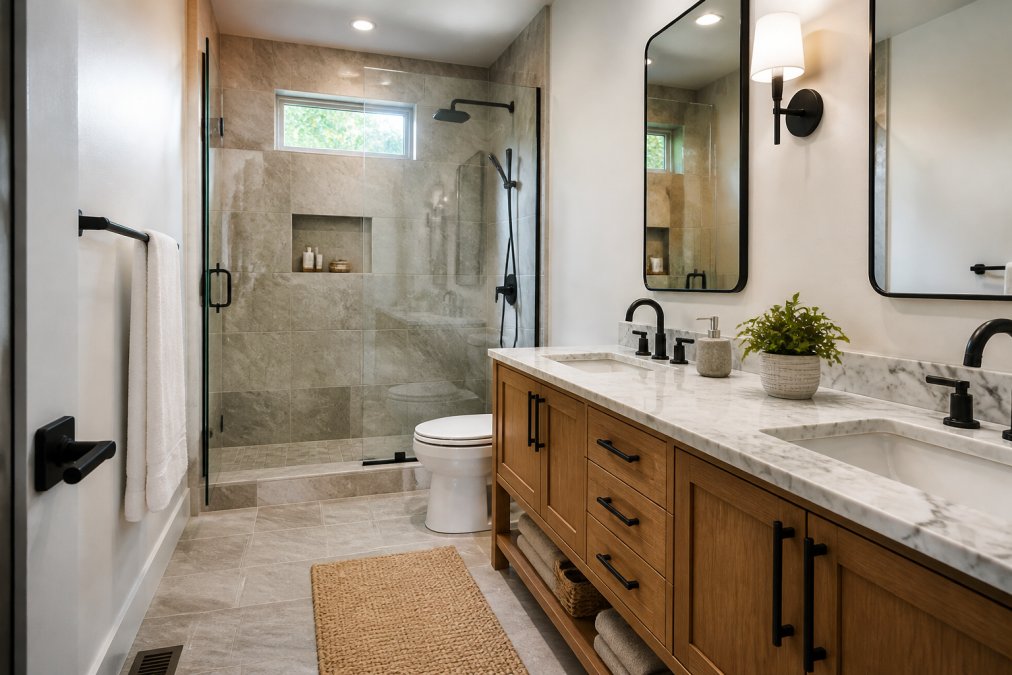
- The wet zone: shower pan, waterproofing membrane, drain slope, and tile
- The mechanical core: supply lines, drain relocation, exhaust fan, GFCI outlets
- The surfaces: flooring, vanity, mirror, lighting, paint
- The structure: subfloor leveling, framing for a curbless entry, blocking for grab bars
Most surprises live in layer two. Moving a toilet or shower drain means cutting into the floor joists, and in older Central New Jersey homes that can expose cast iron or galvanized pipe that has to be addressed before anything else proceeds. Budget conversations should start there, not at the tile showroom.
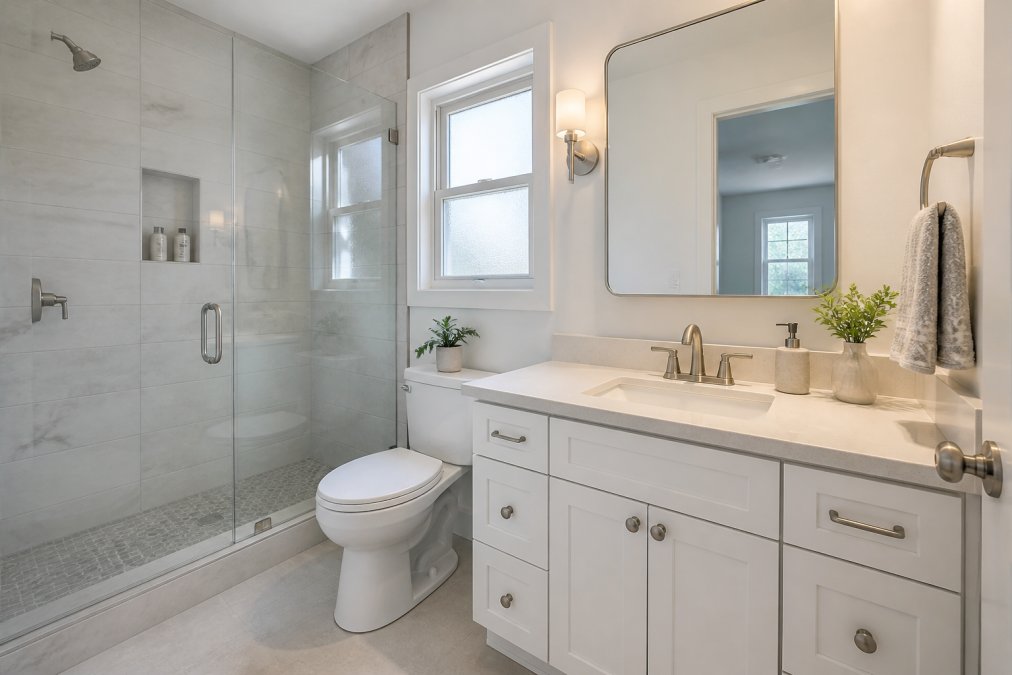
Bathroom Remodeling Timeline: What to Expect Week by Week
A typical hall bathroom takes four to six weeks from demolition to final walkthrough. A primary bathroom with layout changes runs six to ten. The bathroom remodeling timeline stretches mainly because of inspections and material lead times, not labor.
| Phase | Typical Duration | What Happens |
|---|---|---|
| Design and permits | 2-4 weeks | Drawings, selections, municipal filing |
| Demolition and rough-in | 1 week | Tear-out, plumbing and electrical rough |
| Inspections | 2-5 business days | Rough plumbing and electrical sign-off |
| Waterproofing and tile | 1-2 weeks | Membrane, pan, tile set and grout |
| Fixtures and finish | 1 week | Vanity, toilet, glass, paint, punch list |
Two things wreck this schedule more than anything else: waiting on a special-order vanity, and a homeowner changing tile after the order is placed. Lock selections before demolition. A common mistake is treating the schedule as fixed when the material list is still fluid.
Hiring a General Contractor in New Jersey: What to Check Before You Sign
Hiring a general contractor in New Jersey comes down to three verifications: state registration, insurance certificates, and a written scope. New Jersey requires home improvement contractors to register with the Division of Consumer Affairs, and you can confirm a contractor's registration status through the New Jersey Division of Consumer Affairs contractor registration lookup.
Ask for the certificate of insurance directly from the carrier, not a photocopy from the contractor. General liability and workers' compensation both matter; if a crew member is injured on your property without coverage, that exposure lands on you.
Then compare the written scope line by line. A bid that says "bathroom remodel" with one number is not a bid. You want allowances itemized for tile, fixtures, and vanity, plus a stated policy on change orders.
Aging-in-Place Bathroom Design NJ Options for Multigenerational Homes
Aging-in-place bathroom design NJ families choose most often starts with the shower, not the grab bars. A curbless entry with a linear drain removes the single biggest fall risk in the room, and it can be built into a standard remodel if the framing allows.
Practical modifications that hold up over time:
- Curbless shower with a slight slope and a bench
- Blocking in the walls for future grab bars, added during framing
- Comfort-height toilet and a taller vanity to reduce bending
- Lever handles on faucets instead of knobs
- Anti-scald pressure-balance valve to cap water temperature
- Slip-resistant flooring rated for wet areas
The blocking detail is the one people regret skipping. Installing it during construction costs almost nothing; opening finished walls later does not. According to the CDC's older adult fall prevention guidance, falls are the leading cause of injury for adults 65 and older, and bathrooms are a common location.
PIONEER WOODWERX specializes in aging-in-place remodeling for exactly this reason, and we build the reinforcement in during the framing stage whether or not the homeowner installs bars on day one.
Permits, Inspections, and Code Requirements for a Bathroom Remodel NJ Project
Most bathroom remodels require a permit, and the ones that do not still require code-compliant work. Cosmetic swaps like paint, a mirror, or a vanity top usually fall outside permitting. Anything touching plumbing, electrical, or structural framing does not.
What typically triggers a permit:
- Relocating or adding a drain, supply line, or vent
- Adding or moving electrical circuits, outlets, or the exhaust fan
- Removing or altering a wall
- Changing a window or adding one
Inspections generally happen in two stages: rough-in, before walls close, and final, after everything is installed. The rough inspection is the one homeowners should attend. It is the last moment to catch a venting or slope problem before it is buried behind tile.
Code items that catch people off guard include exhaust fan venting to the exterior rather than the attic, GFCI protection near water, and the required clearance between the toilet and adjacent surfaces. Confirm current requirements with your local construction office, since New Jersey adopts updated model codes on its own schedule.
How to Set a Realistic Bathroom Remodel NJ Budget Without Hidden Costs
A realistic budget starts with a contingency line, not a wish list. Set aside a percentage for what demolition reveals, because in older homes it always reveals something. Pricing for a specific project depends on size, layout changes, and finish level, so the honest answer is that any figure quoted before a site visit is a guess. Request a free consultation for a scope-based number.
Where budgets quietly break:
- Layout changes. Moving plumbing adds rough-in labor, permits, and inspection time.
- Allowances. A tile allowance that does not match the tile you actually want.
- Unforeseen conditions. Rot, undersized framing, or outdated wiring behind the walls.
- Add-ons mid-project. Heated floors and niche lighting are easy to want and easy to forget to budget.
A useful test: if a contractor gives you a firm number over the phone without seeing the bathroom, that number is a sales tool, not an estimate. The same applies to us. PIONEER WOODWERX prices from a walkthrough, and we put allowances in writing so the final invoice is not a surprise.
Bathroom remodeling in Central New Jersey rewards homeowners who treat it as a construction project rather than a decorating project. Get the plumbing, waterproofing, and permits right, and the finishes take care of themselves. PIONEER WOODWERX is a veteran-owned general contractor serving Old Bridge and the surrounding counties, handling bathroom renovations, kitchen remodels, decks, basements, and aging-in-place modifications under one roof. Our team provides dependable project management, real-wood craftsmanship, and a written scope from the first consultation. Get started with PIONEER WOODWERX and request a free consultation for a bathroom that is built to last.
Frequently Asked Questions
What permits are required for a bathroom remodel in New Jersey?
Most bathroom remodels in New Jersey require a building permit, and separate permits for plumbing, electrical, and mechanical work. Cosmetic updates like paint or a new vanity top typically do not. Your general contractor should pull the permits and schedule inspections with your local building department. Skipping permits can stall a future home sale, so confirm who is responsible before work starts.
How long does a typical bathroom remodel take to complete?
A full bathroom remodel usually runs four to eight weeks from demolition to final walkthrough. A simple cosmetic refresh may take one to two weeks. The bathroom remodeling timeline depends on permit turnaround, material lead times, and whether structural or plumbing changes are involved. Ask your contractor for a written schedule with milestones so you can plan around the disruption.
How do I choose a reliable general contractor in Central New Jersey?
Check the contractor's New Jersey Home Improvement Contractor registration, liability insurance, and workers' compensation coverage. Ask for references from projects completed in the past year and visit one if possible. Get a written scope of work, a payment schedule tied to milestones, and a start and finish date. A veteran-owned remodeling company should be able to show all of this without hesitation.
What should aging-in-place bathroom design in NJ include?
Prioritize a curbless or low-threshold shower, grab bars anchored into blocking behind the walls, a comfort-height toilet, and slip-resistant flooring. A handheld showerhead and a fold-down bench add flexibility. Wider doorways and a clear turning radius help if a walker or wheelchair becomes necessary later. These changes work well for guests of all ages and add resale value.