 ultimate-guide
Benefits of Hiring Local Custom Carpenters (2026 Guide)
Table of Contents
- Why Your Home Project Deserves a Local Custom Carpenter
- 5 Key Benefits of Hiring Local Custom Carpenters
- Custom Wood Furniture vs Mass Produced: What’s the Real Difference?
- How to Identify Solid Wood Furniture Before You Buy
- Understanding the Cost of Custom Carpentry in New Jersey
- A Practical Checklist for Vetting a Local Carpenter
- Conclusion: Building Value That Lasts with Pioneer Woodwerx
- Frequently Asked Questions
Last Updated: September 7, 2026
Why Your Home Project Deserves a Local Custom Carpenter
Choosing the right professional for a home renovation or custom build often comes down to a simple question: what are the benefits of hiring local custom carpenters versus a big-box store or a distant contractor? For homeowners in Old Bridge, New Jersey, the answer usually involves a blend of quality, communication, and accountability that only a nearby specialist can offer. At PIONEER WOODWERX, we have seen how a local partnership transforms a project from a transaction into a lasting improvement to your home.
A local custom carpenter is a skilled tradesperson who designs and builds wood elements specifically for your space, rather than installing pre-made units. This approach ensures the work fits your home’s exact dimensions, style, and structural quirks. Many homeowners discover that generic services cannot address the unique challenges of older homes or custom layouts, which is where a dedicated professional becomes essential.
Below, we will break down the specific advantages you gain, the real differences between custom and mass-produced pieces, and how to vet a professional effectively. We will also cover how a project with a local expert in New Jersey handles the practical details of budgeting and timelines.
5 Key Benefits of Hiring Local Custom Carpenters
The advantages of working with a local professional extend far beyond the final product. These five benefits cover the entire experience, from the first design conversation to the last coat of finish.
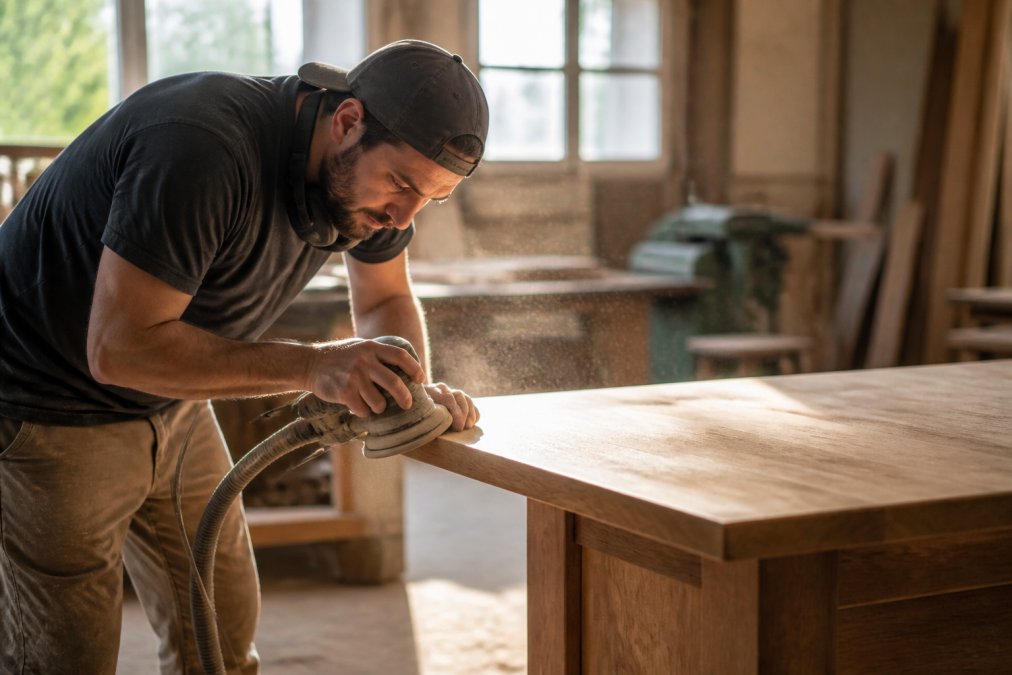
1. Unmatched Craftsmanship and Structural Integrity
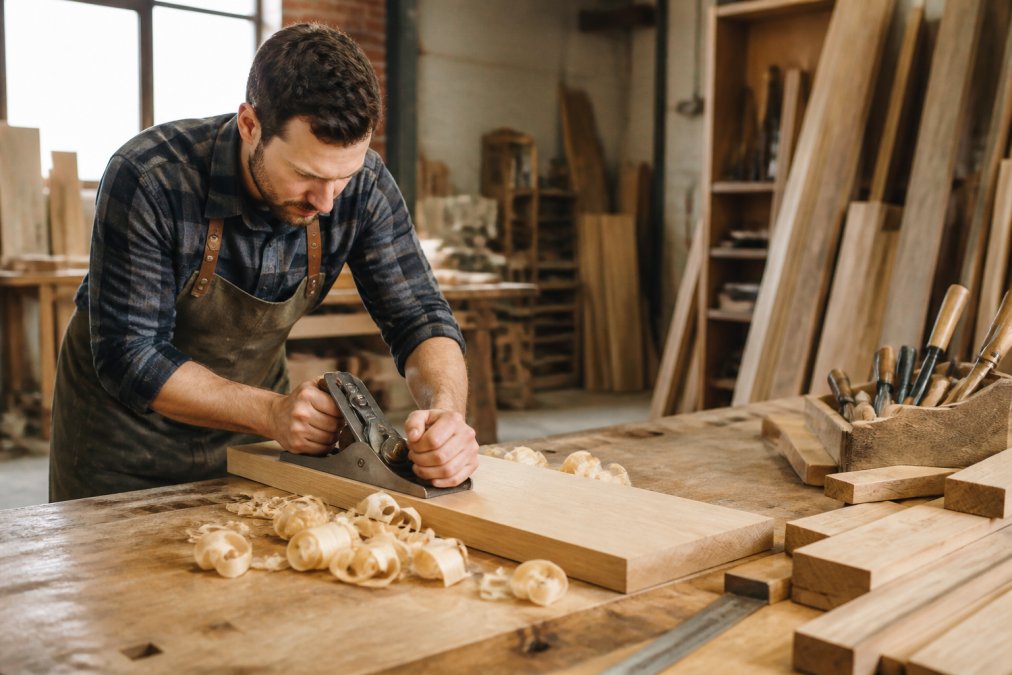
The primary reason to hire a local custom carpenter is the level of craftsmanship applied to your project. Unlike factory assembly, a local expert uses joinery and finishing techniques that prioritize long-term structural integrity over speed. This means your built-in shelves, cabinetry, or furniture are designed to handle daily use for decades, not just until the next renovation. The workmanship reflects a deep understanding of wood grain, load-bearing points, and finish carpentry that is difficult to find elsewhere.
2. True Custom Solutions and Design Consultation
A significant benefit is the ability to get bespoke carpentry tailored to your living habits. During a design consultation, the carpenter asks how you use the space, what you store, and how you gather. This leads to custom solutions that maximize your home’s potential, such as a dining table sized for your family’s holiday gatherings or built-in storage that hides clutter without sacrificing style. This level of personalization is impossible with off-the-shelf products.
3. Clear Project Management and Timelines
Local professionals rely on their reputation within the community, which drives them to maintain clear communication. You work directly with the person or a small team responsible for the build, eliminating the confusion that often comes with large companies and subcontractors. A dedicated carpenter provides a realistic project timeline, orders materials efficiently, and manages the installation process. This direct oversight reduces the risk of delays and ensures the project stays on track from start to finish.
4. Accountability and Direct Communication
When you hire a local carpenter, you know exactly who is responsible for the outcome. If an issue arises during the installation, you speak directly with the person who will fix it. This accountability is a stark contrast to dealing with a faceless corporation where you might speak to a different representative every time you call. For homeowners in Middlesex County, this direct line of communication builds trust and ensures that your vision is understood and executed correctly.
5. Supporting the Local Economy and Community
Hiring a local professional keeps your investment within the Central New Jersey economy. This supports local jobs and contributes to the financial health of your own community. Furthermore, a local carpenter who works in Old Bridge understands the specific housing stock and architectural styles common to the area. They are also invested in maintaining a positive reputation, which means they are more likely to go the extra mile to ensure your satisfaction.
Custom Wood Furniture vs Mass Produced: What’s the Real Difference?
The gap between custom wood furniture and mass-produced items is significant, impacting everything from durability to long-term cost. Mass-produced furniture often relies on particle board or veneers over cheaper cores to reduce manufacturing costs. In contrast, custom pieces from a local carpenter use 100% real wood, which can be sanded and refinished over time, extending the life of the piece indefinitely.
This difference also affects your wallet over the long term. While a mass-produced table may have a lower upfront price, it often needs replacement within a few years. A custom piece is an investment in home equity and longevity. When you work with a professional who uses solid materials and precise joinery, the initial cost is justified by the fact that the piece will likely outlast several generations of factory-made alternatives.
The Hidden Environmental and Longevity Advantage
Beyond the obvious quality difference, a major benefit of custom work is its alignment with sustainable practices, a growing priority for Old Bridge homeowners. Most mass-produced furniture is designed for a short lifecycle, ending up in a landfill within a decade. A custom piece, built with joinery that can be repaired, is a long-term investment that reduces waste.
A local carpenter can also source materials with a lower carbon footprint (the EPA). Instead of plywood shipped from overseas, a local professional can source hardwoods like black cherry or white oak from regional mills in Pennsylvania or New York. This reduces transportation emissions and supports regional forestry. When you commission a piece, you can ask for wood that is certified by the Forest Stewardship Council (FSC), a well-known, non-profit organization that sets standards for responsible forestry (fsc.org). This ensures your project doesn't contribute to deforestation.
Maintenance: The Real Cost of Ownership
A key, often-overlooked difference is maintenance. Mass-produced furniture with a printed wood grain over MDF cannot be sanded or refinished. When the surface is scratched or the veneer peels, the entire piece is trash. Custom furniture, however, is built to be serviced.
A solid wood table from a local carpenter can be sanded and re-oiled every few years to look brand new. A scratched cabinet door can be repaired by the original maker, who has the exact finish and stain. This serviceability is a direct cost saving over time. When you buy custom, you are not just buying a product; you are buying a relationship with a craftsman who can maintain and repair the piece for decades. This is a stark contrast to the disposable nature of big-box store furniture, which often cannot be repaired at all.
How to Identify Solid Wood Furniture Before You Buy
Knowing how to identify solid wood furniture is crucial, whether you are buying custom or shopping retail. A common mistake is assuming that a piece is solid wood just because it is heavy. Here is a quick method to check:
- Inspect the Grain: Look at the edges and underside. If the wood grain pattern continues consistently around the corners, it is likely solid wood. If the pattern stops abruptly or looks like a printed image, it is a veneer over a composite core.
- Check the Weight and Sound: Solid wood is dense. Knock on a drawer side or panel. Solid wood produces a dull, solid thud, while particle board or MDF sounds hollow and flat.
- Look at the Joints: Quality joinery, such as dovetail or mortise-and-tenon joints, indicates a piece built to last. Furniture that relies heavily on staples and glue is often mass-produced and less durable.
- Ask About the Source: A reputable carpenter will gladly tell you the species of wood and where it was sourced. If the seller cannot specify the material beyond "wood," it is often a sign of lower quality.
Understanding the Cost of Custom Carpentry in New Jersey
The cost of custom carpentry in New Jersey varies widely based on material selection, project complexity, and the level of detail required. It is important to understand that you are paying for skilled labor, precise installation, and a piece that is built to your exact specifications, not just the raw materials. This pricing reflects the time spent on design consultation, material sourcing, and the craftsmanship involved in the build.
Rather than focusing on a single number, consider the value of the finished product. A well-built custom piece adds functional value to your home and avoids the hidden costs of replacement associated with cheaper goods. For a specific quote, homeowners should request a consultation to discuss their project scope. A professional will provide a detailed estimate based on your specific needs, ensuring there are no surprises later.
What Drives the Price in Central New Jersey?
To understand the estimate, you need to know what you are paying for. A typical custom carpentry quote in Middlesex County is broken down into three main areas:
-
Materials (30-40% of the quote): The species of wood is the primary driver. Domestic hardwoods like maple or oak are generally more affordable than imported exotics. The grade of the lumber matters too; clear, knot-free stock costs more than common grade. Your carpenter will also factor in the cost of hardware, finishes, and adhesives.
-
Shop Labor (40-50% of the quote): This is the time spent designing, milling, joinery, assembly, and applying the finish. Complex joinery like dovetails or hand-cut tenons takes more time than a simple butt joint. A custom finish, such as a hand-rubbed oil or a multi-step lacquer, adds significant labor time compared to a single coat of polyurethane.
-
Installation and Overhead (20-30% of the quote): This covers the carpenter's travel time to your home in Old Bridge, the setup of tools, and the cost of liability insurance and shop overhead. It also includes the time to handle unexpected site conditions, such as out-of-square walls in older homes.
The Local Regulatory Factor: Permits and Codes
A critical cost component that generic articles ignore is regulatory compliance. In Old Bridge, any structural modification, like removing a load-bearing wall for a built-in or altering a stairway, requires a building permit from the Township of Old Bridge Construction Code Department. The fees are typically based on the estimated cost of the work.
More importantly, the work must comply with the New Jersey Uniform Construction Code (UCC) (nj.gov). A professional local carpenter will know these requirements. They will factor in the cost of pulling the permit and scheduling the required inspections (e.g., rough-in and final). A distant contractor unfamiliar with Old Bridge's specific enforcement of the UCC might underestimate this process, leading to costly delays and rework if an inspector flags a non-compliant installation. A local expert builds this compliance into the estimate, ensuring your project passes inspection the first time and protecting your home's resale value.
A Practical Checklist for Vetting a Local Carpenter
Finding the right professional in Old Bridge requires more than a quick online search. To ensure quality and reliability, use this vetting checklist before signing any agreement:
- Verify Licensing and Insurance: Ask for proof of contractor licensing and liability insurance to protect your property during the project.
- Review a Portfolio: Ask to see examples of previous work, especially projects similar to yours, to gauge the quality of finish carpentry and joinery.
- Check References: Speak with past clients about their experience regarding communication, cleanliness, and adherence to the project timeline.
- Get a Detailed Written Estimate: Ensure the quote includes material grades, dimensions, and a clear payment schedule based on project milestones.
- Discuss the Timeline: Confirm the expected start and completion dates and ask how they handle potential delays, such as material shortages.
- Clarify Maintenance: Ask about the finish used and how to care for the wood to ensure it lasts. This shows the carpenter’s confidence in their workmanship.
Conclusion: Building Value That Lasts with Pioneer Woodwerx
Hiring a local professional is about more than just a single project; it is an investment in the comfort and value of your home. The benefits of hiring local custom carpenters include superior materials, direct communication, and work that stands the test of time, all while supporting the local economy in New Jersey. Whether you need a custom dining table or a full kitchen renovation, the right partner makes all the difference.
At PIONEER WOODWERX, a veteran-owned and operated business in the heart of Middlesex County, we specialize in custom builds that improve how families live. Our team provides dependable project management from the first consultation through final installation, ensuring your project is handled with care and precision.
Get started with PIONEER WOODWERX and build a space that adds lasting value to your Old Bridge home. Request A Free Consultation to discuss your project with a local expert.
Frequently Asked Questions
How does hiring a local veteran-owned business benefit the Old Bridge community?
Hiring a veteran-owned local business like Pioneer Woodwerx keeps your investment in the Central Jersey economy, supporting local jobs and families. Veteran-owned businesses are built on a foundation of discipline, accountability, and pride in workmanship. You get a team that treats your project with the respect it deserves, communicates clearly, and shows up on time, all while contributing to the prosperity of your own neighborhood.
Does custom woodwork actually increase home resale value in Central NJ?
Yes, high-quality custom woodwork can increase your home's resale value and market appeal. Built-in bookshelves, custom mantels, and quality trim are attractive features that set a home apart. More importantly, these projects are built to last, which is a strong selling point for buyers who want to avoid future repair costs. The durability and bespoke nature of the work often translates to a higher perceived value and can speed up the sale process.
What is the difference between a general contractor and a custom carpenter?
A general contractor manages the entire construction process, coordinating various trades like plumbing, electrical, and framing. A custom carpenter specializes in the woodwork itself: building furniture, installing trim, creating built-ins, and ensuring a perfect finish. Many companies, like Pioneer Woodwerx, operate as a hybrid, offering the project management of a general contractor with the specialized skills of a custom carpenter, so you don't have to hire and manage multiple people.
How do I verify the credentials of a local carpenter in New Jersey?
First, ask for proof of licensing and insurance. In New Jersey, home improvement contractors must be registered with the state's Division of Consumer Affairs. You can verify this registration online. Ask for references and photos of completed work, particularly projects similar to yours. A reputable carpenter will be happy to share their credentials and put you in touch with past clients who can vouch for their quality and professionalism.