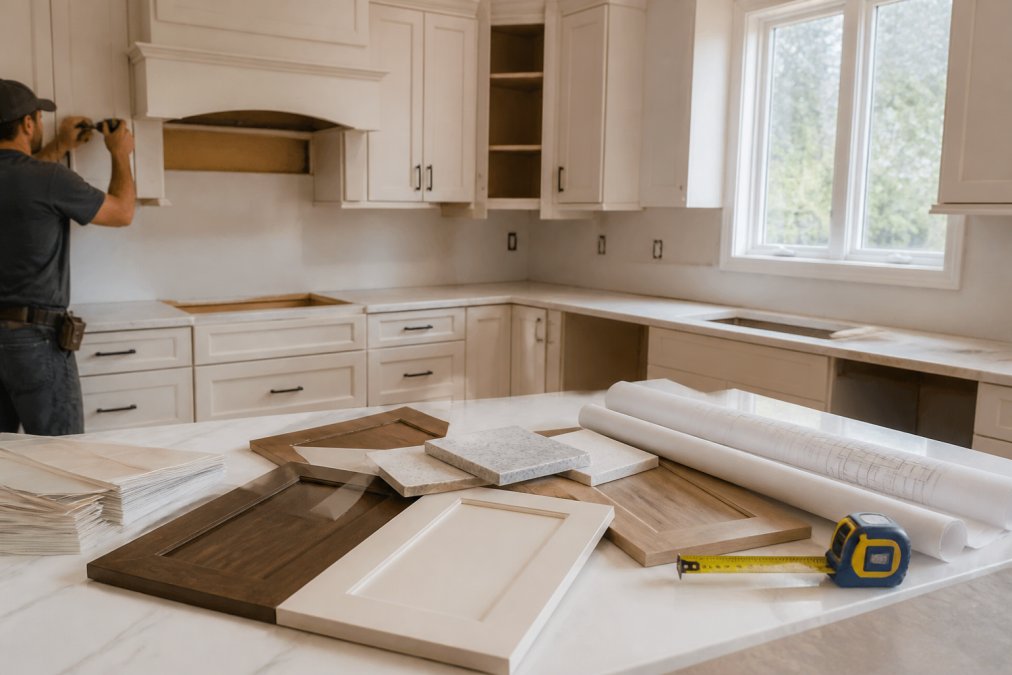
 listicle
Best Kitchen Remodelers in Middlesex County: 2026 Guide
Table of Contents
- How We Evaluated the Best Kitchen Remodelers in Middlesex County
- Credentials, Experience, and Local Track Record
- 1. PIONEER WOODWERX: Veteran-Owned Craftsmanship in Old Bridge
- 2. Magnolia Home Remodeling Group: Full-Service Design and Installation
- 3. Kitchen Magic: Specialized Kitchen Design with Strong Warranties
- 4. Cranbury Design Center: 45 Years of Design-Build Experience
- 5. Diamond Ridge Contracting: Free Estimates and Versatile Services
- 6. Heart of Home Kitchens: Luxury Custom Cabinetry and Finishes
- 7. Xpress Construction: 28 Years of General Contracting Experience
- Kitchen Renovation Timeline: What to Expect in Middlesex County
- Kitchen Remodeling Permit Requirements in New Jersey
- Hiring a General Contractor in Middlesex County
- Frequently Asked Questions
Last Updated: September 12, 2026
How We Evaluated the Best Kitchen Remodelers in Middlesex County
The contractor with the biggest ad budget is rarely the one who shows up on schedule. This guide from PIONEER WOODWERX ranks seven local kitchen remodelers in Middlesex County on credentials, scope, and track record.
Kitchen remodeling reconfigures a kitchen's layout, cabinetry, surfaces, and systems, and in Middlesex County that work runs through specific state and local rules.
We scored each firm on four criteria:
- Credentials and licensing: New Jersey Home Improvement Contractor registration, insurance, and years operating locally
- Scope: Whether the firm handles design, demolition, cabinetry, countertops, plumbing, and electrical under one contract
- Material quality: Real wood versus engineered stock, and who sources the materials
- Local track record: Completed projects in Old Bridge, East Brunswick, Edison, and surrounding towns
Credentials, Experience, and Local Track Record
New Jersey requires home improvement contractors to register with the Division of Consumer Affairs before taking on residential work, and you can verify any registration through the New Jersey Division of Consumer Affairs license lookup. Ask for the registration number before you sign anything.
Beyond the paperwork, three signals separate serious firms from the rest:
- A physical local address. Companies based in Middlesex County can return for warranty work. Out-of-county outfits often can't.
- A named project manager. You should know who is on site each week, not just who sold the job.
- Written scope with allowances. Vague contracts are where budgets die.
Experience matters most in older housing stock: much of Old Bridge and neighboring towns was built between the 1950s and 1980s, meaning load-bearing walls in unexpected places and wiring that predates modern code.
1. PIONEER WOODWERX: Veteran-Owned Craftsmanship in Old Bridge
PIONEER WOODWERX is a veteran-owned general contractor based in Old Bridge that earns the top spot by combining full kitchen renovation with genuine custom woodwork under one roof, most firms do one or the other.
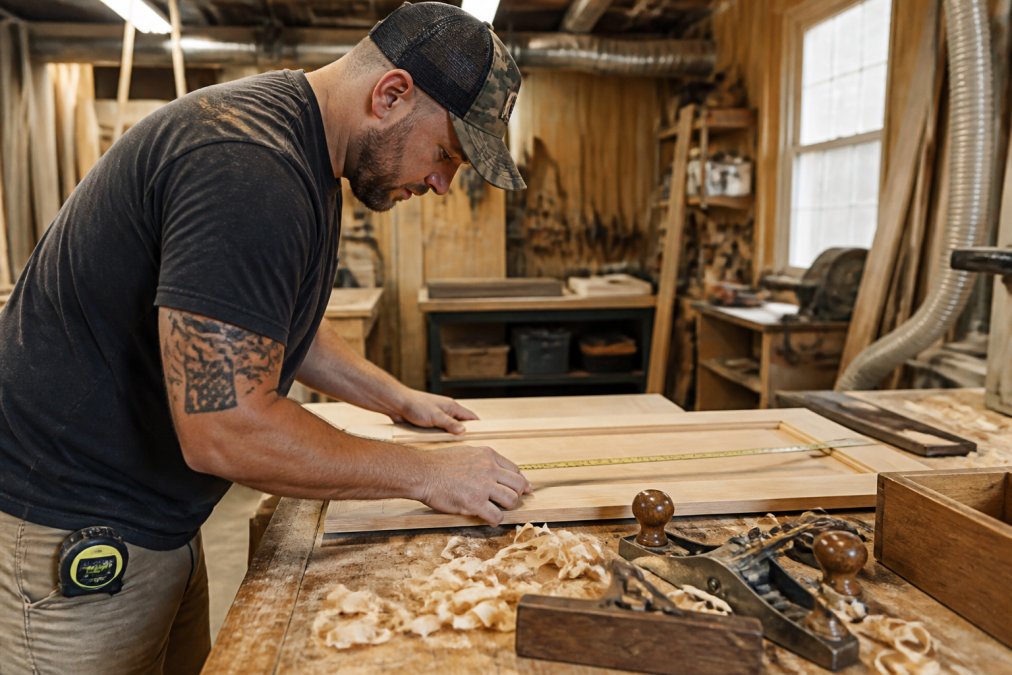
The Army Veteran ownership shows in how projects are run: fixed scopes, clear timelines, and a single point of contact from consultation through final installation. The firm builds with 100% real wood rather than particle board.
Where PIONEER WOODWERX stands apart is range within one contract: custom cabinetry, countertops, flooring, backsplash design, plumbing fixtures, electrical upgrades, plus aging-in-place modifications.
The honest limitation: as a smaller shop, the calendar fills faster than a large outfit's, so book early. Pricing depends on scope, materials, and layout, and the team provides a free consultation.
2. Magnolia Home Remodeling Group: Full-Service Design and Installation
Magnolia runs a full-service model: design, custom cabinetry and countertop selection, and installation managed end to end across Middlesex County under one contract.
The trade-off is that pricing is customized per project, so you won't get a number until after a consultation.
3. Kitchen Magic: Specialized Kitchen Design with Strong Warranties
Kitchen Magic focuses exclusively on kitchens: deep design expertise, premium material sourcing, and warranty coverage stronger than most generalists offer.
What you don't get is anything outside the kitchen. If the project touches a bathroom or a basement, you'll need a second contractor, and coordinating two schedules adds weeks.
4. Cranbury Design Center: 45 Years of Design-Build Experience
Four and a half decades in the region is a track record, not a marketing line. Cranbury Design Center runs an integrated design-build process, so the people drawing the plans are accountable to the people building them.
That structure removes the classic finger-pointing between designer and installer. The catch is that pricing requires a consultation.
5. Diamond Ridge Contracting: Free Estimates and Versatile Services
Diamond Ridge offers free project estimates and handles full home renovation alongside kitchen work, saving coordination time for homeowners juggling several projects.
The trade-off is the generalist approach: a kitchen-only firm brings more specialized finish knowledge.
6. Heart of Home Kitchens: Luxury Custom Cabinetry and Finishes
Heart of Home Kitchens targets the high end: custom cabinetry design, luxury finishes, and detailed planning for clients who care about the look as much as the function.
Expect a premium tier; if your budget is fixed and modest, this is not the right fit.
7. Xpress Construction: 28 Years of General Contracting Experience
Twenty-eight years serving Middlesex County gives Xpress Construction a deep local network of suppliers and inspectors, and full-service general contracting lets it absorb surprises behind the walls.
As a generalist, it won't match a cabinetry specialist on finish detail. For structural work and multi-room renovations, that breadth is the point.
Kitchen Renovation Timeline: What to Expect in Middlesex County
A typical kitchen renovation in Middlesex County runs six to twelve weeks from demolition to final walkthrough, depending on whether walls move and whether custom cabinetry is involved. Permit review adds time before work starts, and in older housing stock the schedule is set less by the crew than by what is discovered once the walls open.
Here is how the schedule usually breaks down:
| Phase | Typical Duration | What Happens |
|---|---|---|
| Design and selections | 2-4 weeks | Layout, materials, cabinetry specs |
| Permits and approvals | 1-3 weeks | Local review, inspections scheduled |
| Demolition and rough-in | 1-2 weeks | Tear-out, plumbing, electrical |
| Cabinetry and surfaces | 2-4 weeks | Cabinet install, countertops, backsplash |
| Finishes and punch list | 1-2 weeks | Flooring, fixtures, final inspection |
What actually stretches the schedule in Middlesex County
Three local realities move the needle more than any other factor:
- Inspection windows, not construction. Rough-in inspections for electrical and plumbing are scheduled through the local construction office, and in busy towns like Old Bridge, East Brunswick, and Edison the gap between "ready for inspection" and "inspector on site" can add several days per trade.
- Housing stock surprises. Much of Old Bridge and the surrounding towns was built between the 1950s and 1980s. Knob-and-tube remnants, undersized panels, and non-standard framing are common. Each discovery triggers a scope change and, often, a re-inspection.
- Material lead times. Stock cabinets ship in days. Built-to-spec cabinetry and natural stone slabs are made-to-order, and a delayed slab can idle the whole job. Order countertops and cabinetry before demolition starts, not after.
A realistic week-by-week view
The first two weeks are the most schedule-sensitive: design and selections must be locked before demolition, because every change after that point cascades. Weeks three through five are rough-in, weeks six through nine are cabinetry and surfaces, and the final one to two weeks are finishes, punch list, and the certificate of approval.
How to protect your timeline
- Get a written schedule with named milestones, not a single completion date.
- Confirm who is responsible for scheduling inspections and who is on site to meet the inspector.
- Ask for lead times in writing for every made-to-order item.
- Build a two-week buffer into your own plans; the buffer is not pessimism, it is how the trades actually sequence.
Kitchen Remodeling Permit Requirements in New Jersey
Most kitchen renovations in New Jersey require permits, and the scope decides which ones (nj.gov). Cosmetic work like painting or swapping a faucet generally does not. Moving plumbing, adding circuits, relocating walls, or changing a gas line does.
In Old Bridge, applications go through the township's construction office, and the process follows the state's Uniform Construction Code. You can review the requirements through the New Jersey Division of Community Affairs construction code guidance.
Three permits come up most often in kitchen work:
- Building permit: Required when walls move or structural elements change
- Electrical permit: Required for new circuits, outlets, or panel work
- Plumbing permit: Required for relocated sinks, dishwashers, or gas lines
A registered contractor pulls these on your behalf. If a firm suggests skipping the permit to save time, walk away; unpermitted work surfaces during resale and can void insurance claims.
What most guides leave out: the local layer
State code is only half the story. Every Middlesex County municipality runs its own construction office, sets its own review windows, and applies its own zoning and historic-district rules on top of the state code, the layer where most out-of-county contractors get tripped up.
- Town-by-town construction offices. Old Bridge, East Brunswick, Edison, Woodbridge, and Sayreville each process applications on their own schedule. A contractor who works across the county knows which offices review quickly and which require in-person submittals.
- Zoning setbacks and lot coverage. If your project adds a bump-out or extends the footprint, the town's zoning officer reviews it before the building permit is issued. Setback rules vary block by block in older neighborhoods.
- Historic district review. Some older neighborhoods in the county fall under local historic preservation review, which adds a design-review step before construction can start. Confirm this before finalizing a layout, because a rejected design means starting the drawing board over.
- Certificate of approval. Once work is complete, the construction office issues a certificate of approval. That document is what a future buyer's inspector will look for, and its absence is one of the most common reasons a kitchen renovation becomes a negotiation point at resale.
How to verify before you commit
- Ask the contractor which towns they have pulled permits in during the past year.
- Confirm who submits the application and who meets the inspector on site.
- Request the permit number and the certificate of approval at project close.
- If the home is in a historic district, ask the contractor to walk you through the review step before signing.
Why this matters for your home's value
Beyond code compliance, permitted and inspected work affects resale: buyers and their inspectors treat a certificate of approval as proof the work was done to standard, and unpermitted work is routinely flagged during a sale. In a county where much of the housing stock predates modern code, that paper trail is often the difference between a smooth closing and a renegotiation.
Hiring a General Contractor in Middlesex County
Hiring a general contractor in Middlesex County means verifying registration, confirming insurance, and getting a written scope before any deposit changes hands.
Run this checklist before you sign:
- Verify the contractor's New Jersey registration number
- Request a certificate of insurance for general liability and workers' compensation
- Get three local references from the past 18 months
- Confirm who the on-site project manager will be
- Read the payment schedule; it should tie to milestones, not dates
- Confirm the written warranty terms for labor and materials
- Check that the contract lists allowances for tile, fixtures, and countertops
If you're searching for "kitchen remodelers near me" in Old Bridge or anywhere in Middlesex County, the same checklist applies. Local firms with a physical address and a verifiable registration are the ones worth your time.
Frequently Asked Questions
What should I look for when hiring kitchen remodelers in Middlesex County?
Verify New Jersey licensing through the Division of Consumer Affairs, confirm liability insurance and workers' compensation, and check for a physical local address. Ask for references from projects completed in the past year and request a detailed written contract that specifies materials, timeline, and payment schedule. A reputable remodeler will provide a free estimate and never pressure you to sign immediately.
How long does a typical kitchen renovation take in Middlesex County?
Most full kitchen renovations take 6 to 12 weeks from demolition to final walkthrough. Custom cabinetry can add 2 to 4 weeks to the kitchen renovation timeline. Permit approvals in Middlesex County typically add 1 to 3 weeks before work begins. Ask your contractor for a written schedule with milestones.
Do I need a permit for a kitchen remodel in Middlesex County?
Yes, most kitchen remodels require permits. New Jersey building codes require permits for electrical upgrades, plumbing fixture relocation, structural changes, and gas line work. Cosmetic updates like painting or replacing a countertop with the same layout often do not need permits. Always confirm with your local building department in Old Bridge or your specific Middlesex County municipality before starting work.
What is the difference between a kitchen designer and a general contractor?
A kitchen designer focuses on layout, materials, and aesthetics, producing drawings and specifications. A general contractor manages the entire build: permits, subcontractors, scheduling, and quality control. For a full renovation, you need both skill sets. Some firms offer design-build services that combine both under one contract, which simplifies communication and accountability.
How do I verify a contractor's license in New Jersey?
Use the New Jersey Division of Consumer Affairs online license lookup to confirm a Home Improvement Contractor registration. Ask for the contractor's registration number and verify it matches their business name. Also request a certificate of insurance for general liability and workers' compensation. A legitimate contractor will provide these without hesitation and carry a current registration.