 Listicle
Are Eco-Friendly Bathroom Upgrades Worth the Cost?
Last Updated: November 4, 2026
Quick Summary
An eco friendly bathroom upgrade is usually worth the cost for New Jersey homeowners, mainly because of lower water use and lower water heating costs. Low-flow showerheads, faucet aerators and EPA WaterSense toilets are the simplest places to start, and the payoff depends on fixture age, how long you plan to stay, and whether you are already opening walls.
- Look for the EPA WaterSense label on toilets rated 1.28 gallons per flush or less.
- Showerheads rated 1.75 gallons per minute or less can cut shower water use with basic tools.
- Faucet aerators are an inexpensive option that screws onto existing bathroom faucets.
- Clean showerhead nozzles every few months because New Jersey mineral buildup can clog spray holes.
- Check your water utility and the New Jersey Board of Public Utilities for possible fixture rebates.
Table of Contents
- Why Eco Friendly Bathroom Upgrades Pay Off in New Jersey Homes
- Low-Flow Showerheads and Faucet Aerators: The Easiest Starting Points
- EPA WaterSense Certified Fixtures: What the Label Means for Your Toilet and Shower
- Sustainable Materials for Bathroom Vanities, Countertops and Tile
- Planning a Bathroom Remodel NJ Homeowners Can Budget For
- What an Eco-Friendly Bathroom Renovation Costs and How Pricing Varies
- Scheduling Your Eco-Friendly Bathroom Upgrade With Pioneer Woodwerx
- Frequently Asked Questions
Why Eco Friendly Bathroom Upgrades Pay Off in New Jersey Homes
An eco friendly bathroom upgrade is worth the cost for most New Jersey homeowners, but the payoff depends on which fixtures you choose and how you install them. Pioneer Woodwerx builds decks, kitchens, basements, and bathrooms across Middlesex County. Generally, the bathroom is where water and energy use concentrate, so it is often a good place to start.
Most of the value comes from lower water use and lower water heating costs. A bathroom with dated fixtures can waste a lot of hot water every day without anyone noticing. Replacing a few key pieces rarely requires tearing out walls, which makes this one of the more manageable efficiency projects in a home.
The answer to whether it is worth it comes down to three things: how old your current fixtures are, whether you plan to stay in the home long enough to recover the cost, and whether you are already opening walls for a remodel. We walk through each of these below.
Low-Flow Showerheads and Faucet Aerators: The Easiest Starting Points
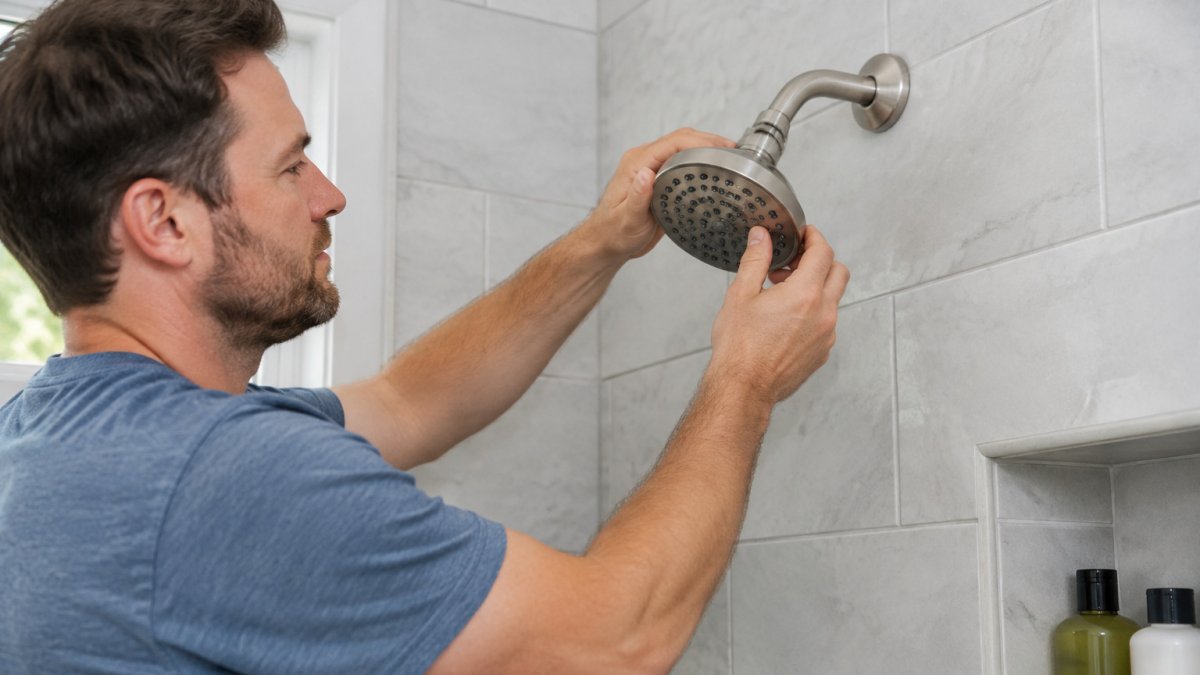
Low-flow showerheads and faucet aerators are the simplest upgrades to start with. A showerhead rated at 1.75 gallons per minute or less can cut shower water use, and many models install with basic tools. Aerators are an inexpensive option that screws onto existing bathroom faucets.
Watch out: mineral buildup in New Jersey water can clog fine spray holes over time. Plan on cleaning the nozzles every few months, or choose models with easy-clean faces.
A homeowner installing a water-saving showerhead on a tiled shower wall. The homeowner is American.
The article's main upgrade options are easiest to compare side by side.
| Upgrade | Typical water rating | Key note |
|---|---|---|
| Low-flow showerhead | 1.75 gallons per minute or less | Installs with basic tools |
| Faucet aerator | Screws onto existing faucet | Inexpensive option |
| WaterSense toilet | 1.28 gallons per flush or less | Compared with 3.5 gallons or more on older toilets |
| Dual-flush toilet | Lower-volume flush for liquid waste | More complex valve, fussier with hard water |
| WaterSense faucet | 1.5 gallons per minute or less | Standard maximum is 2.2 gallons per minute |
EPA WaterSense Certified Fixtures: What the Label Means for Your Toilet and Shower
The EPA WaterSense label identifies fixtures that meet federal efficiency and performance criteria set by the U.S. Environmental Protection Agency. It is the most useful shortcut when comparing toilets and showerheads, because it confirms the product was tested for both water savings and performance, not just flow rate. You can check current certified products on the EPA WaterSense product search.
Toilets: the flush-rate math that matters
Look for the label on toilets rated at 1.28 gallons per flush or less (the EPA). Compared with older toilets using 3.5 gallons or more per flush, a WaterSense model can save a substantial amount of water over the course of a day.
Dual-flush models go further by offering a lower-volume flush for liquid waste and a full flush for solids. They are widely available with the WaterSense label, but the trade-off is a more complex valve assembly that can be fussier in areas with hard water.
Showerheads and faucets
WaterSense showerheads are capped at 2.0 gallons per minute, and many efficient models run at 1.75 or 1.5 gallons per minute. WaterSense bathroom faucets are rated at 1.5 gallons per minute or less, compared with the 2.2-gallon federal maximum for standard faucets. The label also covers performance, so a certified low-flow showerhead is tested to deliver a usable spray rather than a weak trickle.
Installation realities in older New Jersey homes
A toilet swap is often straightforward, but older homes may need more than a straight replacement. Older homes can have issues such as a closet flange that is cracked or set too low, or a seized supply stop valve, which a plumber can address during installation. Showerhead and aerator swaps are simpler: most thread on by hand, though a wrench and thread tape help prevent leaks.
Watch out: mineral buildup in New Jersey water can clog fine spray holes over time. Plan on cleaning the nozzles every few months, or choose models with easy-clean faces.
Local rebates and incentives worth checking
This is where most eco-bathroom guides stop short. Some water utilities and state programs may offer rebates for efficient fixtures, and eligibility and availability change over time. Before you buy, check with your municipal water utility and the New Jersey Board of Public Utilities for current programs, and confirm that the specific model qualifies.
Sustainable Materials for Bathroom Vanities, Countertops and Tile
Sustainable materials cover a range of options, and the right choice depends on how the bathroom is used, how much maintenance you will tolerate, and what the material is actually made of. "Eco-friendly" is a marketing term, not a standard, so the useful questions are: how much recycled or rapidly renewable content does it contain, how long will it last in a wet environment, and what does it take to keep it clean?
Vanities
Bamboo vanities use a rapidly renewable grass that matures far faster than hardwood. The catch is humidity: solid bamboo can swell and cup in a steamy bathroom unless it is sealed and the room is ventilated well. Reclaimed or FSC-certified wood vanities are another option, and cabinet boxes made from composite panels with recycled content or low-formaldehyde binders are increasingly common. For a bathroom, prioritize a moisture-resistant finish and a cabinet box that stands up to steam over the sustainability claim alone.
Countertops
Composite stone and solid-surface countertops often include recycled mineral or glass content, and they are non-porous, which suits a bathroom sink area well. They are heavy and usually need professional fabrication and installation. Recycled glass countertops are another option with visible recycled content; they resist moisture but can be scratched, so they suit low-traffic powder rooms better than a busy family bath. If you are keeping an existing countertop and only replacing the sink or faucet, that is often the lower-impact choice.
Tile
Recycled glass tile contains recycled content, and it may require specialized thin-set mortar to install properly. For floors, slip resistance matters as much as recycled content in a bathroom, so check the tile's coefficient of friction rather than choosing on the sustainability label alone.
What happens to the old fixtures and materials
This is the part most guides skip. A bathroom upgrade produces real waste: a porcelain toilet, a metal faucet, a vanity cabinet, and often tile and countertop offcuts. Before demolition day, confirm your municipality's rules for bulky waste and scrap metal so the old fixtures leave the house responsibly.
Watch out: glass tile and recycled-content countertops can look identical to standard products, so ask for the recycled-content documentation rather than relying on the showroom label.
Planning a Bathroom Remodel NJ Homeowners Can Budget For
A bathroom remodel in New Jersey usually goes smoothly when the scope is defined early. Start by separating the must-have upgrades, such as a low-flow toilet and showerhead, from the nice-to-have finishes like a new vanity or tile. This keeps the budget honest and makes it easier to phase the work.
Older homes often hide surprises behind the walls, including outdated supply lines, wiring that needs updating, or subfloor damage. Build a contingency into the plan before you sign anything. Our guide on avoiding renovation budget overruns walks through how to keep the project on track.
Pricing depends on fixture selection, the amount of plumbing work, and access to the drain lines. Ask any contractor for a written scope, and check the U.S. Department of Energy's home energy guidance for ways to reduce long-term utility costs.
What an Eco-Friendly Bathroom Renovation Costs and How Pricing Varies
Costs vary widely based on the fixtures chosen, the condition of existing plumbing, and whether walls or floors need work. Our bathroom remodel guide with current cost ranges covers how these factors affect the total. Individual product prices in our research start from a few dollars for aerators to several hundred dollars for smart leak detection or drain-water heat recovery systems.
For a faster, lower-cost first step, consider grab bars for safety in older bathrooms. Our review of grab bar options for elderly bathroom safety compares models that fit alongside water-saving upgrades.
Pricing for our own work depends on quantity, dates, and delivery. Contact Pioneer Woodwerx directly for a quote.
Scheduling Your Eco-Friendly Bathroom Upgrade With Pioneer Woodwerx
Pioneer Woodwerx is a veteran-owned general contractor based in Old Bridge, serving Middlesex County and the surrounding Central New Jersey area. We handle bathroom remodels, kitchens, decks, and aging-in-place modifications, from first consultation through final installation. You can read more about our background and experience before booking.
To plan your eco-friendly bathroom upgrade, request a free consultation and we will review your fixtures, plumbing, and goals together.
Frequently Asked Questions
What are some of the most eco-friendly home upgrades?
Among bathroom upgrades, the most practical eco-friendly changes are low-flow showerheads, faucet aerators, and toilets carrying the EPA WaterSense label. These reduce water use without requiring a full remodel. Larger projects such as replacing countertops with recycled-content composite stone or installing recycled glass tile add sustainability as well, though they cost more and take longer. Start with the fixtures, which are inexpensive and quick to install, then decide whether a larger renovation makes sense for your home and budget.
Do eco-friendly bathroom upgrades increase home resale value?
They can help, mainly because buyers respond to lower utility costs and updated finishes. Resale impact depends on the local market, the quality of the work, and whether the upgrades match the rest of the house. Fixture swaps are unlikely to add value on their own, but a well-planned bathroom remodel that pairs efficient fixtures with durable, low-maintenance surfaces tends to present better. For a figure specific to your property, a local real estate agent can review recent comparable sales in your area.
How do low-flow fixtures impact water usage in New Jersey homes?
Low-flow fixtures lower the volume of water used at each fixture. Faucet aerators that limit flow to 1.5 gallons per minute and showerheads rated at 1.75 gallons per minute or less cut household use without a noticeable loss of pressure. WaterSense toilets use 1.28 gallons per flush or less. Your actual savings depend on how many people live in the home and how often each fixture is used. Check with your water utility about any rebates for qualifying fixtures.
What should I look for when choosing sustainable bathroom materials?
Look for recycled content, low-maintenance finishes, and materials that resist moisture and mildew, since bathrooms are humid spaces. Recycled glass tile is non-porous and resists mold and mildew, and composite stone countertops often include recycled mineral content and resist stains. Bamboo vanities are renewable but need care in high-humidity areas. Ask any contractor how the material is installed, because some options, such as glass tile, require specialized thin-set mortar.