 comparison
Composite vs Wood Decking for NJ Climate: 2026 Guide
Table of Contents
- Composite vs Wood Decking for NJ Climate: Quick Comparison
- What Is the Best Decking Material for NJ Weather?
- Pressure Treated Wood Decking Lifespan in New Jersey
- Initial Cost vs. Long-Term Value: Which Decking Pays Off?
- Composite Decking Maintenance Tips for NJ Homeowners
- Heat, Slip Resistance, and Aesthetics: Real-World Performance
- Old Bridge Permits, Drainage, and NJ Resale ROI
- Conclusion: Choosing the Right Deck for Your Home
- Frequently Asked Questions
Last Updated: September 24, 2026
Composite vs Wood Decking for NJ Climate: Quick Comparison
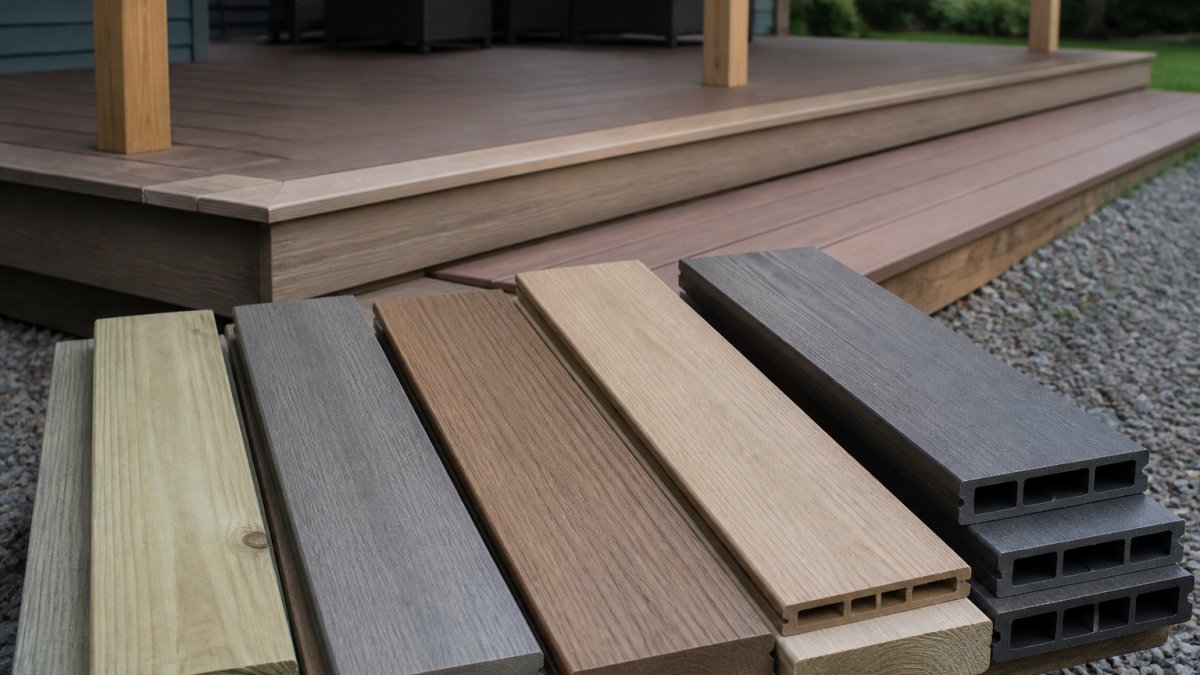
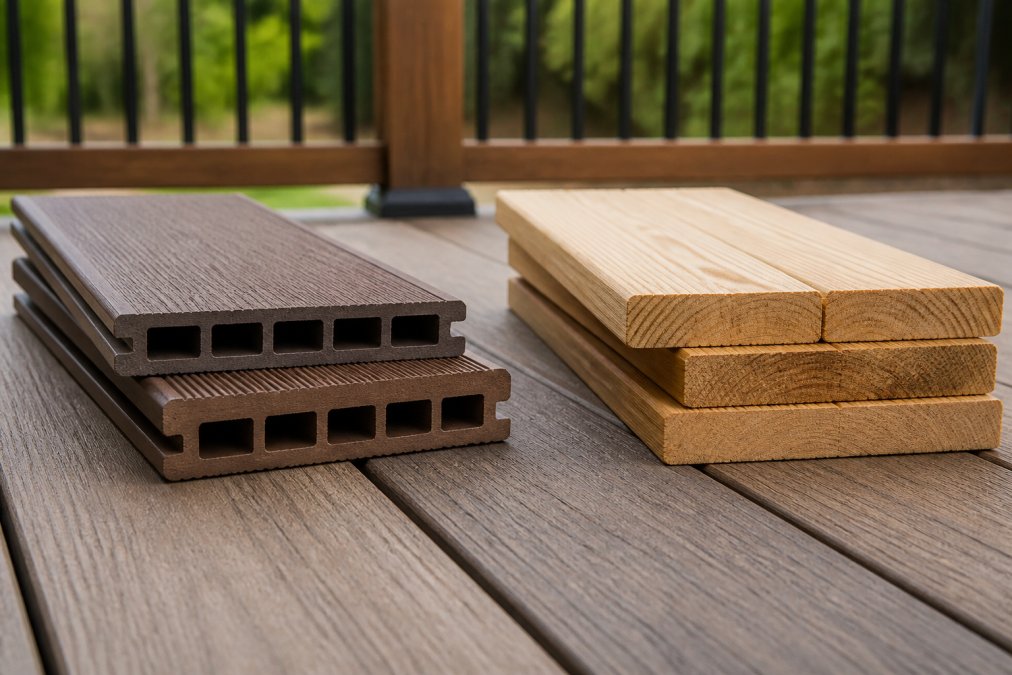
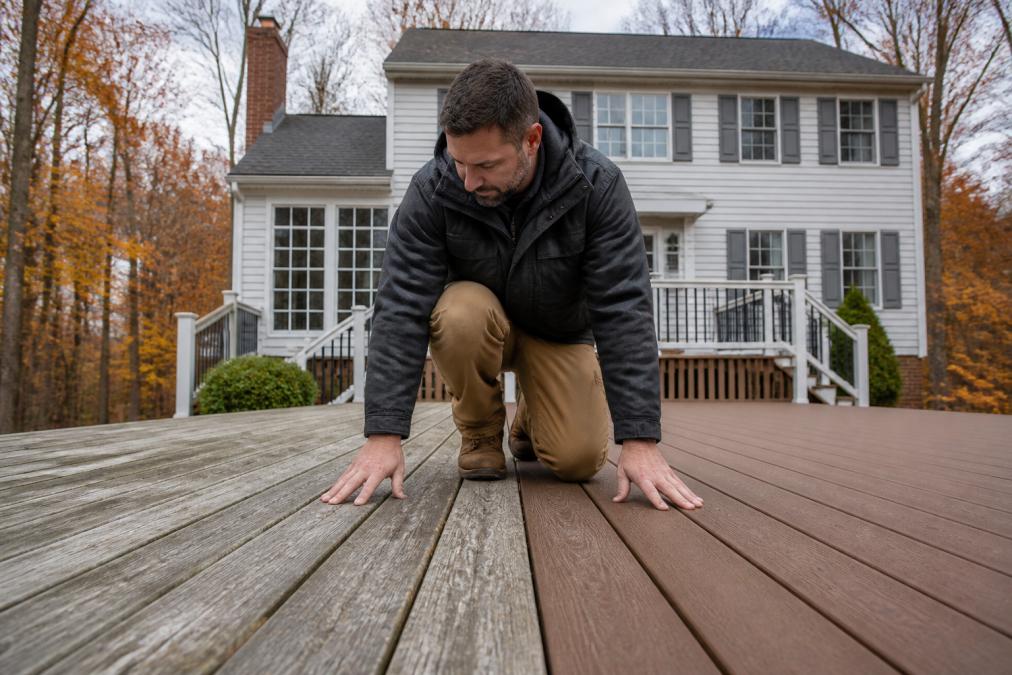
Choosing between composite and wood decking for the New Jersey climate comes down to one trade-off: upfront cost versus long-term effort. Pressure-treated pine costs the least to install but demands annual staining and sealing. Capped composite costs more initially and asks for almost nothing afterward.
This guide from PIONEER WOODWERX breaks down how each material handles freeze-thaw cycles, moisture, insects, and heat, so you can pick the right deck for your home in Old Bridge or anywhere across Central New Jersey.
| Factor | Pressure-Treated Wood | Capped Composite |
|---|---|---|
| Upfront cost | Lowest | Higher |
| Annual upkeep | Staining and sealing | Soap and water |
| Rot and insect risk | High without treatment | Very low |
| Freeze-thaw performance | Warps and cracks over time | Holds structural integrity |
| Best for | Budget builds, DIY owners | Low-maintenance outdoor living |
What Is the Best Decking Material for NJ Weather?
The best decking material for NJ weather is capped composite, because it resists moisture, rot, and the constant expansion and contraction of a northern climate without annual sealing. Pressure-treated wood remains the budget pick for homeowners who will commit to upkeep.
New Jersey sits in a climate zone that swings from humid 90-degree summers to hard freezes in January. That range is brutal on natural lumber. For a deeper look at regional climate patterns, the National Weather Service climate data documents how often the region cycles above and below freezing each winter.
How the Freeze-Thaw Cycle Tests Every Decking Material
The freeze-thaw cycle is the repeated process of moisture soaking into a material, freezing, expanding, and thawing again as temperatures cross 32 degrees. Each cycle pushes boards slightly apart.
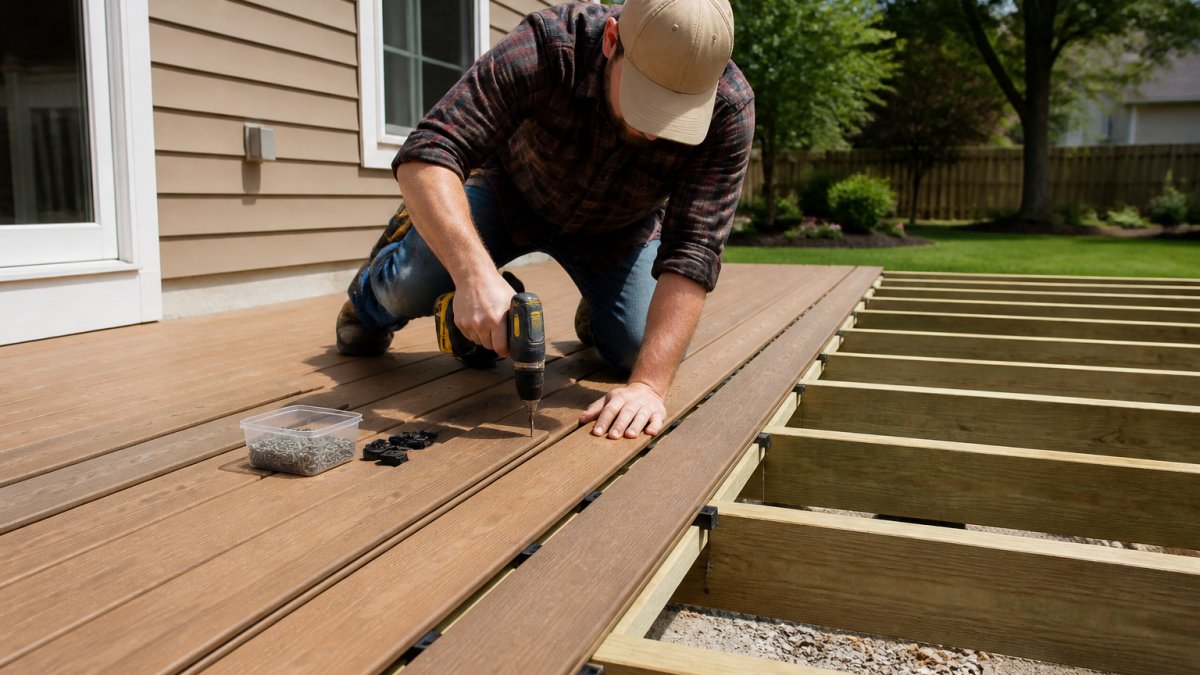
Wood absorbs that moisture through its grain. Over several winters, the swelling and shrinking leads to warping, cracking, and loose fasteners. Composite boards shed water at the surface, so the cycle has far less grip on them. Hidden fasteners also keep the substructure tighter than face-nailed wood.
Pressure Treated Wood Decking Lifespan in New Jersey
A pressure-treated wood deck in New Jersey typically lasts with consistent annual maintenance. Skip the staining, and that window shrinks considerably. Rot sets in at the ledger board and posts first, where water sits longest.
The supporting keyword here is pressure treated wood deck lifespan, and the honest answer is that lifespan is a maintenance decision, not a material guarantee. A deck sealed every year can outlast a neglected composite install in rare cases, but the labor adds up fast.
Moisture, Rot, and Insects in Central NJ
Central New Jersey's humid summers create ideal conditions for mold, mildew, and wood-destroying insects. Termites and carpenter ants both target damp lumber near soil contact.
Composite decking removes that food source entirely. Trex, for example, builds its capped boards with a protective shell that resists rot and insect damage, and the company notes the material is made from 95% recycled content (Trex decking materials overview). AZEK takes a different route with 100% synthetic polymer, which cannot absorb water at all.
Initial Cost vs. Long-Term Value: Which Decking Pays Off?
Composite wins on long-term value for most homeowners, while pressure-treated wood wins on day-one cost. The crossover point depends on how you price your own weekends.
Here is how the two materials typically compare on installed cost per square foot in Central New Jersey. Pressure-treated pine is generally a lower upfront cost, while capped composite and PVC are higher.
What NJ Homeowners Actually Recoup at Resale
Deck projects tend to return a solid portion of their cost at resale in the New Jersey market, and the return favors decks that photograph well and show no deferred work. A graying, splintering wood deck reads as a project to a buyer. A clean composite surface reads as a finished outdoor living space. That difference shows up in how fast a home moves and in what buyers are willing to offer.
The Crossover Point, Roughly
The break-even point for cost depends on how you value your time and whether you pay for annual wood maintenance. If you do the work yourself and enjoy it, wood stays cheaper longer. If you would rather not think about it, composite pulls ahead sooner.
- Choose wood if: you are budget-focused, handy, and willing to seal every year
- Choose composite if: you want maintenance-free seasons and a longer service life
- Choose PVC if: you want maximum moisture and fade resistance
Composite Decking Maintenance Tips for NJ Homeowners
Composite decking maintenance tips for NJ homeowners start with one rule: clean before winter, not after. Fallen leaves trap moisture against the surface through the freeze-thaw months.
Heat, Slip Resistance, and Aesthetics: Real-World Performance
Heat and slip resistance separate good composite from average composite. Darker boards get noticeably hot in direct July sun, while lighter tones and PVC formulations stay cooler underfoot. Wood stays cooler than dark composite in full sun, but it also grays and checks faster under the same UV load.
Heat Mitigation Strategies Most Guides Skip
If you want composite but worry about barefoot heat, you have options that go beyond picking a lighter color.
- Choose a lighter color family. Light gray, sand, and whitewashed tones reflect more solar energy than espresso or dark walnut. The difference underfoot on a 90-degree afternoon is noticeable.
- Add a shade structure. A pergola, awning, or retractable shade sail cuts surface temperature dramatically by blocking direct sun. This is the single most effective fix.
- Orient the deck for afternoon shade. If your yard allows it, position the main seating area where a tree or the house itself shades it during the hottest hours.
- Consider PVC over capped composite. PVC boards run cooler than composite in direct sun because of their density and surface formulation.
- Use a light-colored area rug. A woven outdoor rug over the hottest zone gives bare feet a cool landing spot without changing the deck.
Slip Resistance
Slip resistance matters more than most buyers expect. Wood develops a slick film when wet and shaded, and composite boards vary widely by texture. Look for a surfaced board with visible grain rather than a smooth finish. A brushed or wire-brushed texture grips better than a matte or glossy surface, especially near stairs and pool edges.
Aesthetics
On appearance, modern capped composite mimics natural wood grain closely enough that guests rarely notice. Cedar and redwood remain the aesthetic benchmark for authentic grain and color depth. Composite holds its color without annual staining, which is the trade most homeowners accept. If authentic grain is the priority and you are ready for the upkeep, real wood still wins the look.
Old Bridge Permits, Drainage, and NJ Resale ROI
Old Bridge deck projects need a construction permit, and the township reviews plans for footings, ledger attachment, and guardrail height before work begins. Skipping the permit creates a real problem at resale, when an inspector or buyer's attorney asks for the approval record.
Conclusion: Choosing the Right Deck for Your Home
Every deck decision in this climate starts with the same question: how much upkeep do you want to own? Wood rewards the homeowner who seals it every fall. Composite rewards the one who would rather spend the weekend on the deck than under it.
Frequently Asked Questions
What is the best decking material for NJ weather?
For most New Jersey homes, capped composite or PVC decking handles the freeze-thaw cycle, moisture, and UV exposure better than untreated wood. Pressure-treated pine is the budget option, but it needs annual staining and sealing to last. The right choice depends on your budget, how much upkeep you want, and how long you plan to stay in the home.
Does composite decking get hotter than wood decking?
Yes, darker composite boards can absorb more heat and feel warmer underfoot than natural wood on a sunny day. Lighter colors and PVC-based composites stay cooler. If your deck faces full sun, choose a light color or add a pergola or shade sail to keep the surface comfortable for bare feet and pets.
What is the pressure treated wood deck lifespan in New Jersey?
A pressure-treated wood deck in New Jersey typically lasts with regular care. The freeze-thaw cycle, humid summers, and winter snow load speed up wear. Annual staining, sealing, and prompt attention to loose boards or soft spots can extend that range.
How does the NJ freeze-thaw cycle affect wood versus composite decking?
Wood absorbs moisture, then expands and contracts as temperatures swing above and below freezing, which causes cracking, warping, and splintering. Composite and PVC decking resist moisture absorption, so they hold their shape through the same cycle. That structural stability is the main reason many Central NJ homeowners choose composite for new builds.
What are the downsides of composite decking?
Composite decking costs more upfront than pressure-treated pine, and darker boards can get hot in direct sun. Some early-generation composites faded or stained, though capped and PVC products now carry strong fade and stain warranties. It also requires a properly framed substructure, so installation quality matters as much as the board itself.