 ultimate-guide
Cost of Custom Kitchen Cabinetry 2026: Full Guide
Table of Contents
- Why 2026 Cabinet Prices Are Different
- Custom vs Stock Kitchen Cabinets Price Comparison
- What Drives the Cost of Custom Kitchen Cabinetry
- Kitchen Cabinet Installation Cost Old Bridge NJ
- Kitchen Remodeling Budget Breakdown 2026
- The Real ROI of Custom Cabinetry
- How to Hire a Kitchen Remodeling Contractor in New Jersey
- Request a Free Consultation for Your Kitchen Project
- Frequently Asked Questions
Last Updated: September 4, 2026
Why 2026 Cabinet Prices Are Different
The cost of custom kitchen cabinetry 2026 reflects a market shifted dramatically from just a few years ago. Supply chain pressures, rising hardwood prices, and sustained remodeling demand have pushed material costs upward, making careful budgeting more important than ever for New Jersey homeowners.
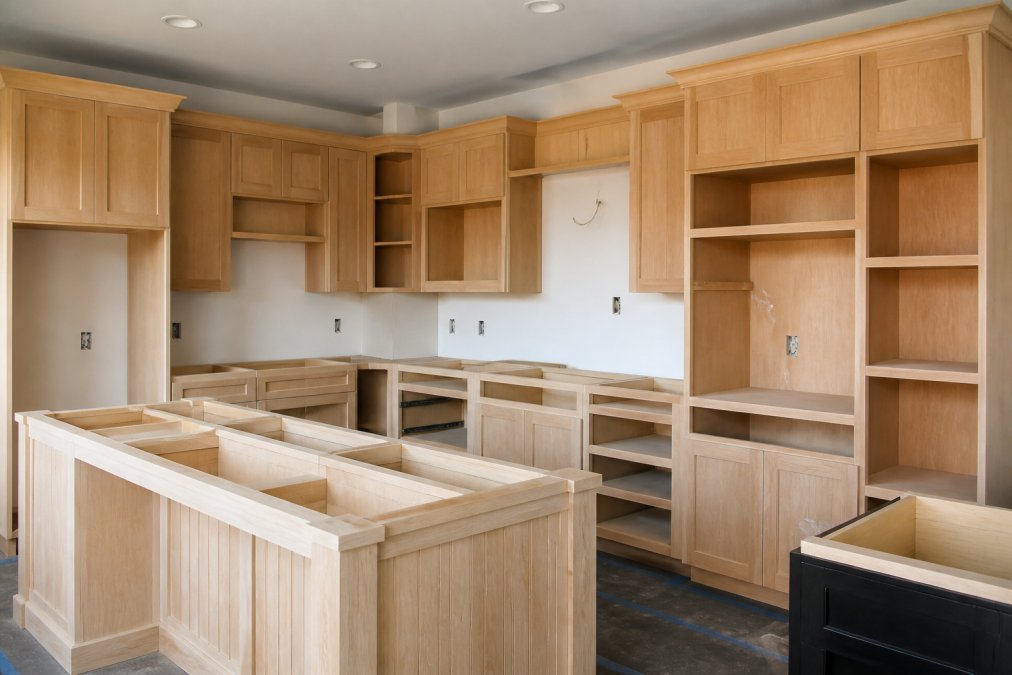
Custom kitchen cabinetry is built to your exact specifications, dimensions, and finish preferences by a skilled woodworker or shop, rather than manufactured to standard sizes. This distinction directly determines your total project cost, lead time, and longevity.
At PIONEER WOODWERX, we build every cabinet with 100% real wood and have watched these pricing trends reshape how Central New Jersey families plan renovations. Homeowners in Old Bridge are asking harder questions about whether custom work justifies the premium over stock options. The short answer is yes, but only when you understand what you are paying for.
Below, we break down the real cost drivers for 2026, compare custom against stock cabinets, and show you how to budget for a kitchen remodel in Middlesex County. Most national guides get this wrong: they quote broad averages that do not reflect local labor rates, building codes, or the demands of remodeling an existing New Jersey home.
Custom vs Stock Kitchen Cabinets Price Comparison
The gap between stock, semi-custom, and fully custom cabinets is not just about price. It is about construction quality, material options, and how well the final product fits your space and your life.
Stock cabinets are mass-produced in standard sizes, typically using particle board boxes with veneer finishes. They are the most affordable option and work fine for basic layouts, but they limit your design flexibility. Semi-custom cabinets offer standard sizes with more finish and door style choices, upgrading the box to plywood construction in most cases. Fully custom cabinets are built to order around your exact kitchen dimensions, your chosen wood species, and your preferred hardware and accessories.
| Cabinet Type | Box Construction | Sizing | Typical Lead Time | Best For |
|---|---|---|---|---|
| Stock | Particle board | Standard only | In stock | Quick, budget remodels |
| Semi-Custom | Plywood | Standard with options | 4-8 weeks | Moderate budgets, some choice |
| Fully Custom | Plywood or solid wood | Built to your specs | 8-16 weeks | Heirloom quality, exact fit |
The real price difference comes down to material and labor intensity. A builder-grade stock line uses the cheapest materials and minimal labor per unit. A custom shop-built cabinet involves a craftsman measuring, cutting, joining, and finishing each piece, labor that, plus the cost of hardwood, plywood, and quality hardware, moves the per-linear-foot price significantly higher.
What Drives the Cost of Custom Kitchen Cabinetry
Most of the cost in custom cabinetry comes down to four variables: the wood you choose, the construction methods used, the hardware you select, and the finish applied. Each one shifts the final number and deserves a deliberate decision based on how you plan to use your kitchen.
Wood Species and Material Quality
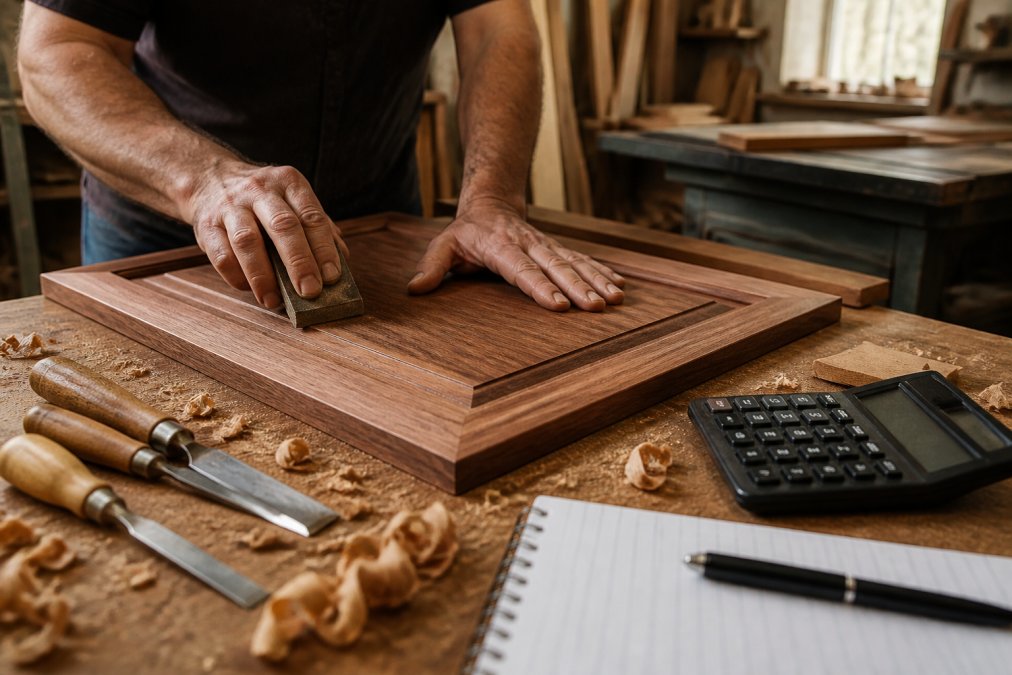
Wood species is the single largest material cost factor. Domestic hardwoods like maple, oak, and cherry balance cost and durability; exotic species or premium grades push pricing higher. The wood you choose affects upfront cost, how the cabinets age, how they accept stain, and their maintenance needs.
Equally important is the difference between solid wood and plywood construction. A quality cabinet box uses plywood with dovetail joints on drawers, not particle board that can swell and sag when exposed to moisture. The plywood grade and face frame thickness determine structural integrity. Ask any contractor about box construction before comparing quotes; it tells you more about longevity than the door style does.
Construction Methods That Matter
Face frame and frameless cabinetry represent two different build philosophies. Face frame cabinets have a solid wood frame across the front, offering traditional strength and a classic look. Frameless cabinetry, also called full overlay, maximizes storage access and gives a more modern appearance. Both can be built to high standards, but the joinery inside matters most: dovetail joints on drawers, soft-close hinges, and full-extension drawer glides. These details add cost but define whether your cabinets still function smoothly in twenty years.
Hardware, Finish, and Door Style Choices
Door style and finish grade are where budgets often stretch. Inset doors, which sit flush within the frame, require precise millwork and cost more than standard full overlay doors. The finish itself, whether a simple clear coat or a multi-step painted finish, adds labor hours. Custom millwork details like crown molding, decorative panels, and specialty accessories such as pull-out shelving and built-in organizers all increase the total.
Kitchen Cabinet Installation Cost Old Bridge NJ
Installation labor in Old Bridge NJ is a distinct line item from the cabinets themselves, varying based on the condition of your existing space. While national guides often quote a flat percentage, labor costs in Middlesex County are driven by specific local factors you must plan for.
The Local Labor Market Reality
Old Bridge and Central New Jersey have a higher cost of living and higher demand for skilled tradespeople than the national average, so expect to pay a premium for experienced installers familiar with this region's homes. Installation labor commonly runs between 20% and 35% of the total cabinet cost for a straightforward project, but this figure is just a starting point (homeadvisor.com).
Why Old Bridge Homes Add to the Cost
Many homes in Old Bridge were built in the post-war era through the 1980s. This creates specific challenges that a contractor from another region might not anticipate:
- Out-of-Square Walls: Plaster and lath walls, or even older drywall, are rarely perfectly plumb or square. A custom cabinet builder will account for this by scribing filler panels or building cabinets to fit the specific angles, which adds labor time. A stock cabinet installer will simply leave a gap, which is not an option for a true custom installation.
- Non-Standard Plumbing and Electrical: Older homes often have galvanized steel pipes or outdated electrical wiring that must be moved to accommodate a new cabinet layout. This work requires a licensed plumber and electrician, and in Old Bridge, these trades are in high demand, often commanding premium rates for small, focused jobs.
- Demolition and Disposal Fees: Removing old cabinets and hauling them away is not free. In New Jersey, disposal fees at transfer stations and the cost of a dumpster rental have steadily increased. A full tear-out of a medium-sized kitchen can easily add several hundred dollars to your project, a cost that is often buried in a vague 'demo' line item.
Permits and Inspections in Old Bridge
Unlike some regions, any project involving moving plumbing, electrical, or altering the structural layout of your kitchen requires a permit from the Township of Old Bridge. The fee is typically modest, but the process requires time and a clear plan. A reputable contractor will handle this, but confirm it is included in their scope of work. Failing to pull a permit can lead to fines and complications when you sell your home.
The Integrated Approach Advantage
For homeowners searching for kitchen cabinet installation near me, the key is hiring a contractor who handles the full scope. PIONEER WOODWERX manages everything from first consultation through final installation, one accountable team for measuring, building, and fitting your cabinets. This integrated approach reduces miscommunication risk and ensures your Old Bridge home's unique challenges are addressed from the first site visit, not discovered as costly surprises mid-project.
Kitchen Remodeling Budget Breakdown 2026
A kitchen remodeling budget breakdown 2026 must account for more than just cabinets. Your total project cost includes demolition, flooring, countertops, backsplash, lighting, plumbing fixtures, and appliances, plus labor for each trade.
A realistic budget allocates the largest portion to cabinetry, followed closely by countertops and appliances. Reserve funds for design fees, permit costs, and unexpected structural findings, in an older New Jersey home, opening walls can reveal outdated wiring or plumbing that must be brought up to code before new cabinets are installed.
- Demolition and disposal of old cabinets and fixtures
- New cabinetry, including hardware and accessories
- Countertops and backsplash materials
- Flooring and underlayment
- Lighting, electrical, and plumbing rough-in work
- Appliances and ventilation
- Paint, trim, and final finishing details
- Permit fees and design consultation
Build in a contingency fund for surprises. Remodeling an occupied home almost always uncovers something not visible during the initial walkthrough, and that buffer keeps the project on schedule instead of forcing budget cuts mid-construction.
The Real ROI of Custom Cabinetry
Custom cabinetry is not just an expense, it is an investment in your home's daily function and resale value. To truly understand the return, look beyond the initial price tag and consider the full cost of ownership over a 20-year horizon. This is where the value proposition becomes clear, especially in a competitive market like Central New Jersey.
The 20-Year Cost of Ownership Analysis
A common pattern is comparing the upfront cost of stock versus custom cabinets. Here is what happens after installation.
- Stock Cabinets (Particle Board): A typical mid-range stock cabinet line has a lifespan of 10-15 years before the particle board boxes begin to show signs of wear, especially in high-humidity areas near the dishwasher or sink (cabinetcorp.com). The veneer can peel, and the board can swell and sag. When this happens, you are not just replacing a door; you are often replacing the entire cabinet box, which means a full remodel. If you install stock cabinets at age 40, you will likely be paying for a second full remodel by the time you are 55.
- Custom Cabinets (Real Wood & Plywood): A well-built custom cabinet with a plywood box and solid wood doors is designed to last 30-50 years or more (woodweb.com). The initial investment is higher, but the annual cost of ownership is often lower. If you install custom cabinets at age 40, they will likely still be functional and beautiful when you are 80. The cost is not doubled; it is amortized over a much longer period.
The Resale Value in the Old Bridge, NJ Market
Real estate in Old Bridge and Middlesex County is competitive, and the kitchen is the single most scrutinized room. Cheap, builder-grade cabinets signal that a buyer will need to remodel soon, which can lead to lowball offers. True custom cabinetry signals quality and permanence.
While we cannot guarantee a specific return on investment percentage, real estate professionals in Central New Jersey consistently note that a high-quality, custom kitchen is a top-tier differentiator, often the deciding factor between two similar homes. Custom, real-wood cabinetry suggests the rest of the home has been maintained to a higher standard, building buyer confidence and supporting a higher asking price.
The Hidden Value: Repairability and Maintenance
Maintenance and long-term cost of ownership also favor quality construction. Solid wood can be refinished and repaired, a scratched maple door can be sanded and re-oiled, a damaged dovetail drawer repaired by a skilled woodworker. Particle board boxes that suffer water damage typically require full replacement. Choosing wood species and finishes that suit your family's lifestyle, and working with a builder who uses real wood throughout, protects your investment.
How to Hire a Kitchen Remodeling Contractor in New Jersey
Hiring a kitchen remodeling contractor in New Jersey requires due diligence beyond comparing price quotes. You are entrusting a major investment to someone who will work in your home for weeks, so verify their credentials, communication style, and track record before signing anything.
Start by confirming the contractor is licensed and insured for work in New Jersey. Ask for references from recent kitchen projects and follow up on them, a contractor proud of their work will connect you with past clients willingly. Look at finish quality in person if possible, not just photos, and ask how they handle change orders and timeline delays.
Clear communication about budget and schedule from the start prevents most conflicts. A reputable contractor will walk you through the project scope, explain what is included in the quote, and be transparent about what could add cost. They should also be honest about lead times, which for custom cabinetry typically run several weeks from final measurements to installation.
Veteran-owned and operated PIONEER WOODWERX brings dependable project management to every kitchen remodel in Central New Jersey. From first consultation through final installation, we provide craftsmanship tailored to each home, building functional spaces that improve how families live. If you are planning a full remodel and want a single team to handle everything from custom cabinets to final trim, that is exactly the scope we manage.
Request a Free Consultation for Your Kitchen Project
Planning a kitchen remodel starts with understanding your options and getting a realistic picture of costs for your specific home. A consultation lets you discuss your layout, style preferences, and budget with a builder who can execute the full project.
When you meet with the PIONEER WOODWERX team, we evaluate your space, listen to how you cook and gather, and recommend solutions that fit your aesthetic and practical needs. We build entirely with 100% real wood and custom-build to your specifications, so the result is a kitchen designed around your family rather than a generic catalog layout.
We also specialize in aging-in-place remodeling, which means we can design a kitchen that remains safe and accessible as your needs evolve. Request a free consultation and see how personalized craftsmanship and full-service project management can bring your vision to life.
Frequently Asked Questions
How much should custom kitchen cabinets cost in 2026?
Custom kitchen cabinetry costs more than stock or semi-custom options because each cabinet is built to your kitchen's exact dimensions and your material specifications. In Central New Jersey, the final price depends on linear footage, wood species, door style, finish, and hardware. A full custom kitchen represents a significant investment, but the cost reflects dovetail joinery, plywood construction, and installation labor that stock cabinets do not include. For a precise estimate for your Old Bridge home, request a consultation and get a detailed quote based on your actual kitchen measurements.
Is custom cabinetry worth the investment for Old Bridge home renovations?
Custom cabinetry delivers measurable returns that stock options cannot match. Solid wood construction and dovetail joints mean the cabinets handle daily use for decades without the sagging or delamination common in particle board boxes. When you sell your home, custom millwork and full overlay inset doors signal quality to buyers, which supports a higher resale value. Custom cabinets also maximize every inch of your kitchen layout, including tricky corners and sloped ceilings. For homeowners planning to stay in their home, the long-term cost of ownership favors custom because replacement cycles are far longer.
How do material choices impact the 2026 cost of kitchen cabinets?
Wood species is the largest material cost driver. Domestic hardwoods like maple and oak cost less than imported species or premium options like cherry and walnut. Plywood construction with solid wood face frames costs more than particle board but resists moisture and holds screws far better. Cabinet grade plywood and dovetail drawers add cost at the front end and extend the life of the cabinet box. Your finish choice also affects price, since sprayed lacquer or conversion varnish requires more labor than basic stains. A reputable contractor will walk you through each material trade-off against your remodel budget.
What is the typical timeline for custom cabinet installation in 2026?
Custom cabinets require a longer lead time than stock units because they are built to order after your kitchen is measured. The timeline starts with a design consultation, followed by material selection and shop drawings for your approval. Once you approve the drawings, fabrication begins. Lead times vary by shop workload and project complexity. After delivery, installation labor adds several days depending on kitchen size and site conditions. A full kitchen remodeling project also includes demolition, electrical, and plumbing work that runs on a parallel schedule. Ask your contractor for a written timeline before signing.
How does custom cabinetry compare to semi-custom or stock options in 2026?
Stock cabinets come in fixed sizes with limited finish options and builder-grade construction. Semi-custom cabinets offer more door styles and finishes but still use a standard box with limited size modifications. Fully custom cabinets are built to your exact specifications, which means you control the cabinet box dimensions, interior fittings, wood species, and hardware. The price gap between these tiers reflects material quality and labor. If your kitchen has non-standard dimensions or you want heirloom-quality construction, the custom route avoids the filler panels and wasted space that stock options require.
What factors influence the price of custom cabinetry in Central New Jersey?
Labor rates, material availability, and project scope all shape pricing in Central New Jersey. Installation labor reflects the local cost of skilled tradespeople and the complexity of your kitchen layout. Design fees and project management are separate from fabrication costs. Your choice of hardware, from soft-close hinges to drawer glides, adds to the total. Accessories like pull-out shelving and custom millwork details also increase the final number. A detailed quote should itemize each of these cost factors so you understand where your remodel budget is going before work begins.
Is $30,000 enough for a kitchen remodel in 2026?
A $30,000 budget covers a kitchen remodeling project in many scenarios, but the outcome depends heavily on scope and material choices. The budget must account for demolition, new cabinetry, countertops, appliances, flooring, lighting, and installation labor. Custom cabinetry will consume a larger portion of that total than stock options. A kitchen remodeling budget breakdown for 2026 typically allocates the largest share to cabinets and installation, followed by countertops and appliances. An experienced contractor can help you prioritize spending so the finished kitchen matches your goals without exceeding your budget.
Planning a kitchen remodel involves many decisions, and the cost of custom kitchen cabinetry 2026 is a significant part of that planning. PIONEER WOODWERX offers dependable project management, quality craftsmanship, and custom builds tailored to each home, all backed by a veteran-owned team serving Old Bridge and all of Central New Jersey. Get started with PIONEER WOODWERX and request a free consultation to build a kitchen that adds lasting value to your home.
This article was written using GrandRanker