 Comparison
Granite vs Quartz Countertops: Cost and Material Comparison
Last Updated: November 18, 2026
Quick Summary
Countertop materials fall into four families: natural stone, engineered stone, wood, and composites, with installed costs ranging from roughly $15 to $250 per square foot. Granite handles heat better but needs periodic resealing, while non-porous quartz resists stains without sealing and suits busy households.
- Installed countertop costs range from roughly $15 to $250 per square foot, averaging near $72.
- Granite handles heat better than quartz, which can scorch from sustained heat.
- Quartz is non-porous, so it resists stains without sealing and comes in consistent lots.
- Fabricators template once base cabinets are installed and level, capturing actual site conditions.
- Ask for slab, fabrication, cutouts, edges, and removal priced as separate lines.
Table of Contents
- Comparing Countertop Materials at a Glance
- Countertop Materials by Cost: What Drives the Price
- Granite vs. Quartz Countertops: Which Fits Your Kitchen
- Kitchen Countertop Installation Cost: What a Quote Should Cover
- Building a Realistic Old Bridge Kitchen Budget
- Choosing a Countertop for Your Central New Jersey Kitchen
- Frequently Asked Questions
Comparing Countertop Materials at a Glance
A kitchen countertop materials comparison and pricing exercise comes down to one uncomfortable truth: the slab you fall in love with at the showroom is rarely the surface that suits your household.
Countertop materials fall into four families: natural stone (granite, quartzite, marble, soapstone, slate), engineered stone (quartz), wood (butcher block), and composites (laminate, solid surface, porcelain). Each family trades durability against maintenance against looks.
Here is the short version before we get into the numbers.
| Material | Best For | Watch Out For | Maintenance Level |
|---|---|---|---|
| Granite | Heat tolerance, one-of-a-kind look | Sealing, visible seams | Medium |
| Quartz | Busy families, low fuss | Heat sensitivity, cost | Low |
| Quartzite | Stone look with toughness | Higher price, fabrication care | Medium |
| Marble | Baking, classic style | Etching, staining | High |
| Butcher block | Warmth, knife-friendly prep | Water damage, oiling | High |
| Laminate | Tight budgets, rentals | Heat, seam wear | Low |
| Porcelain | Heat and scratch resistance | Chipping at edges | Low |
Below, we break down what actually drives the price, then compare granite and quartz head to head.
Countertop Materials by Cost: What Drives the Price
Cost per square foot is the number everyone quotes, and the number that misleads most. Installed cost bundles the slab, fabrication, edge profiles, cutouts, and labor, so a cheap slab with complex fabrication can cost more than a premium slab with a simple edge. Translate the per-square-foot number into a project total for the kitchen you actually have, and ask PIONEER WOODWERX for a written quote for current pricing.
Four factors move the number:
- Slab size and yield. A larger island may require two slabs, and the second slab is often a full charge. Slab yield varies, and a kitchen with a sizable island can require more than one slab.
- Edge profile. A basic eased edge is standard; a built-up or ogee edge adds fabrication time and labor.
- Cutouts and seams. Farmhouse sinks, cooktop cutouts, and undermount sink polishing all add labor, and each seam is a fabrication step.
For a broad benchmark, The Cabinet Coach's 2026 countertop pricing guide reports an installed range of roughly $15 to $250 per square foot across materials, with an average near $72 per square foot. Note that not every published range states whether installation is included, so always ask. Consumer Reports' countertop material comparison covers pros, cons, and installed costs across ten materials; its pricing was published in 2015, so treat those figures as historical context rather than current quotes.
Turning Per-Square-Foot Ranges Into a Project Budget
A realistic budget starts with measured square footage, not the showroom sample. Measure the counter run depth (typically 25.5 inches for base cabinets), add the backsplash height you want, and count the island separately. Then apply the following project-level logic:
- Measure finished square footage. Include the island, peninsula, and any wet-bar surface. Kitchen counter area varies widely from home to home.
- Add a waste factor. Fabricators generally plan some overage for cuts, seams, and sink placement.
- Price slab and fabrication separately. Ask for slab cost per square foot and fabrication and installation cost per square foot as two lines; many quotes blend them.
- Add cutouts and edge work. Each sink cutout, cooktop cutout, and upgraded edge is a discrete line. Ask for each in writing.
- Add removal and disposal. Tear-out of the old surface and haul-away is a real line item that budget quotes often omit.
Fabrication and installation are a significant part of the total, so a homeowner who compares only slab prices can be surprised by the installed total. Compare quotes on the same measured scope, with slab, fabrication, cutouts, edges, and removal broken out separately.
Sample Project Totals by Kitchen Size
Use these as planning scaffolds, not quotes. They show how the same material family scales with kitchen size and island count.
| Kitchen Profile | Approx. Counter Square Feet | What Drives the Total |
|---|---|---|
| Small galley, no island | 25-35 sq ft | Single slab, one sink cutout, simple edge |
| Standard L-shape with peninsula | 40-55 sq ft | One to two slabs depending on yield, two cutouts |
| Large kitchen with island | 60-90 sq ft | Two slabs likely, multiple cutouts, seam planning |
| Kitchen plus wet bar or butler's pantry | 90+ sq ft | Three slabs possible, coordinated seams across rooms |
At the entry-level laminate end, a small galley can land near the bottom of the published per-square-foot spread; at the exotic-stone end, a large island kitchen can approach the top.
Watch out: a quote that gives one blended per-square-foot number without stating slab, fabrication, cutouts, edge, and removal separately cannot be compared fairly against another quote, and it is the most common source of mid-project cost surprises.
Granite vs. Quartz Countertops: Which Fits Your Kitchen
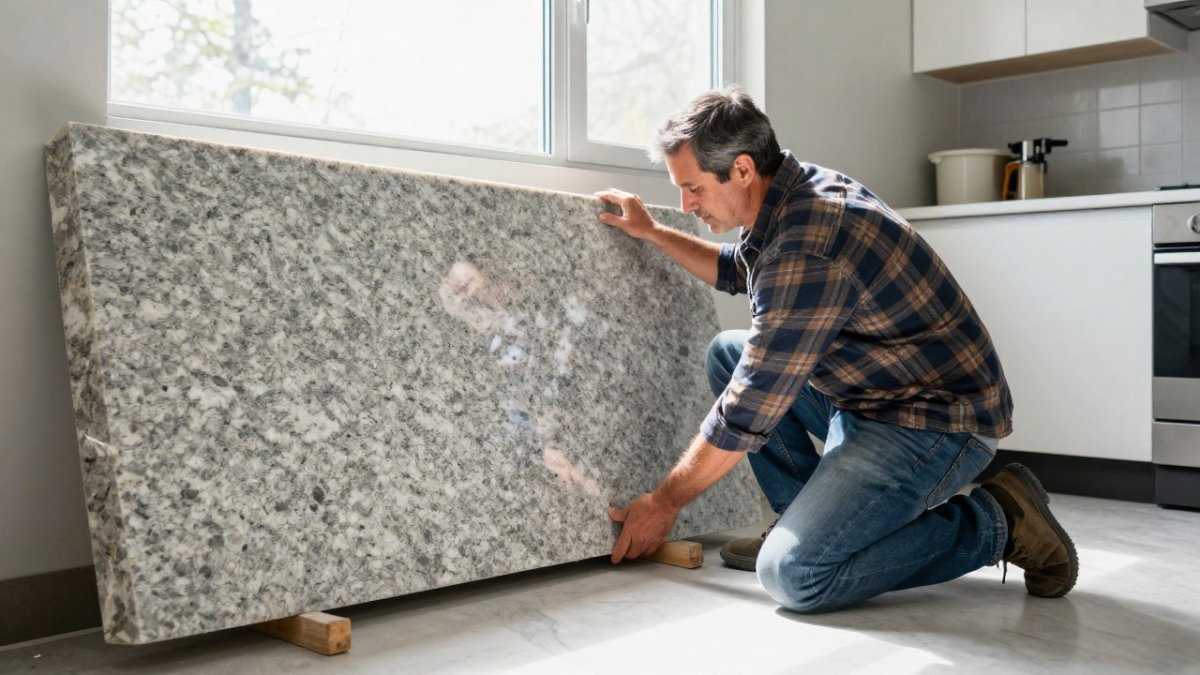
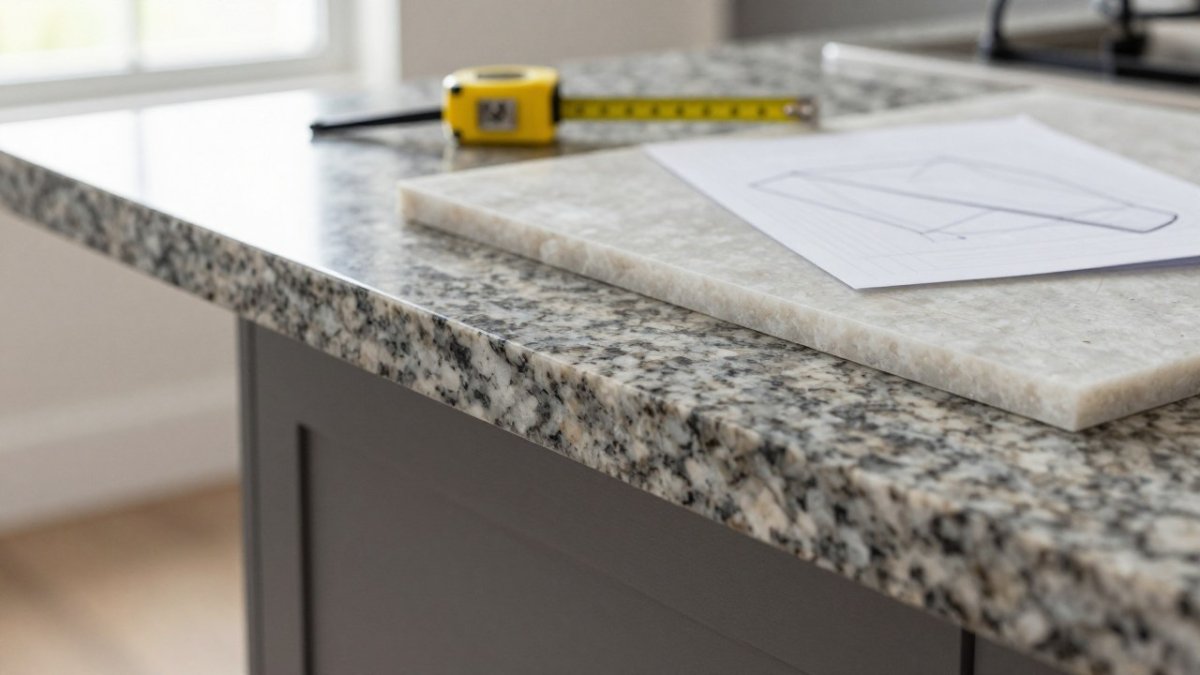
Granite is natural stone cut from quarries; quartz is engineered stone, roughly ground quartz bound with resin. The granite vs. quartz countertops debate usually stalls on looks, but the decision is really about heat, sealing, and consistency.
Kitchen Countertop Installation Cost: What a Quote Should Cover
Kitchen countertop installation cost is where estimates diverge most, and vague quotes are the leading cause of renovation surprises. A detailed written estimate should itemize scope, materials, labor, exclusions, payment schedule, and timeline. The goal is not the lowest number; it is the quote you can compare line by line against another.
Ask specifically whether the quote includes:
- Template visit and field measurement
- Slab selection and yield, including whether a second slab is needed
- Fabrication, edge profile, and cutouts
A Like-for-Like Quote Comparison Checklist
Two quotes are only comparable when they cover the same scope. Build a simple comparison sheet with these rows and mark each quote yes, no, or not stated:
- Template and measurement, is the site visit included, or billed separately?
- Slab allowance, is a specific slab named, or a generic allowance that can move?
- Second-slab charge, is it stated if yield requires it?
- Edge profile, which profile is priced, and what does an upgrade add?
- Sink and cooktop cutouts, included per cutout, or lumped?
- Undermount sink mounting and polishing, included?
- Removal and disposal, included, or an add-on?
- Seam plan, where seams will fall and who decides?
- Backsplash and waterfall edges, in or out?
- Payment schedule and timeline, deposits, milestones, and lead time stated?
A quote that answers all ten is easier to trust than a cheaper one with blanks.
Local Project Logistics and Timing
A countertop project typically follows a predictable sequence, and knowing it helps avoid a stalled kitchen:
- Template after cabinets are set. Fabricators template once base cabinets are installed and level, because the template captures actual wall and cabinet conditions.
- Fabrication lead time. Stone and engineered surfaces typically need a fabrication window after templating; ask for that window in writing so it lines up with sink and appliance delivery.
- Sink and appliance coordination. The sink should be on site at template or before install, and the cooktop and faucet should be ready so cutouts match the actual products.
Lifecycle: Upkeep and Replacement Planning
Initial price is only part of the cost of ownership. Granite typically wants periodic resealing, while quartz and porcelain generally need only routine cleaning. Butcher block needs regular oiling and protection from standing water. Weigh the annual upkeep routine and expected service life against the installed price, not just the sticker.
When you are ready to price your own project, you can request a free estimate and get the scope in writing before committing.
Building a Realistic Old Bridge Kitchen Budget
An Old Bridge kitchen budget has to account for more than the slab. Countertops are one line item among cabinets, flooring, lighting, plumbing, and labor, and the countertop decision often shifts the others.
A practical sequence works better than a single total:
- Set a total budget and reserve a contingency for unexpected conditions.
- Price cabinets and countertops together, since layout affects slab yield.
- Decide the edge profile and sink type early; both change fabrication cost.
- Confirm whether old surface removal is included.
- Get two or three itemized quotes on the same scope so you can compare fairly.
For a fuller local breakdown, our kitchen renovation cost guide for Central New Jersey walks through the line items beyond countertops so your budget reflects the whole project, not just the surface.
Choosing a Countertop for Your Central New Jersey Kitchen
Choosing a countertop for a Central New Jersey kitchen means matching material to household, not to a magazine photo.
A good starting point is how you actually use the kitchen. Do you set hot pans down? Bake often?
If you are weighing cabinets alongside your surface, our guide to which kitchen cabinet material is right for your home helps you coordinate the two. And if you want to see how we handle countertop installation as part of a full kitchen renovation, our kitchen remodeling services in Central NJ page shows the scope.
The kitchen countertop materials comparison and pricing work is worth doing carefully.
A kitchen renovation stalls when the countertop decision drags on and the quote hides the details.
Frequently Asked Questions
What is the most affordable material for kitchen countertops?
Laminate is the lowest-cost countertop materials option, and butcher block and solid surface sit in the middle of the range. Installed countertop prices vary widely across materials. Where you land inside that range depends on the material, the edge profile, cutouts for a sink and cooktop, and how much fabrication your layout requires. Ask for a written scope before comparing any two quotes.
Is quartz or granite more expensive for kitchen countertops?
They often land close together, and the gap shrinks once fabrication and installation are included. Published price ranges vary, and it is worth confirming whether installation is included. Natural stone can vary by slab, while engineered quartz is generally more uniform. Get both priced on the same square footage and edge profile.
Which countertop material is easiest to maintain?
Quartz, porcelain, and solid surface are non-porous, so they resist stains without routine sealing. Granite, quartzite, marble, soapstone, and butcher block need more attention: natural stone typically needs periodic sealing, and wood needs oiling and careful drying. For a household that wants to wipe down and move on, a non-porous engineered surface is the simpler choice. For a homeowner who likes the look of natural stone, sealing twice a year is a small task.
How do I choose a countertop material for my kitchen remodel in New Jersey?
Start with how the kitchen is actually used, then set the budget, then pick the material. Households that cook daily and host often should prioritize heat and scratch resistance; households with young children should prioritize stain resistance and rounded edges. Verify the contractor's New Jersey home improvement contractor registration, confirm insurance, and request a written estimate covering scope, materials, labor, exclusions, payment schedule, and timeline. PIONEER WOODWERX offers a free consultation.