 comparison
Engineered Wood vs Particle Board: Key Differences
Table of Contents
- Are Engineered Wood and Particle Board the Same Thing?
- What Is Particle Board Made Of
- Types of Engineered Wood Products
- Particle Board vs MDF: Strength and Durability
- Particle Board vs Plywood: Performance Comparison
- Which Material Should You Choose for Your Project?
- Conclusion
- Frequently Asked Questions
Last Updated: October 5, 2026
Are Engineered Wood and Particle Board the Same Thing?
No. Engineered wood and particle board are not the same. Engineered wood particle board is one specific type of engineered wood product, but engineered wood is a much broader category that includes several different materials. Understanding this distinction matters when you're choosing materials for kitchen cabinets, shelving, furniture, or home renovation projects.
The confusion is understandable. Both use wood byproducts instead of solid wood. Both are manufactured through heat and pressure. But the composition, manufacturing process, strength, and performance differ significantly. The difference between these products directly affects durability, cost, and whether a material will hold up in your specific application.
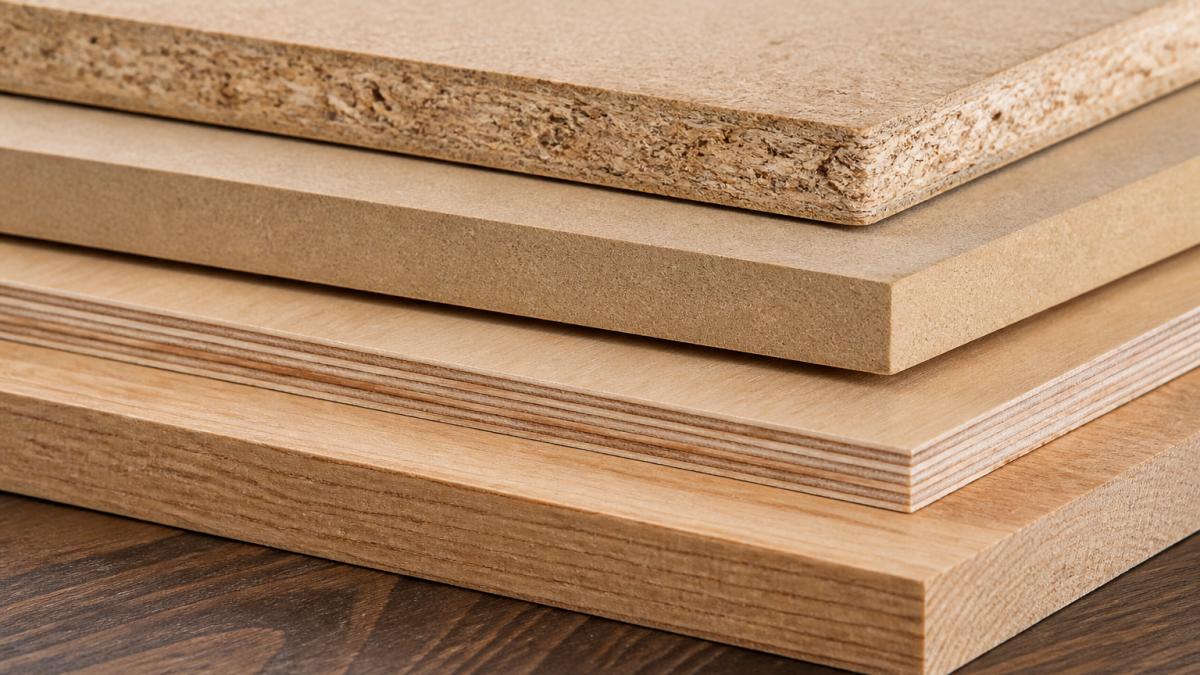
Think of engineered wood as the umbrella category. Under that umbrella sit particle board, MDF (medium-density fiberboard), plywood, and OSB (oriented strand board). Each one is engineered differently, performs differently, and serves different purposes. Knowing which is which helps you avoid costly mistakes.
What Is Particle Board Made Of
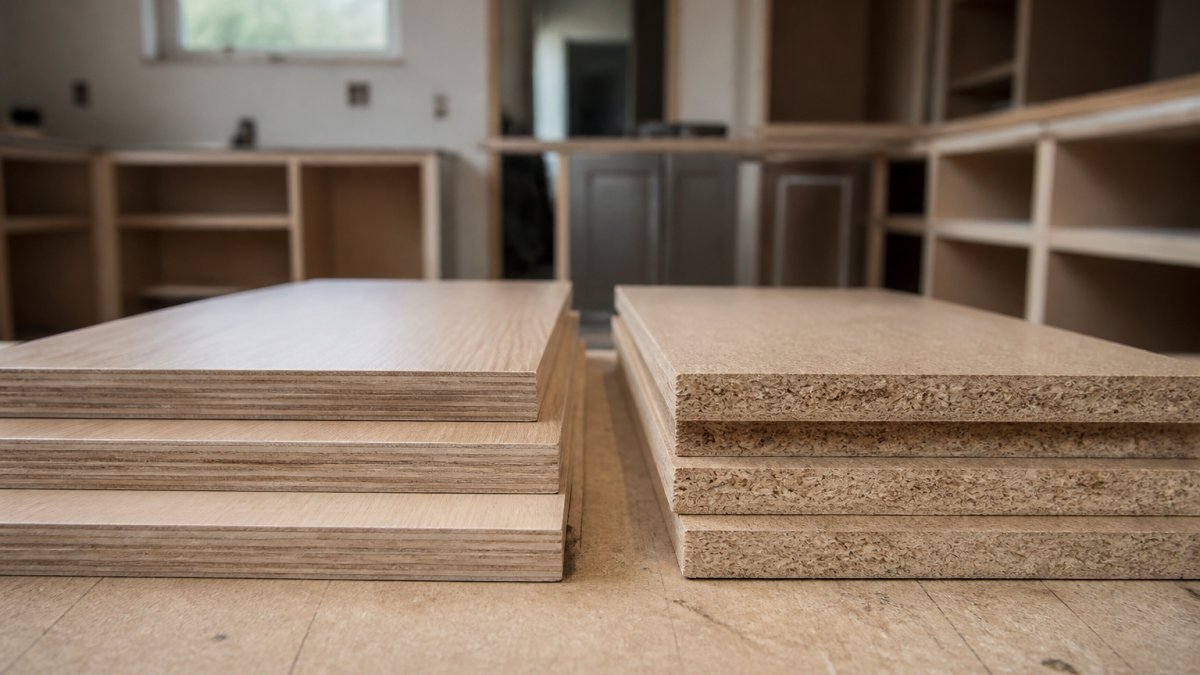
Particle board is manufactured from wood chips, sawdust, and wood fibers combined with resin adhesive, then compressed under intense heat and pressure into solid sheets. The process takes materials that would otherwise be waste and turns them into a usable panel product.
The raw materials come from sawmill waste, wood shavings, and recycled wood. These particles are mixed with a binder (typically formaldehyde-based resin, though low-formaldehyde options exist). The mixture is then spread into a mat and pressed in large hydraulic machines. Heat activates the resin, which bonds the particles together. The result is a lightweight, flat panel that's inexpensive to produce and relatively uniform in density.
Particle board is lighter than plywood and typically less expensive. Its surface is relatively smooth, which makes it suitable for veneering or laminating. However, particle board has lower density than MDF and is more prone to swelling when exposed to moisture. It also doesn't hold fasteners as securely as denser engineered wood products. Once the surface is damaged or exposed to water, particle board degrades quickly because the particles lose their bond.
Types of Engineered Wood Products
Engineered wood isn't a single product. It's a category that includes several distinct materials, each with different properties and best uses.
Particle Board
Engineered wood particle board is the least dense and least expensive engineered wood option. It's made from larger wood particles bonded with resin. You'll find it in budget furniture, cabinet interiors, and shelving that doesn't need to bear heavy loads. It works well as a substrate under veneer or laminate, where the visible surface does the aesthetic work. The weakness of particle board is its moisture sensitivity and poor screw-holding ability. Drive a screw into particle board multiple times, and the holes enlarge because the particles compress rather than grip.
MDF (Medium-Density Fiberboard)
MDF is denser and more uniform than particle board because it's made from finer wood fibers rather than larger particles. The manufacturing process breaks wood down into individual fibers, which are then bonded with resin and compressed. This creates a more stable, consistent material with better screw-holding strength and a smoother surface. MDF machines and cuts cleanly, making it popular for cabinet doors, trim, and decorative applications. It's denser than particle board but still absorbs moisture readily. MDF is heavier than particle board and costs more, but it outperforms particle board in most applications requiring structural integrity or repeated fastening.
Plywood and OSB
Plywood is made from thin layers of wood veneer glued together with the grain alternating in each layer. This cross-grain construction gives plywood superior strength in multiple directions. It's significantly stronger than particle board or MDF and resists moisture better when sealed. Plywood is the engineered wood product closest to solid wood in performance. It's used for structural applications, subfloors, roof sheathing, and furniture that needs to support weight.
OSB (oriented strand board) is similar to plywood but made from larger strands of wood oriented in specific directions rather than thin veneers. It's less expensive than plywood and performs similarly for structural applications. OSB is common in roof and wall sheathing but less common in interior applications because it's visible surface appearance is less refined than plywood.
Particle Board vs MDF: Strength and Durability
The key difference between particle board and MDF comes down to density and fiber structure. MDF is denser, typically 600-800 pounds per cubic foot compared to particle board at 400-600 pounds per cubic foot, which translates directly to strength and fastener-holding performance.
Screw-Holding Strength
When you drive a screw into MDF, the fine, uniform fibers grip the fastener more securely than the larger, looser particles in particle board. In practical terms, MDF can typically withstand 3-5 screw insertions in the same hole before the fastener becomes loose, while particle board often fails after 1-2 insertions.
Warping and Dimensional Stability
MDF resists warping and maintains its shape better than particle board because its uniform density distributes stress more evenly across the sheet. Particle board is more susceptible to swelling and warping when exposed to humidity or moisture.
MDF handles moisture better than particle board but still shouldn't be used in wet environments without proper sealing. In a bathroom or kitchen, both materials benefit from edge-sealing and topcoat protection, but MDF provides a safety margin that particle board does not.
Load-Bearing Capacity
MDF's higher density also means it can support more weight over the same span. For kitchen shelving, bathroom storage, or basement shelving in a home renovation, this difference directly affects whether your installation looks and functions as intended after a year of use.
Trade-Off: Cost vs. Performance
Particle board costs significantly less than MDF, often 30-50% less per sheet depending on thickness and grade. For applications where the surface is finished and protected (like cabinet interiors hidden behind doors), particle board can work acceptably.
Particle Board vs Plywood: Performance Comparison
Plywood outperforms both particle board and MDF in strength, moisture resistance, and durability. Plywood's cross-grain construction makes it strong in multiple directions, while particle board and MDF are weaker in their thickness. Plywood can span longer distances without support, handle heavier loads, and resist warping better.
Moisture Resistance and Longevity
Moisture resistance strongly favors plywood. When sealed properly, plywood resists water penetration far better than particle board or MDF. This matters critically for kitchen cabinets, bathroom vanities, and any application where moisture exposure is possible.
Fastener Holding and Assembly Durability
Screws and nails grip the wood fibers in plywood more securely than in particle board. For projects requiring repeated assembly and disassembly, like adjustable shelving, removable cabinet components, or hardware that bears weight, plywood is more forgiving.
Indoor Air Quality and Emissions
This is where material choice directly affects your home's indoor environment. Particle board and MDF are manufactured with adhesive resins that contain formaldehyde or other volatile organic compounds (VOCs).
Plywood also uses adhesives, but solid-wood plywood (made from wood veneers) typically has lower formaldehyde emissions than particle board or MDF.
Particle board and MDF products are also available in low-formaldehyde versions, but they still typically emit more VOCs than certified plywood. For homeowners in Central New Jersey planning kitchen or bathroom renovations, especially in homes with children, elderly residents, or anyone with respiratory sensitivity, specifying low-emission materials is a health consideration, not just a durability one.
Cost and Value
Plywood is significantly more expensive than particle board or MDF, often 2-3 times the cost per sheet. For applications where strength and durability are essential, structural framing, high-load shelving, kitchen cabinets that will last 20+ years, bathroom vanities in moisture-prone areas, plywood justifies the cost.
| Material | Density | Moisture Resistance | Screw Holding | Formaldehyde Emissions | Best For |
|---|---|---|---|---|---|
| Particle Board | Low (400-600 lbs/cu ft) | Poor | Weak (1-2 insertions) | Higher (unless low-formaldehyde grade) | Budget applications, hidden surfaces, veneered interiors |
| MDF | Medium (600-800 lbs/cu ft) | Fair | Good (3-5 insertions) | Moderate (unless certified low-emission) | Cabinet doors, shelving, trim, decorative surfaces |
| Plywood | High (30-55 lbs per sheet) | Good | Strong (10+ insertions) | Lower (especially CARB/EPA-certified) | Kitchen cabinets, bathroom vanities, structural use, moisture-prone areas |
| OSB | High | Fair | Strong | Moderate | Roof sheathing, wall sheathing, structural applications |
When you're selecting materials for a kitchen renovation, bathroom remodel, or basement project in Central New Jersey, ask your contractor or supplier for emissions certifications.
Which Material Should You Choose for Your Project?
The right choice depends on your specific application, budget, and durability needs. Here's how to think through it:
Choose particle board if: You're building something temporary, budget is the primary concern, the surface will be veneered or laminated, and moisture exposure is unlikely. Particle board works for cabinet interiors, under-sink areas (if properly sealed), and hidden applications where appearance doesn't matter.
Choose MDF if: You need better strength than particle board but don't require plywood's performance. MDF suits cabinet doors, shelving that holds moderate weight, trim work, and decorative applications. It machines beautifully and takes paint well, making it popular for finished surfaces.
Choose plywood if: Durability, strength, and moisture resistance are priorities. Use plywood for kitchen cabinets, bathroom vanities, structural shelving, and any project that needs to last. The higher cost is justified by superior performance and longevity. For homeowners in Central New Jersey planning kitchen or bathroom renovations, plywood is the material that holds up to real-world use.
For custom woodwork and furniture built to last, solid wood is the best choice. At PIONEER WOODWERX, we use 100% real wood for custom builds because it offers unmatched durability, beauty, and the ability to be refinished or adjusted as needed. Engineered products have their place for specific applications, but when you want furniture designed for family gatherings and built to become an heirloom, solid wood is the investment that pays dividends over decades.
Consider your timeline and use case. Particle board suits temporary solutions. MDF handles moderate-duty applications. Plywood and solid wood are the materials for permanent installations and high-value projects.
Conclusion
Engineered wood and particle board are not the same. Particle board is one type of engineered wood, the least dense and least expensive option. The engineered wood category also includes MDF, plywood, and OSB, each with different properties and applications.
Understanding these differences helps you make better decisions for your project. Particle board works for budget applications and hidden surfaces. MDF suits mid-range projects requiring decent strength. Plywood and solid wood deliver durability and performance for projects that matter.
When you're planning a kitchen renovation, bathroom remodel, or custom furniture project in Old Bridge or throughout Central New Jersey, material choice directly affects how long your investment lasts. PIONEER WOODWERX specializes in helping homeowners choose the right materials for their specific needs, whether that's engineered products for certain applications or 100% real wood for pieces built to last generations. Lowe's Particle Board Buying Guide provides additional context on comparing panel materials for different uses. For guidance tailored to your project, we invite you to request a free consultation and discuss which materials will deliver the durability and quality your home deserves.
Frequently Asked Questions
Is engineered wood the same as particle board?
No. Engineered wood is a broad category that includes particle board, MDF, plywood, and OSB. Particle board is one type of engineered wood, made from compressed wood chips and sawdust bonded with adhesive. Not all engineered wood products are particle board, and they have different strength, durability, and moisture-resistance properties. Understanding the distinction helps you choose the right material for your project.
What is particle board made of?
Particle board is manufactured from wood byproducts: wood chips, sawdust, and wood fibers left over from lumber mills. These particles are mixed with resin binders and pressed together under heat and pressure to form compressed sheets. The result is a lightweight, affordable material that is less dense and less stable than MDF or plywood. Particle board is commonly used in budget furniture and cabinetry where cost is a priority over long-term durability.
Which is stronger: particle board or MDF?
MDF is stronger and denser than particle board. Medium-density fiberboard (MDF) uses finer wood fibers and higher resin content, creating a more uniform, stable surface that holds fasteners better and resists edge damage longer. Particle board is lighter and less expensive but more prone to swelling when exposed to moisture and does not hold screws as securely. For furniture or cabinetry that will see regular use, MDF is the more durable choice.
Does particle board hold screws well?
Particle board has weak screw-holding strength compared to plywood or solid wood. The loose particle structure means fasteners can pull through or loosen over time, especially with repeated use or vibration. If you need reliable fastener performance, plywood or MDF are better options. If you must use particle board, use larger-diameter fasteners, pre-drill holes, and avoid placing stress on screw joints.