 Ultimate guide
Why Warm Wood Kitchen Cabinets Are Trending in 2026
Last Updated: November 7, 2026
Quick Summary
Why warm wood kitchen cabinets are trending comes down to homeowners trading cold, dated gray showrooms for kitchens that feel like home. Visible grain adds texture, depth, and calm that flat painted surfaces cannot match, and natural materials age with character.
- Gray cabinets dominated for a decade but now read as cold and dated to many homeowners.
- White oak is the workhorse species: warm medium tone with grain calm enough for large kitchens.
- Use walnut as an island or feature accent rather than across every cabinet in a small kitchen.
- Keep one wood tone dominant and repeat any accent tone at least twice for balance.
- Light countertops like white quartz keep warm wood kitchens bright and let grain lead.
Table of Contents
- Why Warm Wood Cabinets Are Back at the Center of Kitchen Design
- The 2026 Kitchen Color Shift: From Cool Gray to Natural Wood Tones
- Popular Wood Species and Wood-Look Finishes Compared
- Oak Kitchen Cabinets 2026: Why the Grain Is Selling Again
- Choosing a Cabinet Color, Stain, and Sheen That Lasts
- Countertops for Wood Cabinets: Pairings That Keep a Kitchen Bright
- How to Mix Wood Tones in a Kitchen Without It Feeling Heavy
- Planning a Warm Wood Kitchen in Old Bridge and Central New Jersey
- Frequently Asked Questions
Why Warm Wood Cabinets Are Back at the Center of Kitchen Design
Why warm wood kitchen cabinets are trending comes down to one thing: homeowners are tired of rooms that feel like showrooms and want kitchens that feel like homes.
Cool gray dominated kitchen design for years, and many of those kitchens now read as cold and dated.
Below, we break down the species, stains, countertop pairings, and mixing rules that make warm wood work in 2026, plus what to expect when you plan a kitchen renovation.
The 2026 Kitchen Color Shift: From Cool Gray to Natural Wood Tones
The move away from cool gray is the biggest force behind the warm wood revival. Gray cabinets were everywhere for a decade, and homeowners now want a palette with warmth and staying power.
Three forces are driving the change:
- Fatigue with flat color. Painted gray shows every smudge and offers no visual texture.
- A pull toward natural materials. Wood grain, stone, and metal read as honest and durable.
- Longevity concerns. A warm wood finish holds its appeal longer than a trend color, which matters if you plan to sell.
If you are weighing which dated looks to leave behind, our guide to outdated kitchen trends to retire in 2026 covers the styles losing ground fastest.
Popular Wood Species and Wood-Look Finishes Compared
This comparison weighs grain, color consistency, durability, maintenance, and relative cost so your choice still looks right over time.
| Species | Tone | Grain Character | Durability and Wear | Color Consistency | Maintenance | Relative Cost | Best For |
|---|---|---|---|---|---|---|---|
| White oak | Light to medium warm | Straight, subtle | High; dense and hard | Good; minimal pink undertone | Low; occasional damp wipe | Mid to upper | Bright, modern kitchens; large runs |
| Rift white oak | Pale, even | Tight and linear | High | Excellent; very uniform | Low | Upper | Minimal, contemporary style |
| Walnut | Deep brown | Bold, flowing | High; strong but softer than oak | Moderate; sapwood varies | Moderate; oil finishes need refreshing | Upper | Islands and statement walls |
| Red oak | Warm reddish | Pronounced, open | High; hard and shock-resistant | Moderate; color varies by board | Low | Entry to mid | Traditional and rustic looks |
| Maple | Cream to honey | Fine, smooth | High; hard, closed grain | Good; takes paint and stain evenly | Low | Mid | Clean lines; painted-look or two-tone |
| Hickory | Light with dark streaks | Rustic, high contrast | Very high; hardest common species | Low; natural streaking is the point | Low | Mid | Farmhouse and cabin styles |
| Cherry | Warm reddish brown | Smooth, subtle | High | Changes with light over time | Low to moderate | Upper | Traditional and transitional rooms |
| Alder | Light warm brown | Soft, even | Moderate; softer than oak or maple | Good | Low | Entry to mid | Stained looks on a budget |
"Relative cost" reflects how species typically price against each other in a custom or semi-custom order, not a dollar figure, since final pricing depends on door style, construction, finish, and size. Durability ratings describe the wood itself; the finish does most of the day-to-day work, and a quality catalyzed finish beats a premium species with a cheap finish every time.
White Oak and Rift White Oak
White oak is the workhorse of the warm wood trend: a comfortable medium tone, warm without turning orange, with grain calm enough for a large kitchen. Rift white oak goes further with a tighter, straighter grain that suits contemporary style. Both hold a clear or light stain beautifully. The trade-off is price, since rift and quarter-sawn white oak require more careful milling.
Walnut and Darker Warm Tones
Walnut brings richness and drama, and its deep brown tone and flowing grain suit an island or feature wall where you want contrast against lighter surroundings. Avoid running walnut across every cabinet in a small kitchen, which can feel heavy; use it as an accent and let lighter woods carry the perimeter. It also shows dust and fingerprints more than lighter species.
Maple, Cherry, Hickory, and Alder
Maple is the cleanest canvas: fine grain, even color, and excellent for painted or two-tone designs. Cherry starts warm and deepens with sunlight, so view a sample in a sunny window before committing. Hickory is the hardest common species, and its natural streaking gives a rustic look, though you cannot expect a uniform wall of color. Alder is softer and more affordable, best where cabinets will not take heavy abuse.
Wood-Look Finishes and Thermofoil Alternatives
Wood-look laminates and thermofoil doors mimic oak, walnut, and rift-cut grain at a lower price point and stay stable in humid rooms. The trade-offs are real: edges can chip, grain repeats across doors, and the surface cannot be sanded or re-stained later. If the look matters more than long-term flexibility, wood-look is legitimate; if you want a kitchen that can be refreshed decades from now, solid wood or a quality veneer is safer.
Browse the full range of wood and stain color options before you commit.
Oak Kitchen Cabinets 2026: Why the Grain Is Selling Again
Oak kitchen cabinets in 2026 are selling because grain is the point.
What most guides miss is that oak is not one look. A light natural finish reads bright and modern. A medium stain warms the room without going dark.
Watch out: oak has a strong grain, and a heavy stain can make that grain look busy across a full wall of cabinets.
Choosing a Cabinet Color, Stain, and Sheen That Lasts
Choosing a finish is where most projects stall, so start with what is already in the room: look at your floor color, wall color, and existing cabinet tones, then pick a wood finish that sits comfortably alongside them.
A simple decision path:
- Match the undertone, not the exact color. Warm floors pair best with warm wood tones.
- Choose sheen by traffic. A lower sheen hides smudges; a higher sheen reflects more light.
- Test in the real room. View samples under your actual lighting at different times of day.
- Commit to one dominant tone. Let the wood be the star and keep other finishes quiet.
Selecting the right finish can feel daunting when you already have floors, walls, and cabinets to coordinate. Our guide on what color finish is best for my space walks through that decision step by step.
Countertops for Wood Cabinets: Pairings That Keep a Kitchen Bright
Countertops for wood cabinets should do one job: keep the room from going dark. Wood already carries warmth, so a light, quiet countertop balances it.
- White quartz or marble-look surfaces keep a warm kitchen bright and let the grain lead.
- Light granite adds movement without competing with the wood.
- Soapstone or dark stone works as a contrast, best used on an island rather than every surface.
For the backsplash, a simple white or cream tile keeps the focus on the cabinetry. A bold backsplash plus bold wood grain plus a busy countertop is how a kitchen starts to feel cluttered. Pick one feature and let the rest support it.
How to Mix Wood Tones in a Kitchen Without It Feeling Heavy
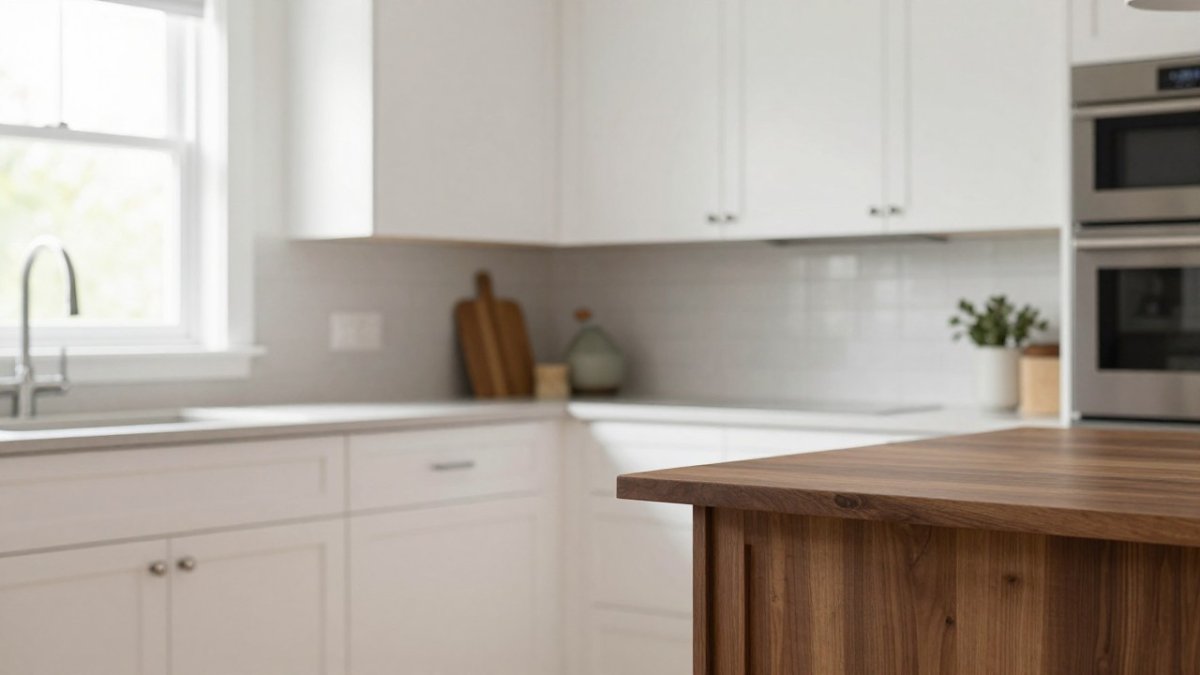
Mixing wood tones works when you keep one tone dominant and treat the others as accents. The goal is contrast, not competition.
Follow these rules:
- Pick a lead tone for most of the cabinetry, then add a second wood in a smaller dose.
- Separate tones by function. A walnut island against white oak perimeter cabinets reads intentional.
- Use painted cabinets as a bridge. White uppers over wood lowers is a proven two-tone combination.
The difference between a mixed-wood kitchen that works and one that feels heavy is restraint. Two tones, done well, beat four tones fighting for attention.
Planning a Warm Wood Kitchen in Old Bridge and Central New Jersey
Local planning matters more than most trend guides admit. Homes across Old Bridge and Central New Jersey vary widely in age and layout, and that shapes which wood tones and cabinet configurations work best.
How Local Housing Stock Shapes the Choice
Old Bridge and the surrounding Middlesex and Monmouth County towns mix mid-century ranches, 1980s and 1990s colonials, and newer construction. Each type pushes the design in a different direction:
- Mid-century ranches and split-levels. Lower ceilings and smaller footprints reward lighter species such as white oak, maple, or rift white oak; dark walnut across a full run can close the room in.
- 1980s and 1990s colonials. Larger kitchens with more wall space can carry a two-tone scheme, such as white oak perimeter cabinets with a walnut island.
- Newer construction and open plans. Big islands and tall ceilings suit medium and darker warm tones and larger door profiles.
Regional light matters too. Central New Jersey kitchens often face strong southern or western exposure, which warms and lightens wood over time. North-facing kitchens get cooler, flatter light and benefit from a slightly warmer stain.
A Decision Checklist Before You Order
Most stalled kitchen projects stall at the same point: too many open decisions at once. Work through this list in order.
- Confirm the layout. Measure the room, note window and door locations, and decide whether the footprint stays or changes. Layout drives cabinet sizes and, in turn, price.
- Pick the lead tone. Choose one dominant species and finish for the majority of the cabinetry before considering accents.
- Choose the door style. Shaker, slab, and raised-panel doors read very differently in the same species; view full doors, not chips.
- Select the finish and sheen. Lower sheen hides smudges in busy households; higher sheen reflects more light in darker rooms.
- Coordinate counters and backsplash. Bring countertop samples to the cabinet sample review so the tones are judged together.
- Review the plan and place the order. Lead times start at order, not at the first design meeting, so build that into your schedule.
Timelines and Installation Realities
Cabinet lead times vary by manufacturer, door style, finish, and customization level, and they are a major factor in when a kitchen is finished. Project timing depends on the specific scope of the renovation, so ask for a schedule tailored to your project during your consultation.
Scheduling across Middlesex and Monmouth Counties also means coordinating trades: electrical, plumbing, and HVAC work often has to happen before cabinets go in. Planning the order of work up front keeps the project on schedule.
Budget Trade-Offs That Actually Move the Number
Final project cost depends on more than species. The biggest levers are:
- Cabinet box construction and drawer hardware. Better construction and hardware raise the price but extend service life.
- Door style and customization. Standard sizes cost less than custom sizes and unusual configurations.
- Finish type. A catalyzed factory finish typically costs more than a basic finish but holds up better in a working kitchen.
Because these levers interact, the useful question is which trade-offs protect the look you want without overspending on the parts no one sees.
When you are ready to move from ideas to a plan, you can see our kitchen remodeling services and how we handle a project start to finish. If you are still weighing what custom cabinetry involves, our guide to the cost of custom kitchen cabinetry explains the scope before you commit.
As a veteran-owned contractor, we handle full kitchen renovations, not just the cabinetry, so you are not coordinating multiple crews.
Warm wood cabinetry rewards homeowners who plan the species, finish, and pairings together rather than one at a time.
Frequently Asked Questions
Are oak cabinets coming back in 2026?
Yes, but not the orange-toned oak of the 1990s. White oak and rift white oak are leading the return because the grain is straighter and the tone is calmer. Homeowners are pairing them with light countertops and simple hardware so the wood reads as texture rather than color. If you are weighing oak kitchen cabinets in 2026, ask to see a finished sample under your own kitchen lighting before committing, since the same stain looks different in a showroom.
What countertop colors go well with warm wood cabinets?
Light, low-contrast surfaces keep a warm wood kitchen from feeling closed in. Cream and off-white quartz, soft white marble-look surfaces, and warm gray stone all work. A white countertop with a subtle veining pattern reflects light back onto the cabinet faces. Darker countertops can work too, but usually on an island only, where the contrast becomes a feature instead of a wall of dark.
How do you keep a kitchen with wood cabinets from looking too dark?
Three moves do most of the work: keep the upper cabinets or the backsplash light, choose a finish with a lower sheen so light is not absorbed, and add under-cabinet lighting along the full run. Mixing in painted cabinets on the perimeter while keeping wood on the island is another reliable way to hold the warmth without shrinking the room. In older homes with smaller windows, a lighter species like white oak is usually the safer starting point.
Are natural wood kitchen cabinets a good choice for a modern kitchen?
They are, when the surrounding details stay quiet. Slab or shallow-shaker doors, flat hardware, and a simple backsplash let the grain carry the design. The look that dates fastest is heavy ornament on top of strong grain. Warm wood also mixes well with painted cabinets and black or brass hardware, which is why it fits contemporary and transitional kitchens at the same time.